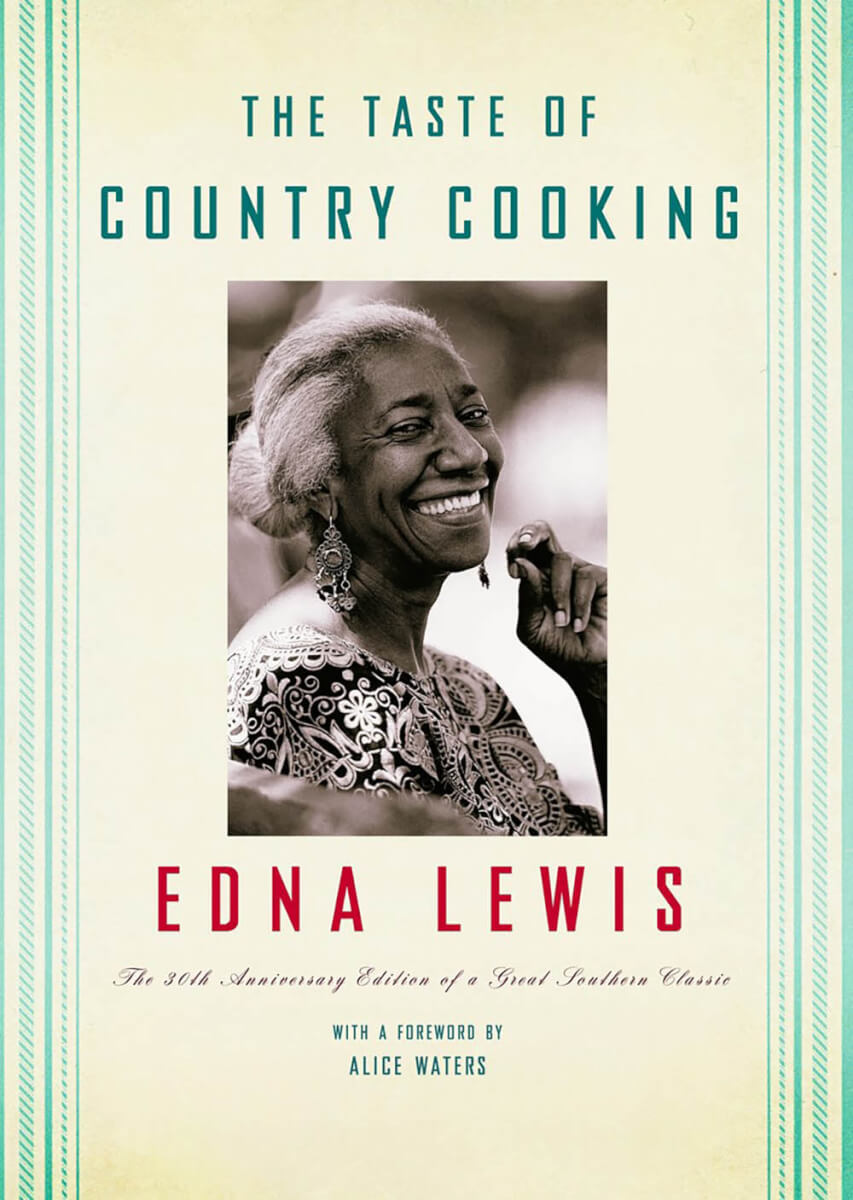
New editions of previously published cookbooks are a perfect example of how food and tastes evolve over time, providing a look into the past while connecting the dots to what still resonates today. First published in 1976, The Taste of Country Cooking by Edna Lewis is the primer for the recipes and foods that define the American South. This newly updated The Taste of Country Cooking: 50th Anniversary Edition (Knopf, $40, 9780593804957) is both retro and modern, with its personal touches, focus on garden-fresh ingredients and an insightful new foreword by Toni Tipton-Martin.
Lewis’ descriptive introduction drops the reader directly into her hometown of Freetown, Virginia, a farming community established by people who had been freed from chattel slavery, including Lewis’ own grandfather. She dives into its history, describing that “the spirit of pride in community and of cooperation in the work of farming is what made Freetown a very wonderful place to grow up in.” Although she eventually left Freetown, the recipes she learned and loved are the focus of her book—and they shine.
The cookbook’s organization into four sections mirroring the four seasons is brilliant, giving the reader a series of perfectly curated seasonal menus to enjoy throughout the year. Her menu for “A Late Spring Lunch” includes classic Southern recipes such as slices of Virginia baked ham, crispy biscuits and garden strawberry preserves, as well as a ring mold of chicken with rich wild-mushroom sauce—“an elegant dish for an occasion like Sunday brunch.” Some ingredients are repeated but presented differently; for example, ham and biscuits appear again in “An Early Summer Breakfast,” showcasing the ingredients’ versatility. Recipes emphasize the abundance of each season, as in fall’s “Hunting Season Dinner,” which features quail casserole and warm poached Kieffer pears, and winter’s “Christmas Dinner” menu, featuring roast chicken with dressing, fruitcake and hot mince pie.
Lewis prefaces each section with a personal story or reminiscence, such as the harvesting and canning of fruits and berries in summer and the sweet scents of Christmas baking in winter. “Her approach to recipes and writing is enchanting and reverential,” writes Martin, “teaching us that the story of Black food is a story of naturally good food—with ingredients and methods that are deeply connected to the land and self-care.” The Taste of Country Cooking is a deliciously informative history lesson.