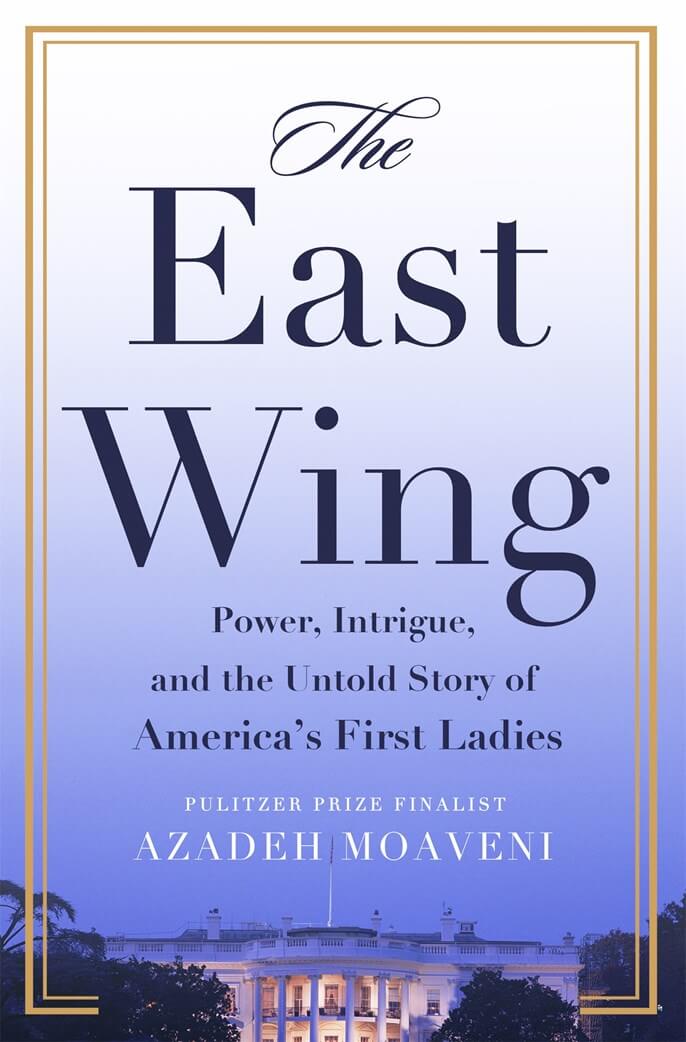
These days, hearing the words “the East Wing” is likely to conjure up the unsettling image of a dusty construction pit. Many Americans have registered dismay its destruction, whether or not they have detailed knowledge of its history. With her absorbing The East Wing: Power, Intrigue, and the Untold Story of America’s First Ladies, Azadeh Moaveni sets out to explore and analyze first ladies and their various roles in the 20th and 21st centuries, and pays special attention to their aides, who managed their wardrobes, their press communications, their diplomatic missions and so much more. In doing so, Moaveni helps reclaim some of the history in danger of being lost.
A Pulitzer Prize finalist, director of the Global Journalism program at New York University and author of Guest House for Young Widows: Among the Women of Isis, Moaveni has spent more than two decades covering global conflicts and women’s movements. Her accomplished storytelling and profound understanding of political power structures (especially the often-invisible mode of “soft power”) combine to make The East Wing both fresh and insightful.
The author begins with a look at Eleanor Roosevelt, a political legend about whom tomes have been penned. Moaveni instead focuses on the woman in the wings for Roosevelt’s success: her indispensable secretary, Malvina “Tommy” Thompson, “a key character in the origin story of the East Wing.”
From there, Moaveni devotes an impeccably researched chapter to the aide or aides of each first lady since. In “Myth Maker,” we see social secretary Letitia “Tish” Baldrige scurrying to manage Jackie Kennedy’s rogue decision to jettison a traditional political visit for a stay on the yacht of a Greek tycoon. In “Class Act,” readers are treated to an in-depth look at the camaraderie Barbara Bush and press secretary Noelia Rodriguez—the first woman of color to hold a senior position in the East Wing—nurtured among their staff. Melania Trump gets two chapters, separated by a chapter devoted to Jill Biden and senior adviser Anthony Bernal, titled “Bunker.”
Each account brims with intriguing details, making this the kind of book that is bound to prompt conversations. The East Wing includes a complete bibliography, source notes and an index, and concludes with a heartfelt, even optimistic epilogue titled “The East Wing Is Ours.” Moaveni reminds us that while the physical structure of the East Wing may be gone, “its legacy is untouchable.”