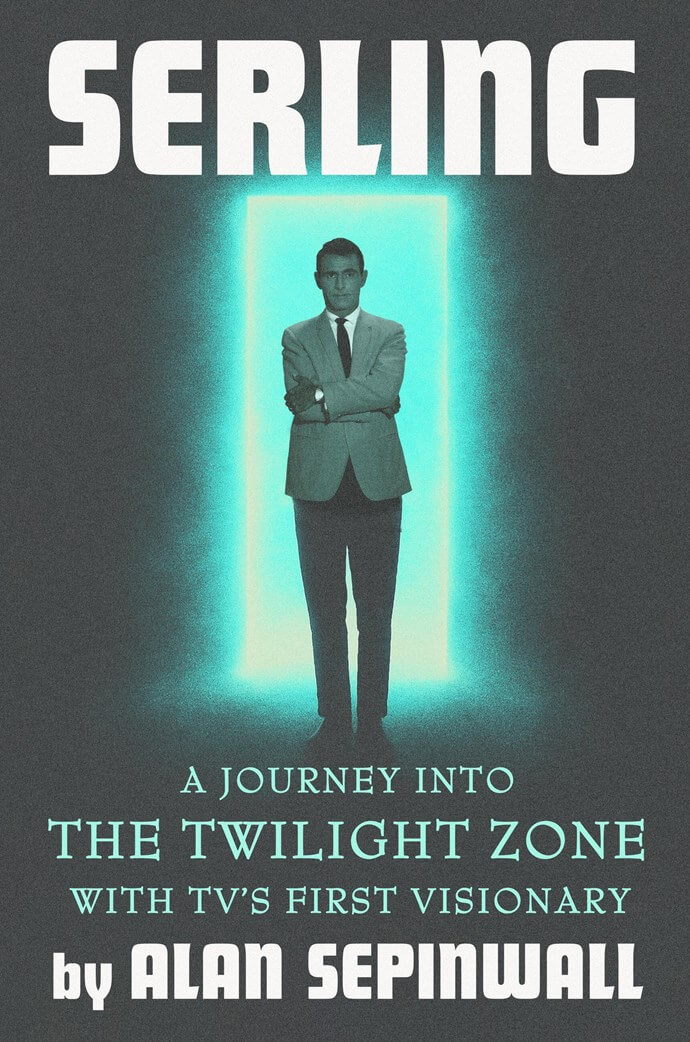
It’s fascinating to learn about the inspirations for and driving forces behind cultural icons, and Serling: A Journey Into the Twilight Zone With TV’s First Visionary provides that kind of in-depth education.
Before Alan Sepinwall began writing his insightfully presented chronicle of Rod Serling’s extraordinary life, he “worried that I wasn’t enough of a Serling expert to write this book.” Thanks to exhaustive research, hundreds of interviews and hours of watching and rewatching Serling’s work, the TV critic and author (Saul Goodman v. Jimmy McGill, The Revolution Was Televised) has certainly become one.
Fans of Serling’s oeuvre will find the book to be a valuable resource sure to fuel even greater appreciation of the man who—despite his accomplishments in TV, film, books, activism and education—once said “I have this horrible feeling that I will never be remembered.”
The contrast between Serling’s talent and his not infrequent crises of confidence is a recurring theme in Serling, as is the autobiographical nature of his work. Sepinwall notes that he once said, “What I write is a part of me,” and in 13 chapters named for Twilight Zone episodes, the author leads readers through Serling’s backstory, including his Binghamton, New York, childhood; his start in Cincinnati radio; his traumatic service as a WWII paratrooper; his family life with wife Carol and daughters Anne and Jodi; and his tenures in New York City and Hollywood.
Throughout Serling, Sepinwall provides multilayered explanations of the auteur’s work and habits, such as his addiction to smoking and his staunch dedication to the Dictaphone as a writing tool. He also quotes a murderers’ row of superfans—J.J. Abrams, Pamela Adlon, Steven Spielberg, Jane Schoenbrun, Jordan Peele and more—and marvels that everything from music (Rush, Anthrax, Ariana Grande) to TV (The Simpsons, Lost, Star Trek) to the Tower of Terror ride at Disney World bears Serling’s imprint.
Serling’s beloved schoolteacher, the late Helen Foley, once said, “He never wanted to grow old. . . . He never did grow old.” Sepinwall’s revealing, thought-provoking tribute to the complicated and endlessly influential Serling will help ensure he lives on.