Formula 1 has always been a pursuit of fractions. A few tenths of a second, several grams of weight or a marginal improvement in efficiency can separate victory from the rest of the grid. Increasingly, luxury is finding its place within that pursuit.
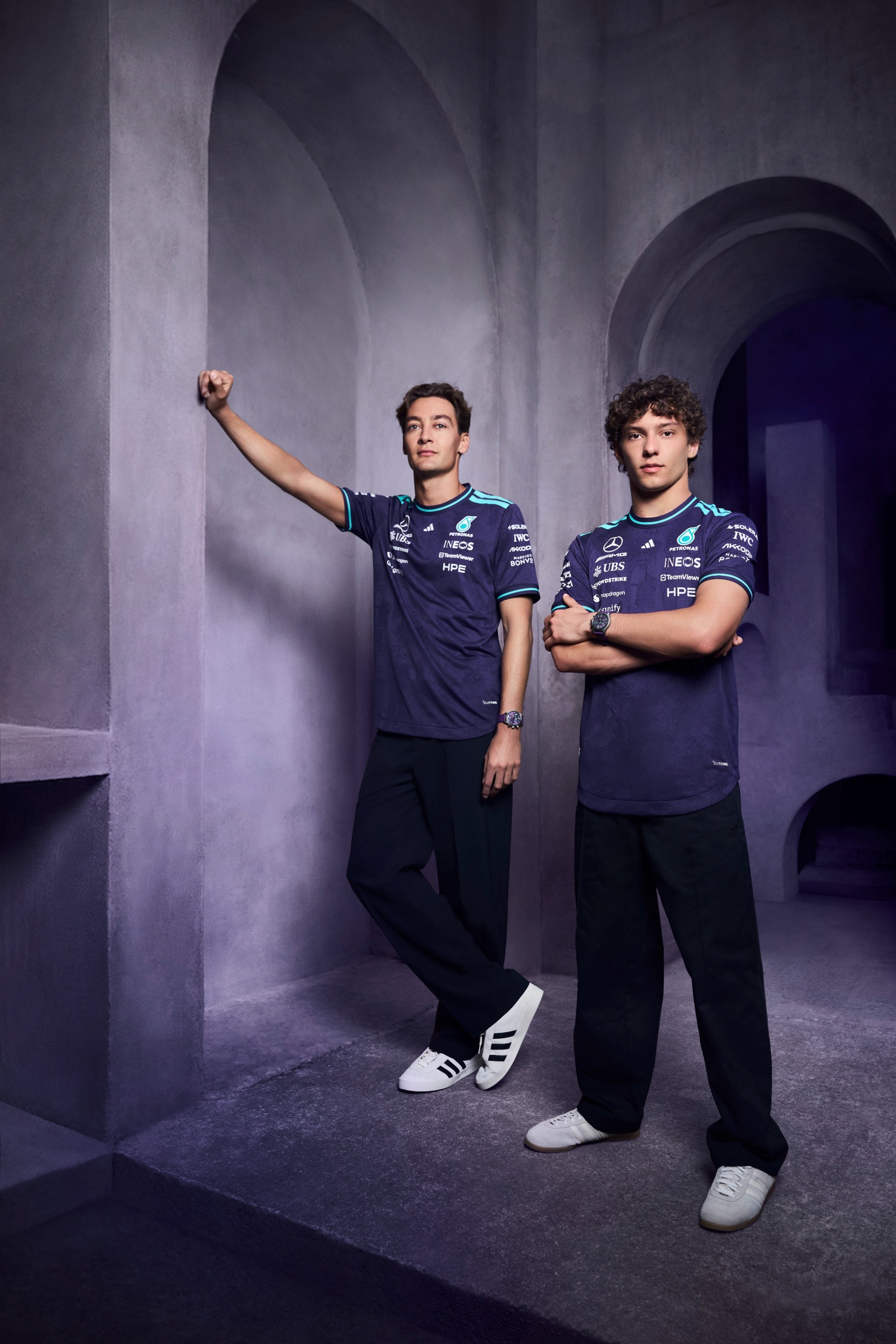
Ahead of the 2026 Singapore Grand Prix, IWC Schaffhausen has unveiled the latest expression of its longstanding partnership with the Mercedes-AMG PETRONAS Formula One Team: a Pilot’s Watch Chronograph 41 created with Singapore specifically in mind. Its deep purple dial takes inspiration from the Vanda Miss Joaquim, Singapore’s national flower, while PETRONAS green details connect it unmistakably to the team.
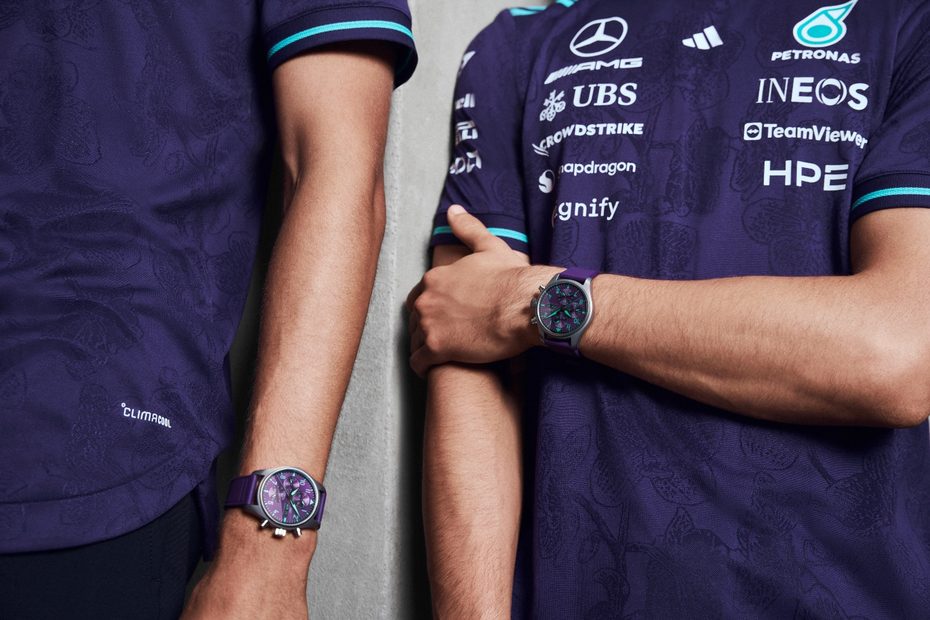
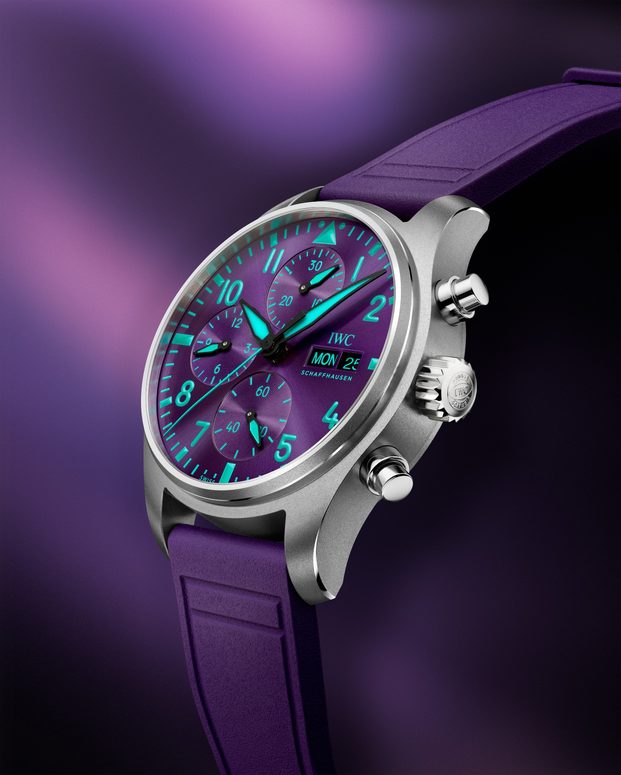
George Russell and Kimi Antonelli wearing the Pilot’s Watch Chronograph 41 Mercedes-AMG PETRONAS Formula One™ Team. Image courtesy of IWC Schaffhausen.
The connection goes beyond colour. Its 41mm case is constructed from Grade 5 titanium, valued in Formula 1 for its strength-to-weight ratio and heat resistance; the metal also has practical applications within race cars, including the protective Halo structure above the cockpit.
It is a particularly fitting object for a Singapore race weekend. Yet the watch also represents something much larger than a local tribute.
From IWC and TAG Heuer to Richard Mille, Girard-Perregaux and TUDOR, watchmaking has become deeply embedded in Formula 1. Fashion is following, with BOSS, Tommy Hilfiger and Louis Vuitton extending the sport into wardrobes, craftsmanship and lifestyle.
The relationship between Formula 1 and luxury has evolved well beyond traditional sponsorship, becoming increasingly intertwined with how the sport is experienced, styled and perceived.
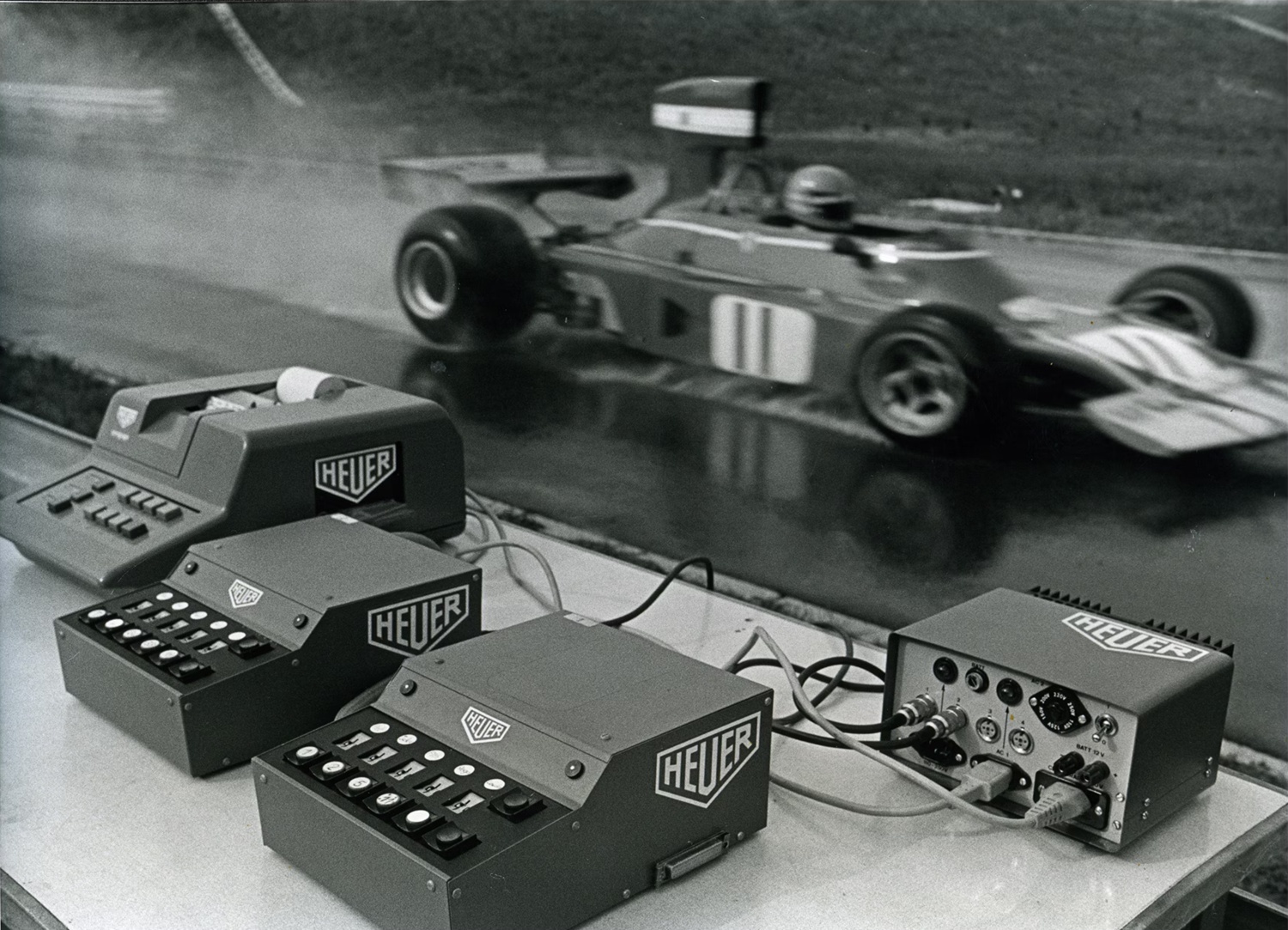
Why Watches Got There First
Few luxury categories have as natural a relationship with motorsport as watchmaking.
Precision is the obvious connection, but it is only the beginning. Mechanical watches and Formula 1 cars share an obsession with engineering, reliability, materials and the incremental improvements that can appear inconsequential until they are measured against the highest standards.
IWC’s relationship with Mercedes-AMG PETRONAS dates to 2013. Its 2026 Singapore edition is the fourth official team watch since 2022 and, importantly, these are not merely commemorative objects: IWC says the watches are worn trackside by mechanics, engineers and other team members, as well as personnel at the team’s Brackley headquarters.
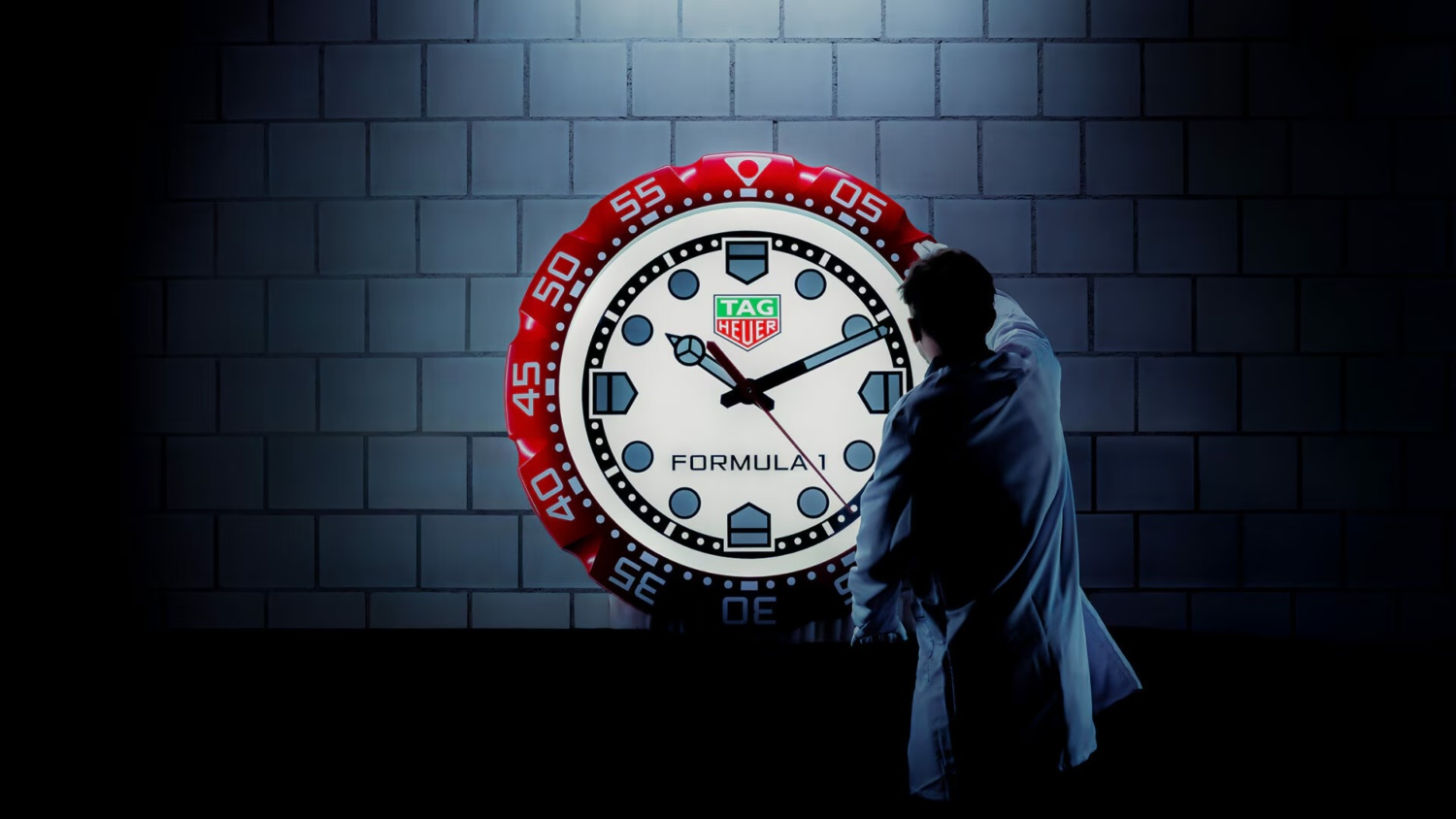
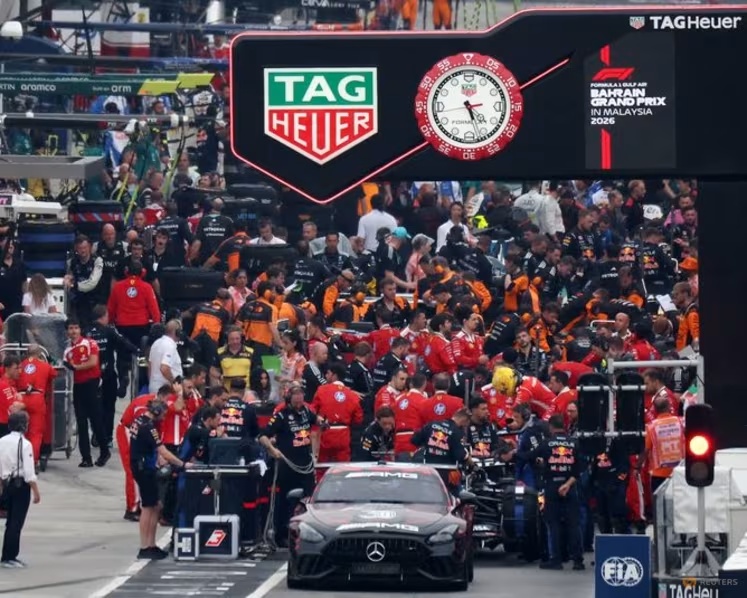
Measuring 1.2 metres in diameter, these timekeeping instruments draw inspiration from the 1986 TAG Heuer Formula 1 Series 1 watch and its motorsport heritage. Images courtesy of Tag Heuer and Reuters.
Elsewhere, TAG Heuer’s return as Formula 1’s Official Timekeeper gives watchmaking a championship-wide presence, while its separate association with Oracle Red Bull Racing connects the brand directly with one of the grid’s most recognisable teams.
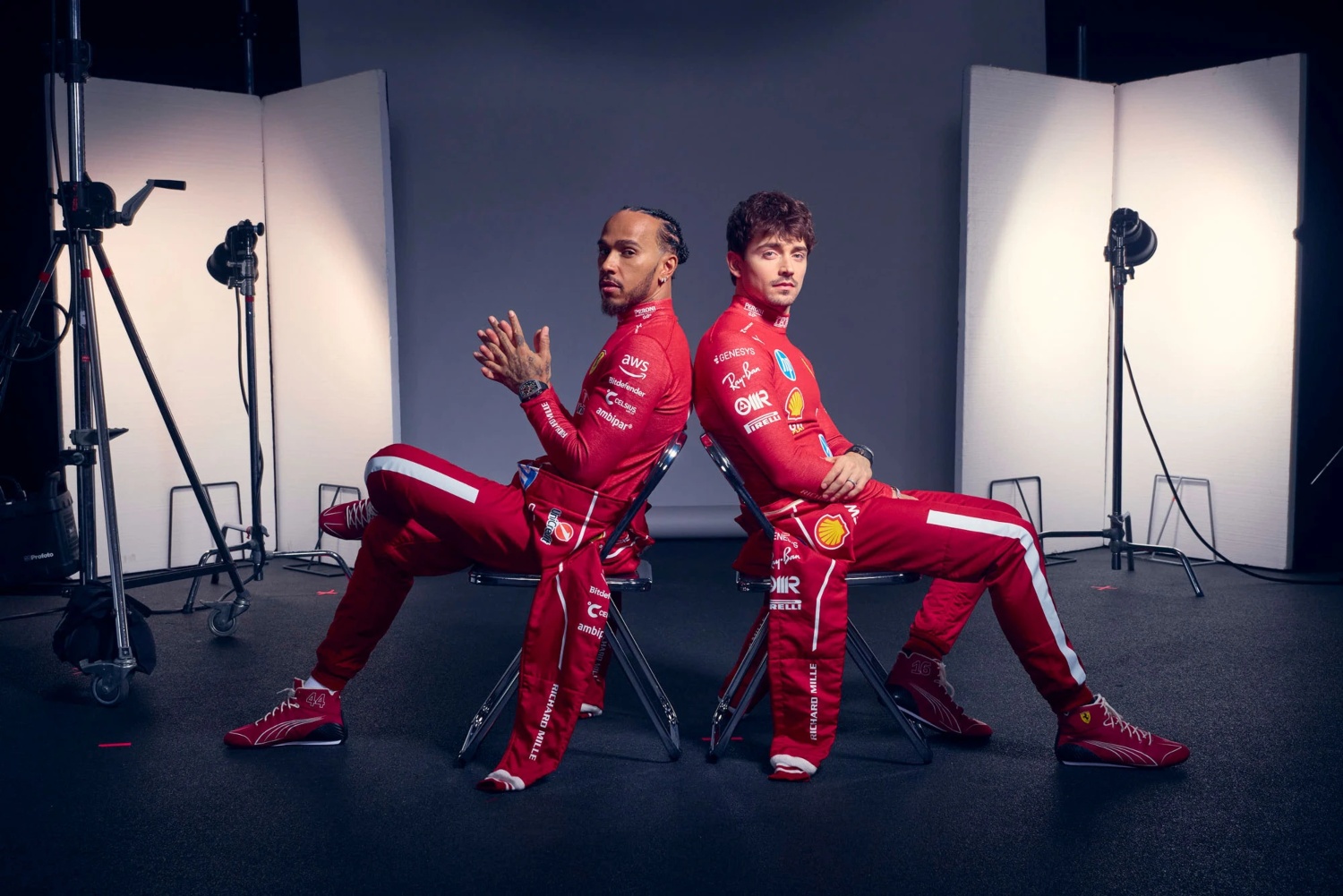
With Richard Mille, the relationship becomes more technical still. Its partnership with Ferrari began in 2021 and extends across Scuderia Ferrari’s Formula 1 programme as well as Ferrari’s other motorsport activities. The RM UP-01 Ferrari became perhaps the most extreme expression of the collaboration: a watch measuring just 1.75mm thick, developed through more than 6,000 hours of work and testing.
Richard Mille’s separate relationship with McLaren F1 Team follows a similarly engineering-led philosophy. The partnership has explored carbon composites and lightweight construction, including the RM 50-03, developed with McLaren and the University of Manchester using graphene.
These are watches associated with racing not because a chronograph is required to time a modern Formula 1 car, but because the values surrounding the sport — precision, innovation and performance — remain unusually compatible with high watchmaking.
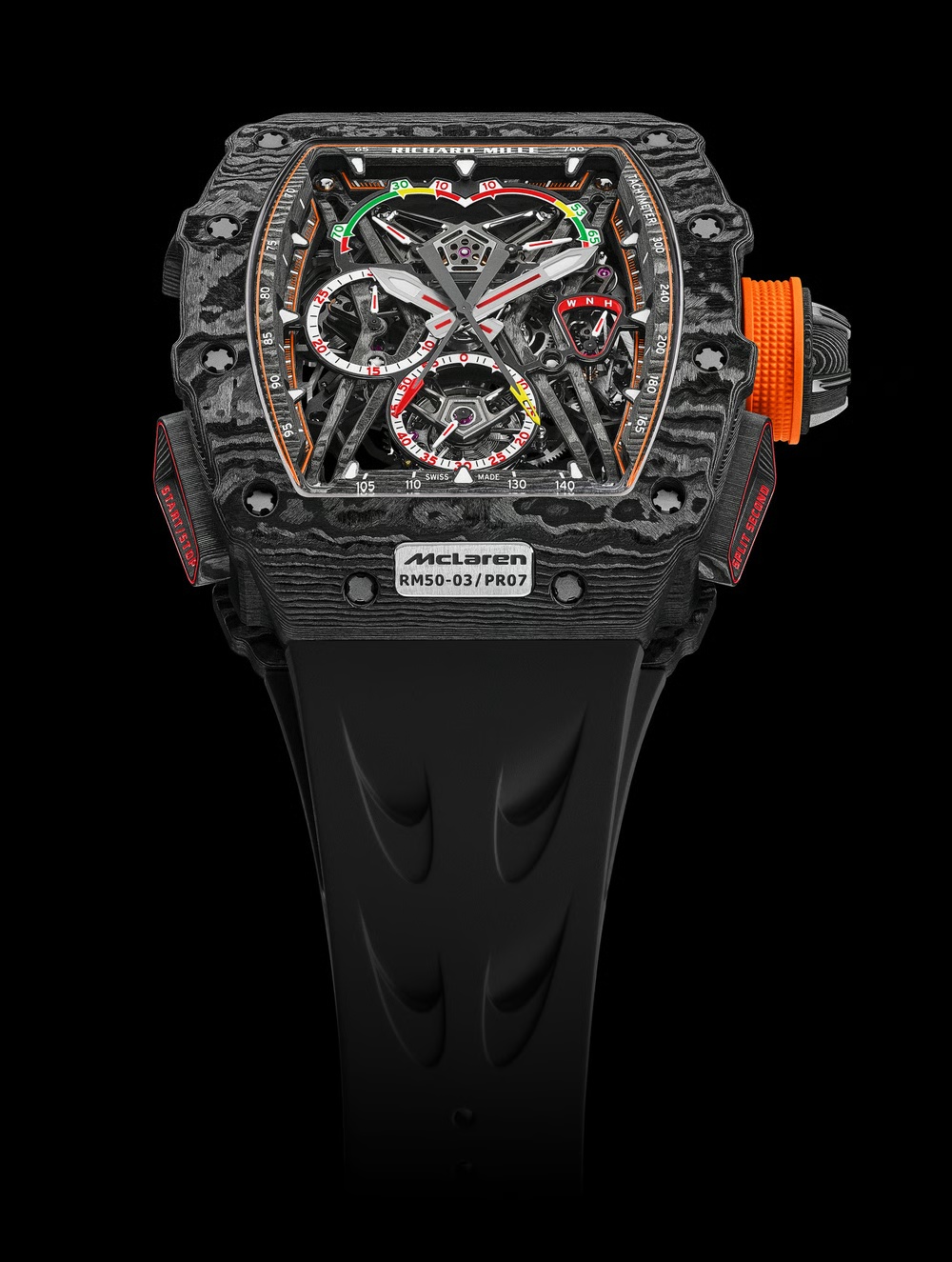
A partnership between Richard Mille and one of grand prix racing’s most successful team, MacLaren F1 highlights include the RM 50-03. Images courtesy of Richard Mille.
A New Generation of Racing Watches
The category continues to expand in 2026. Girard-Perregaux and Atlassian Williams F1 Team have already produced their first collaborative pieces: the Laureato Williams Edition and Laureato Chronograph Williams Edition. Their blue Clous de Paris dials draw directly from the Williams FW48 race car, with red detailing echoing elements of its livery.
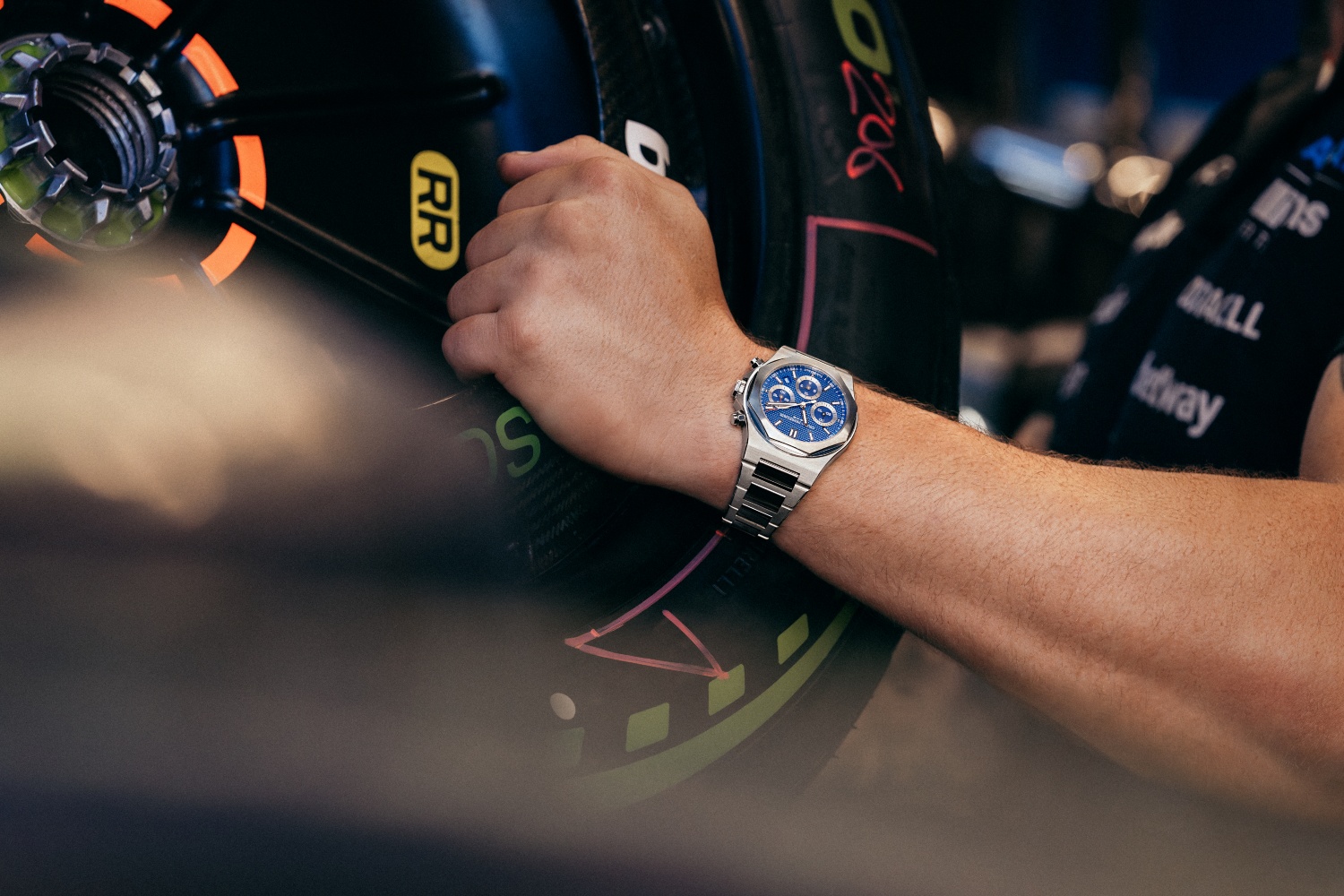
It is a partnership with a different character from Richard Mille’s technical extremity. Williams brings one of Formula 1’s longest-established racing names, while Girard-Perregaux brings a manufacture whose Laureato itself has decades of history. Both are simultaneously looking forward.
Breitling × Aston Martin provides another fresh 2026 example. The Swiss watchmaker became Official Watch Partner of Aston Martin and the Aston Martin Aramco Formula One Team in February, linking Breitling’s history in precision timekeeping with the British marque’s performance identity.
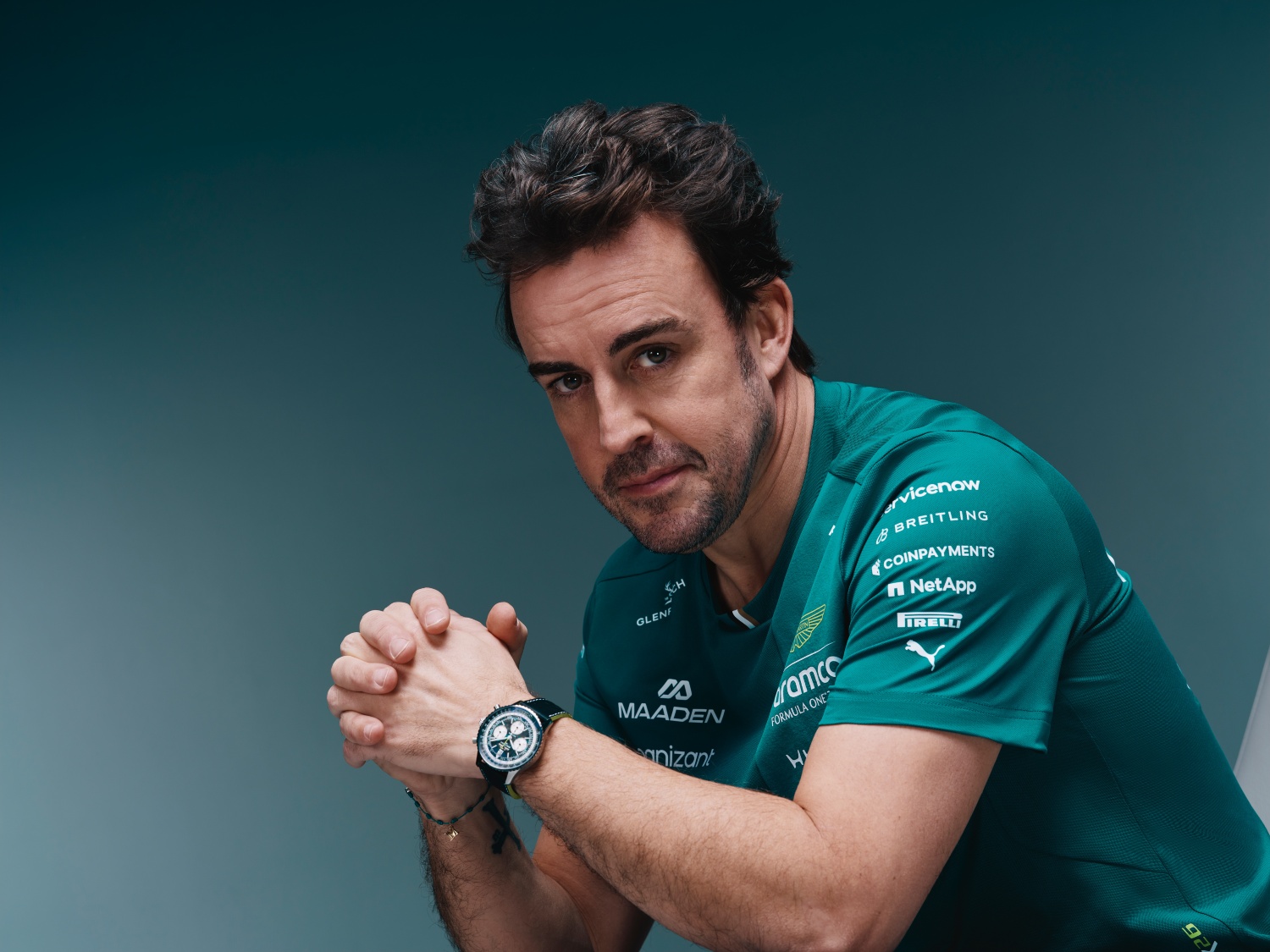
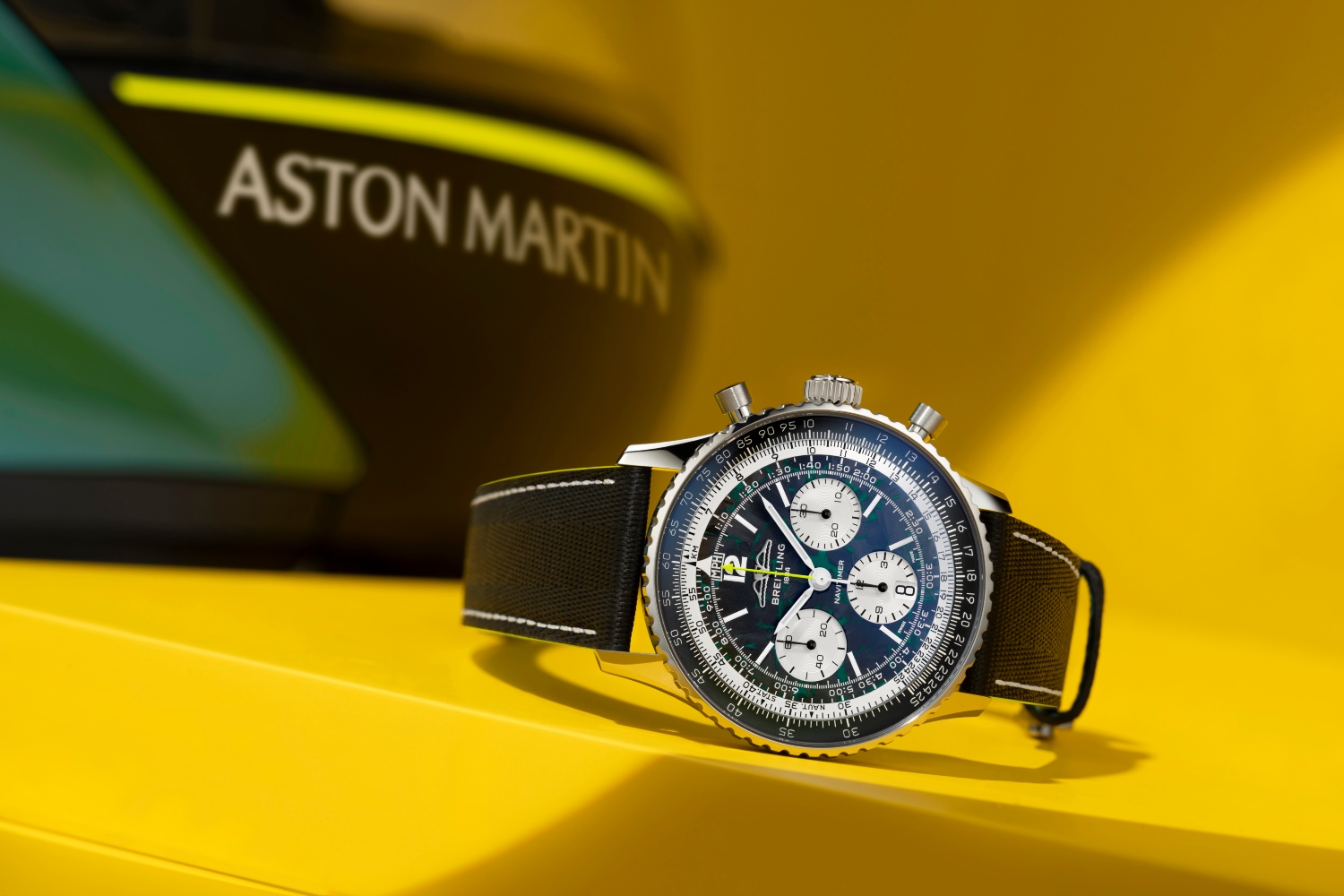
Double World Champion Fernando Alonso wears the Brietling Navitimer B01 Chronograph 43 Aston Martin Aramco Formula One™ Team. Images courtesy of Brietling.
Then there is TUDOR × Visa Cash App Racing Bulls, where the connection is less about heritage than attitude. TUDOR continues as an official partner in 2026, aligning its “Born To Dare” positioning with a younger team attempting to challenge Formula 1’s established order.
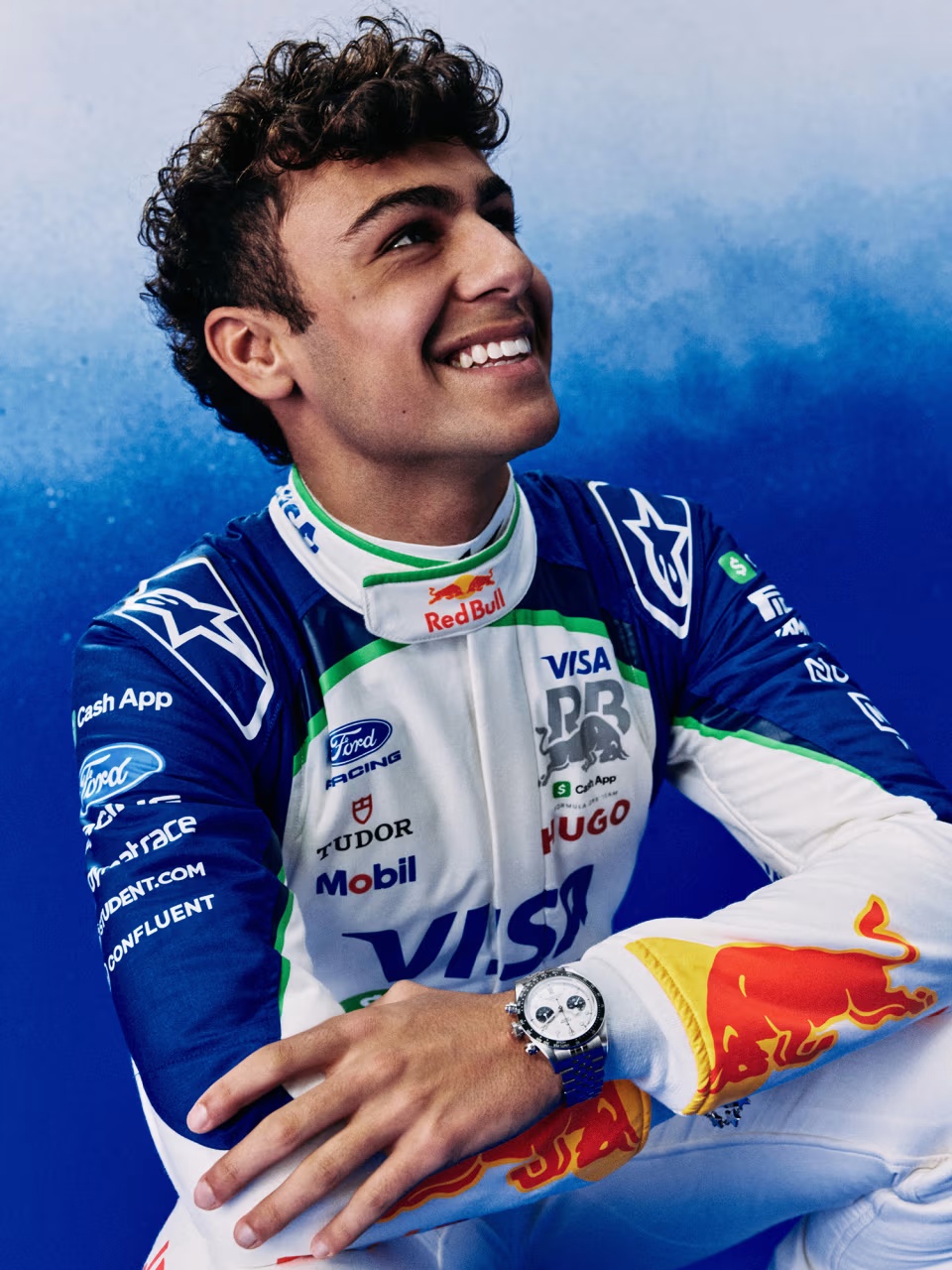
All will be visible in one form or another when the championship arrives in Singapore. But unlike IWC’s purple-dial chronograph, these collaborations are not Singapore-specific. Their significance comes from operating throughout the season, allowing Marina Bay to serve as the moment through which a much broader luxury phenomenon can be examined.
When the Paddock Became a Fashion Space
Watchmaking may have established luxury’s traditional connection to motorsport, but fashion is expanding what that relationship can mean.
Formula 1 drivers are no longer encountered only in race suits. Their arrivals have become social-media moments; paddocks attract celebrities, designers and affluent travellers; and team identities increasingly extend into what is worn away from the car.
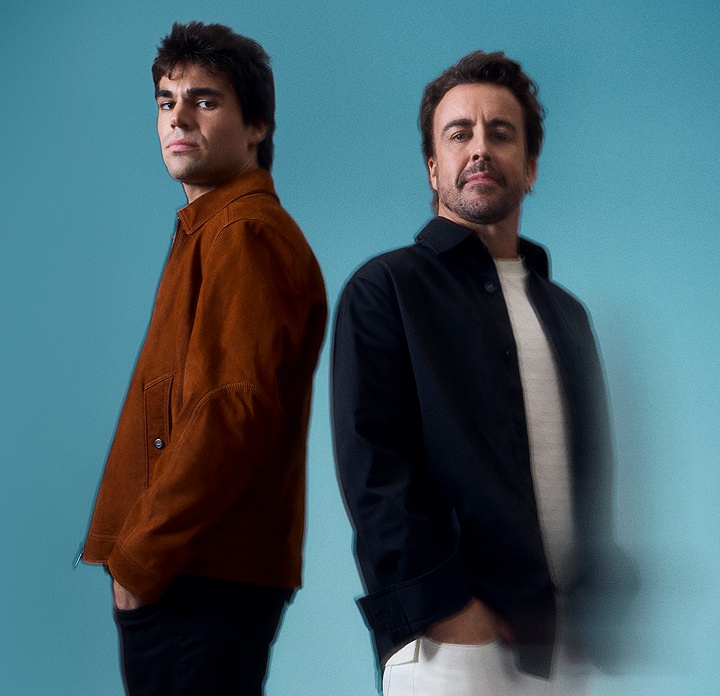
BOSS and Aston Martin illustrate that progression particularly well. Their Fall/Winter 2026 collection translates elements of automotive design into contemporary fashion, drawing on leather interiors, sculptural lines and the shared language of precision and craftsmanship.
The collaboration effectively asks what Aston Martin should look like once its identity moves beyond carbon fibre and onto the body.
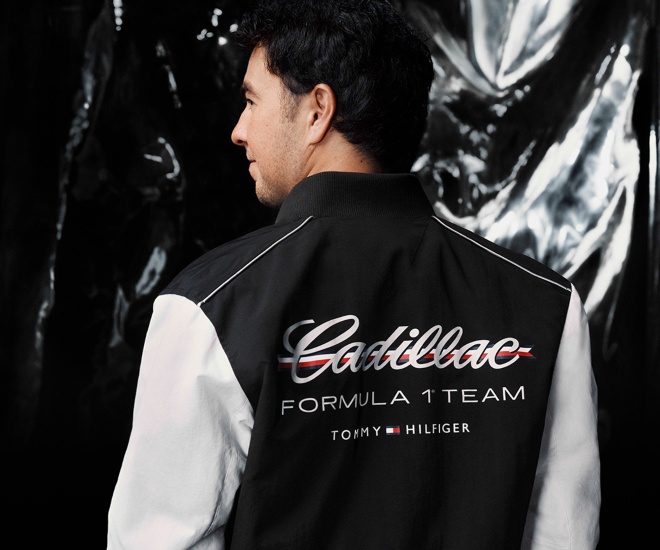
Tommy Hilfiger × Cadillac Formula 1 Team approaches the same opportunity differently. As Cadillac makes its Formula 1 debut in 2026, Tommy Hilfiger has developed team kit and fanwear around what it describes as a new expression of American motorsport style, with additional releases planned around selected races and driver moments.
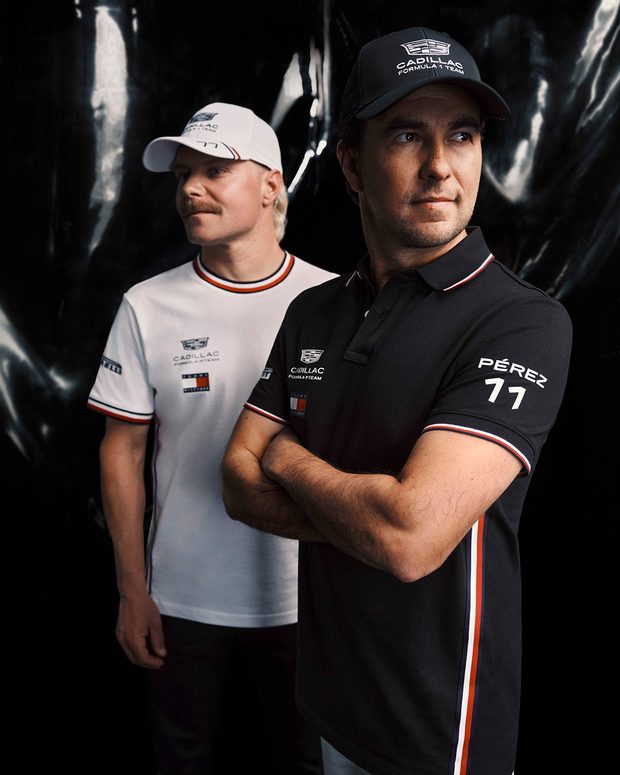
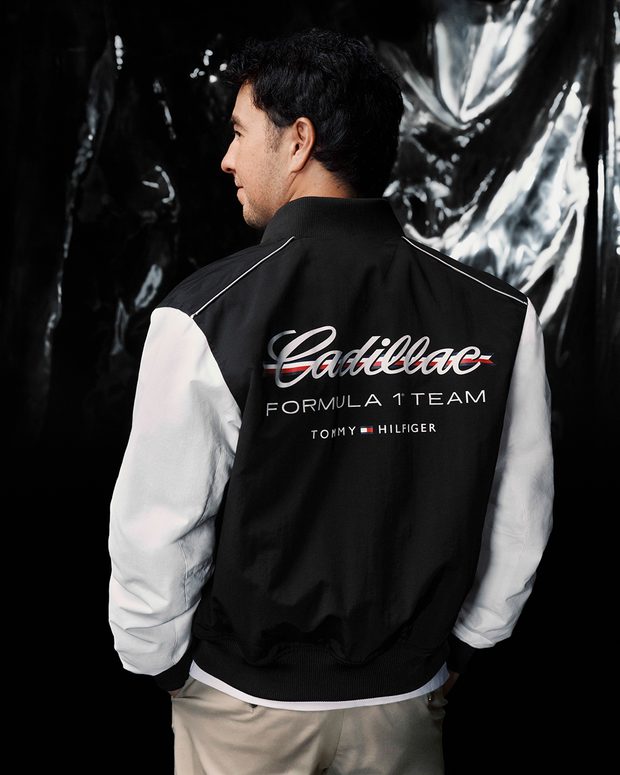
Tommy Hilfiger’s fashion collaboration with Cadillac Formula 1® Team. Images courtesy of Tommy Hilfiger.
Where BOSS and Aston Martin communicate European refinement, Tommy Hilfiger and Cadillac offer a more distinctly American combination of sportswear, pop culture and racing.
The contrast is revealing. Formula 1 fashion is becoming less about attaching a logo to merchandise and more about translating the identity of a team into something consumers can actually wear.
Louis Vuitton Turns Victory Into Luxury
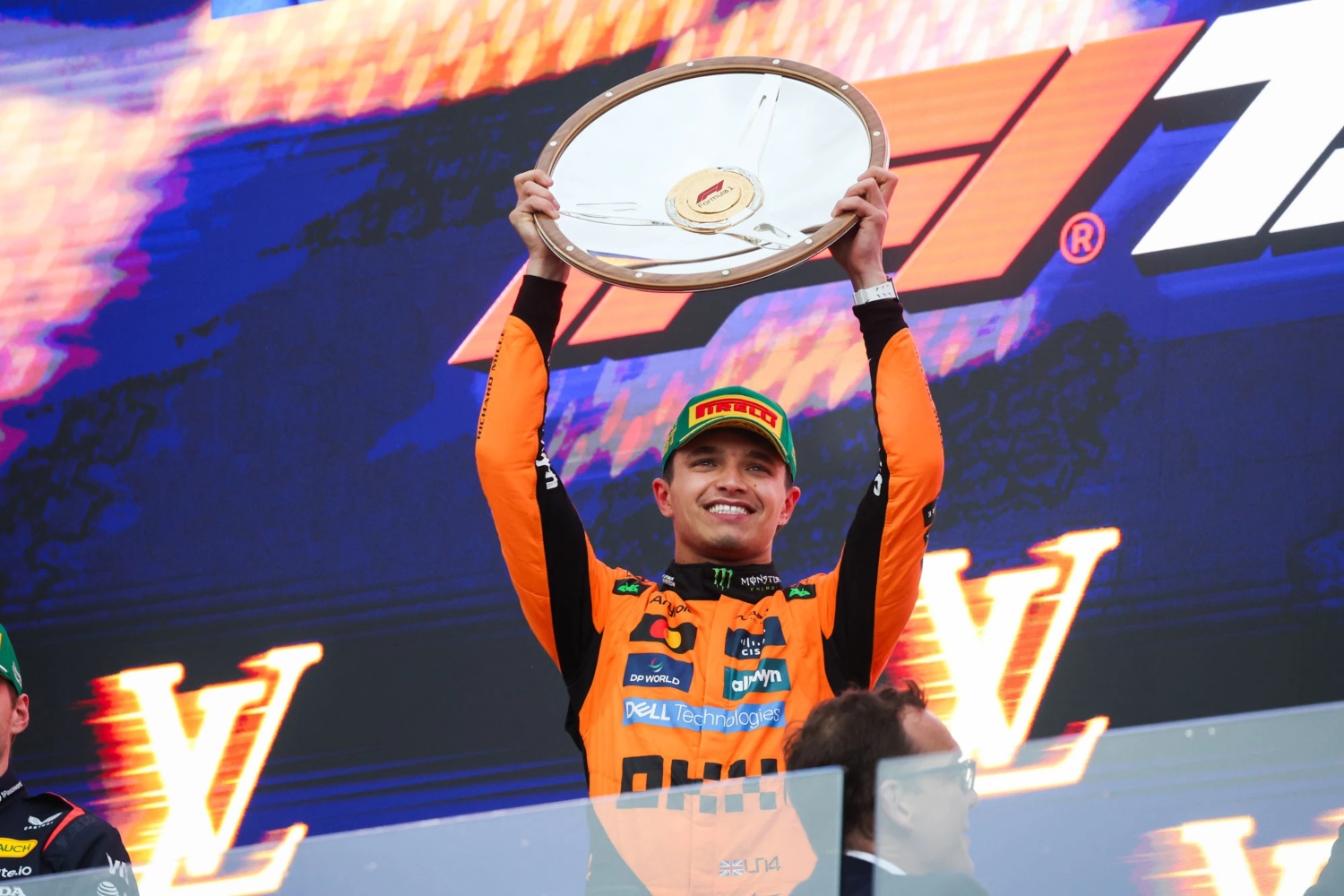
Louis Vuitton occupies another position altogether. Rather than dressing drivers or producing a racing watch, the maison creates bespoke trophy trunks for Formula 1. Under its long-term relationship with the championship, each handcrafted trunk brings Louis Vuitton’s historic travel and trunk-making codes to the moment of victory. The maison says its 2026 programme includes trophy trunks reflecting the colours and identities of individual host cities and circuits.
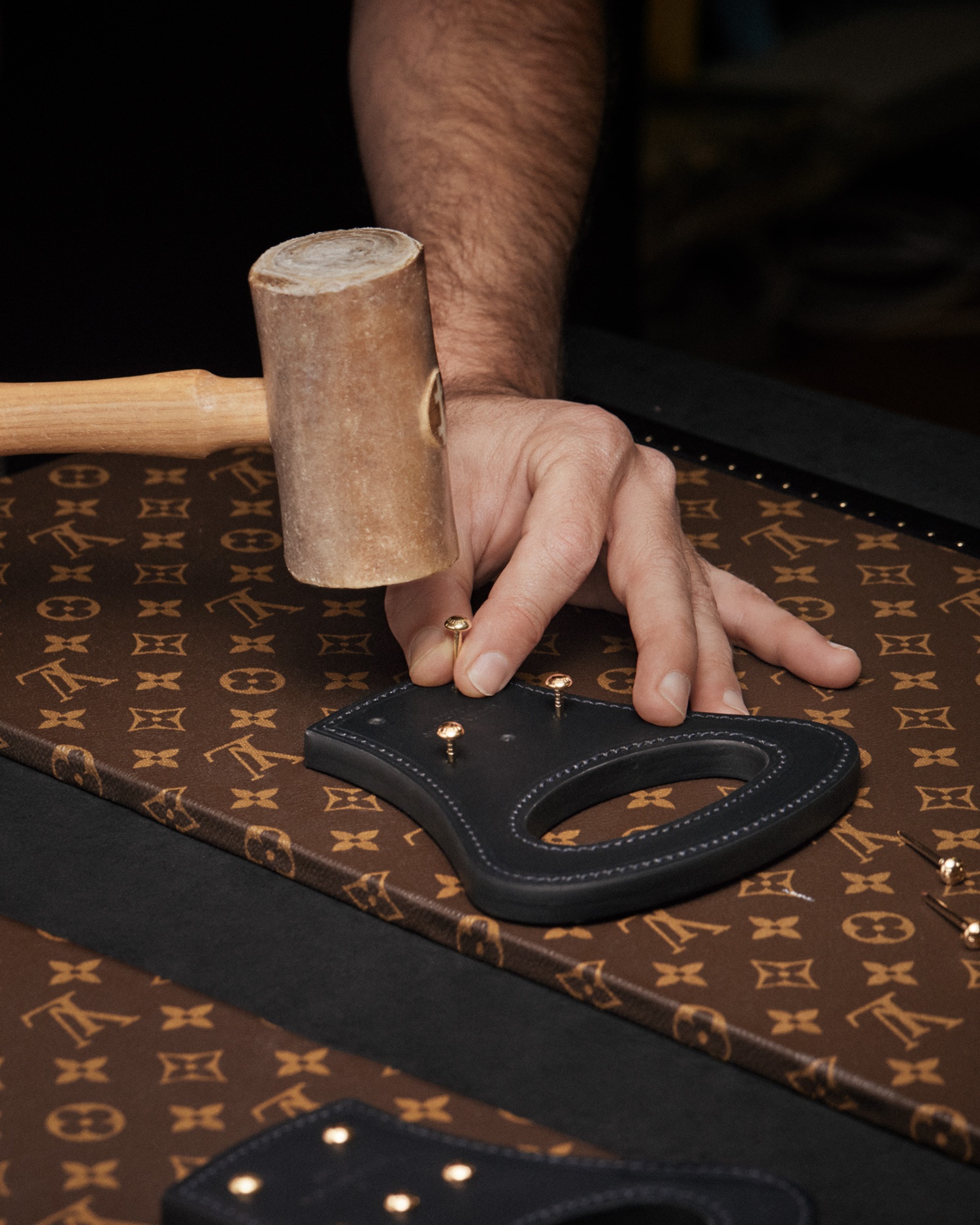
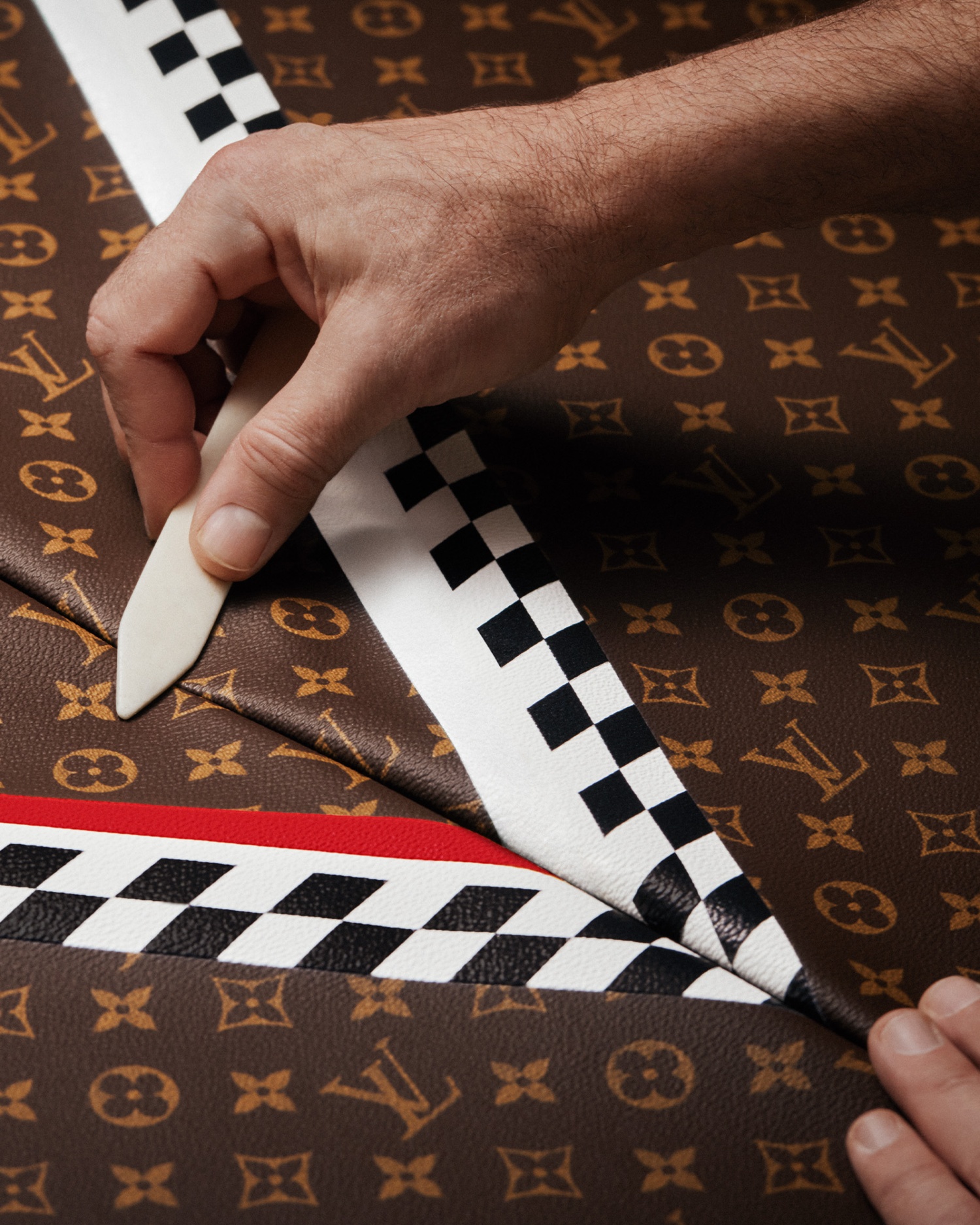
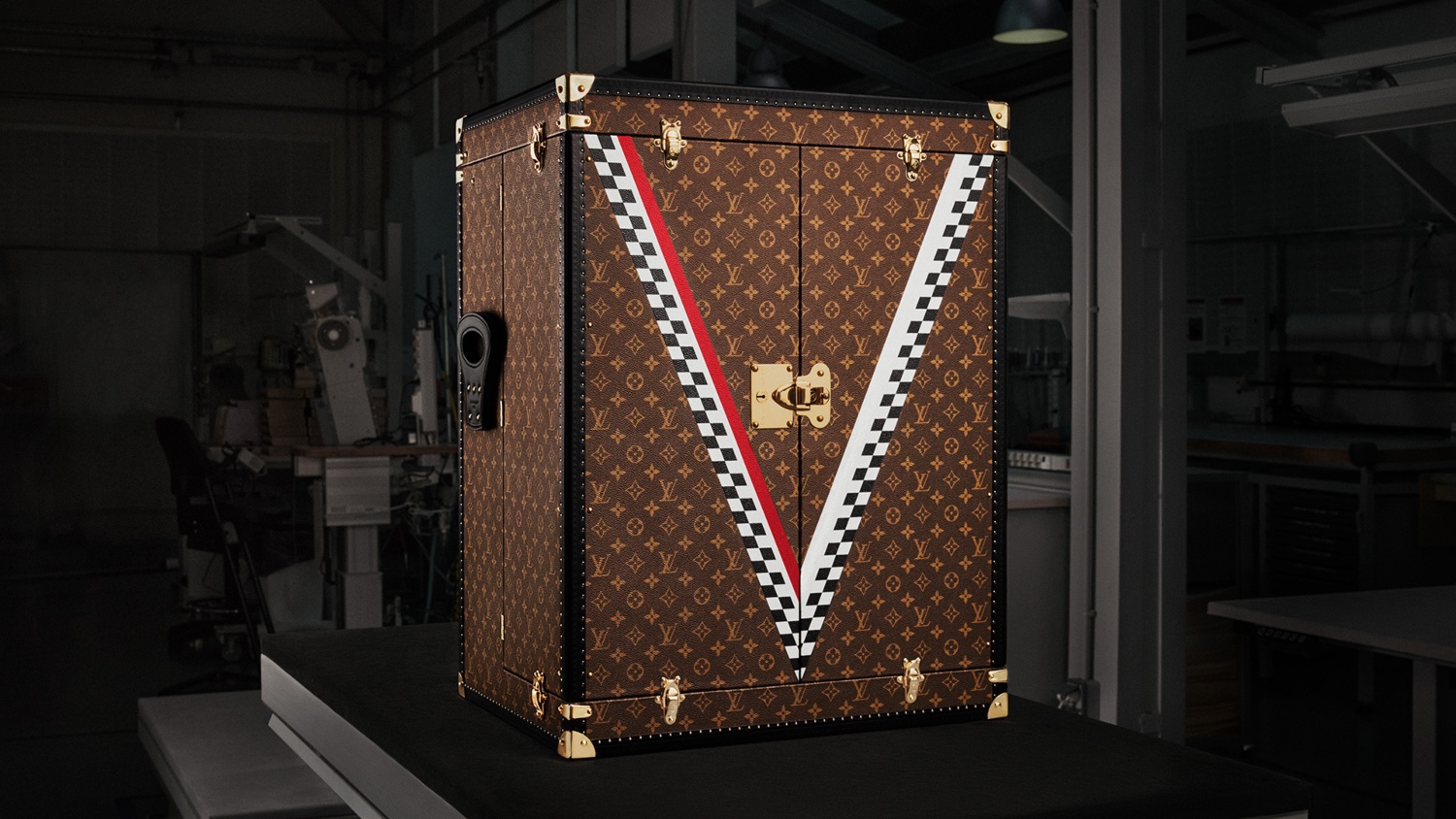
It is perhaps the most literal meeting of Formula 1 and luxury craftsmanship. Months of development and engineering decide who reaches the podium; traditional savoir-faire determines how the resulting trophy is presented.
That juxtaposition explains why the partnership works. Formula 1 provides speed, competition and spectacle. Louis Vuitton turns the outcome into ceremony.
Luxury Moves Beyond The Grid
Taken together, these partnerships demonstrate how dramatically Formula 1’s relationship with luxury has widened. Watchmaking remains the most established bridge. IWC, TAG Heuer, Richard Mille, Girard-Perregaux, Breitling and TUDOR can all draw credible parallels between horology and motorsport without requiring either discipline to become the other.
Fashion operates differently. BOSS and Tommy Hilfiger translate team identity into lifestyle, while Louis Vuitton elevates the symbolism surrounding victory itself.
Singapore brings those worlds into particularly sharp focus. IWC has created a watch specifically referencing the city, while the remaining partnerships arrive at Marina Bay as part of a global championship whose cultural reach increasingly extends beyond motorsport enthusiasts.
The attraction ultimately lies in a shared pursuit. Formula 1 makes seemingly marginal differences consequential. A fraction of a second, a lighter component or a more efficient solution can determine success. Luxury often relies on the same conviction: that details invisible or unnecessary to most can matter profoundly to those who understand them. The appeal of Formula 1 to luxury therefore lies not simply in speed or visibility, but in a common belief that something already exceptional can always be made more precise, more considered and more desirable.
For more on the latest in luxury fashion and style reads, click here.