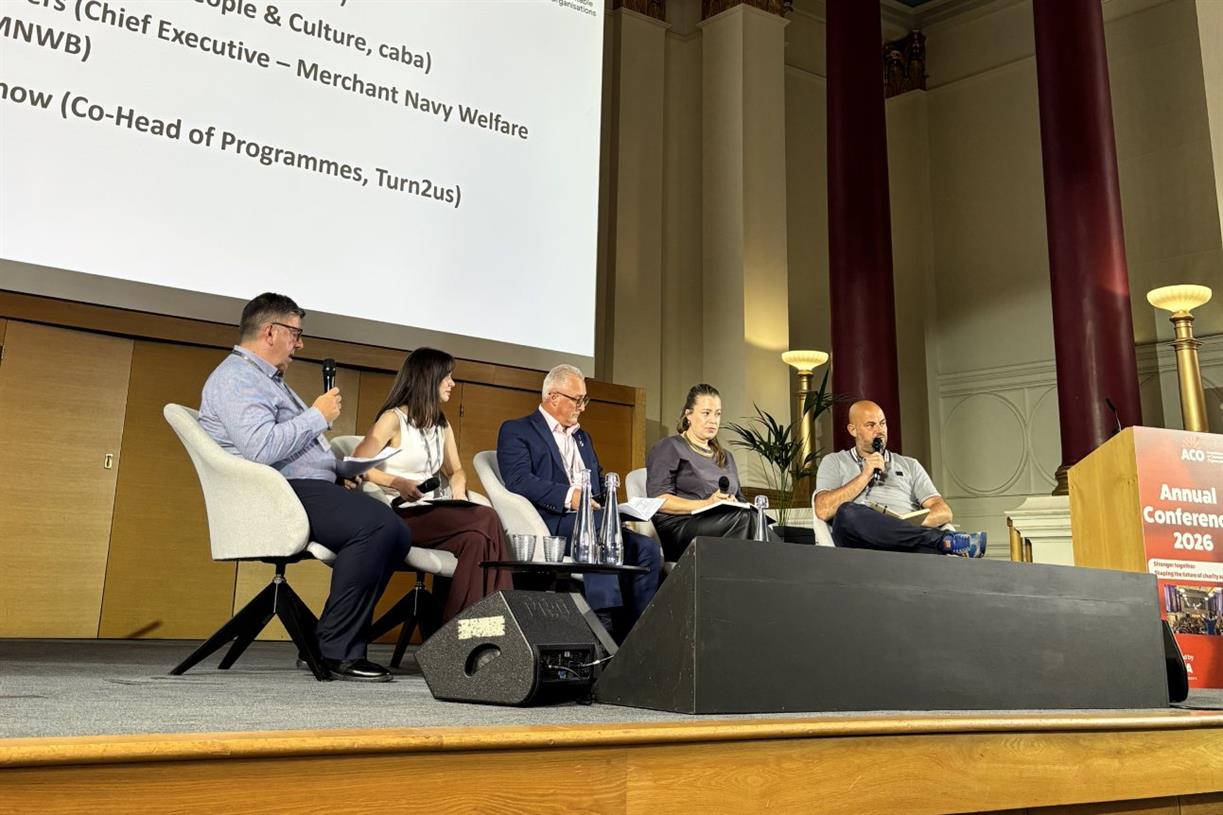
Charities with a culture of transparency around risk will be better placed to adapt to a changing world, according to the programmes lead at Turn2us.
Speaking at the Association of Charitable Organisations’ annual conference, Polly Trenow, who is the co-head of programmes at the financial insecurity charity, said leaders must be willing to talk about failure to enable transparent discussions about risk.
“Sometimes the answer is […] building the opportunity for people to reflect not just on what went well, but also what didn’t go well,” she said, adding that this has to be modelled by leadership.
“Leadership has to be willing to say: ‘Oh that thing didn’t go as well as I hoped it would and here’s the reasons why and here’s how we might do it differently,’” Trenow said, as this enables discussions about risk.
“When they [staff] talk about risk, you can become an organisation that will adapt and manage risk better than when people are constantly penalised for things that don’t go well.”
Trenow added that charities also need “creative spaces” to allow staff to pitch new ideas.
“People want scaffolding but they also want autonomy and a chance to be creative within their work,” she said.
“If you shut down that creativity, you forgo the opportunity for your teams to evolve and you’re not making the best use of the skills, capacity and brilliance that already exists within your teams.”
Suzie Dawes, head of people and culture at the Chartered Accountants Benevolent Association, said that to improve retention, charities must tap into employees’ connections to the mission.
“People that work in our organisations are so deeply connected to our purpose,” she said. “They are purpose-driven individuals and we should really recognise that and support it throughout their employment.”
Dawes acknowledged that charities may feel they must compete with the private sector when it comes to their value proposition as an employer, saying: “In a sense we are, but in another sense we are not, because we’re attracting people who want to make a difference in an organisation that is about purpose and mission.”
She urged charities to consider how best to support and engage those purpose-driven individuals, including by helping them remain connected to their role and exploring ways they can learn, grow and develop within the organisation.
Stuart Rivers, chief executive of the Merchant Navy Welfare Board, agreed, saying: “Benefits don’t always come in terms of the top-line salary. There’s lots of ways to motivate people but I think one of them is their connection to the cause.”
The panellists also discussed the role of AI in recruitment and retention in the charity sector.
Referring to concerns about jobs being taken by AI, Rivers said: “I think it re-emphasises the need for that human element within us, within charitable work.
“We need to have relationships, people depend on that. So I think there’s still a job for us, it’s just that the job has changed.”