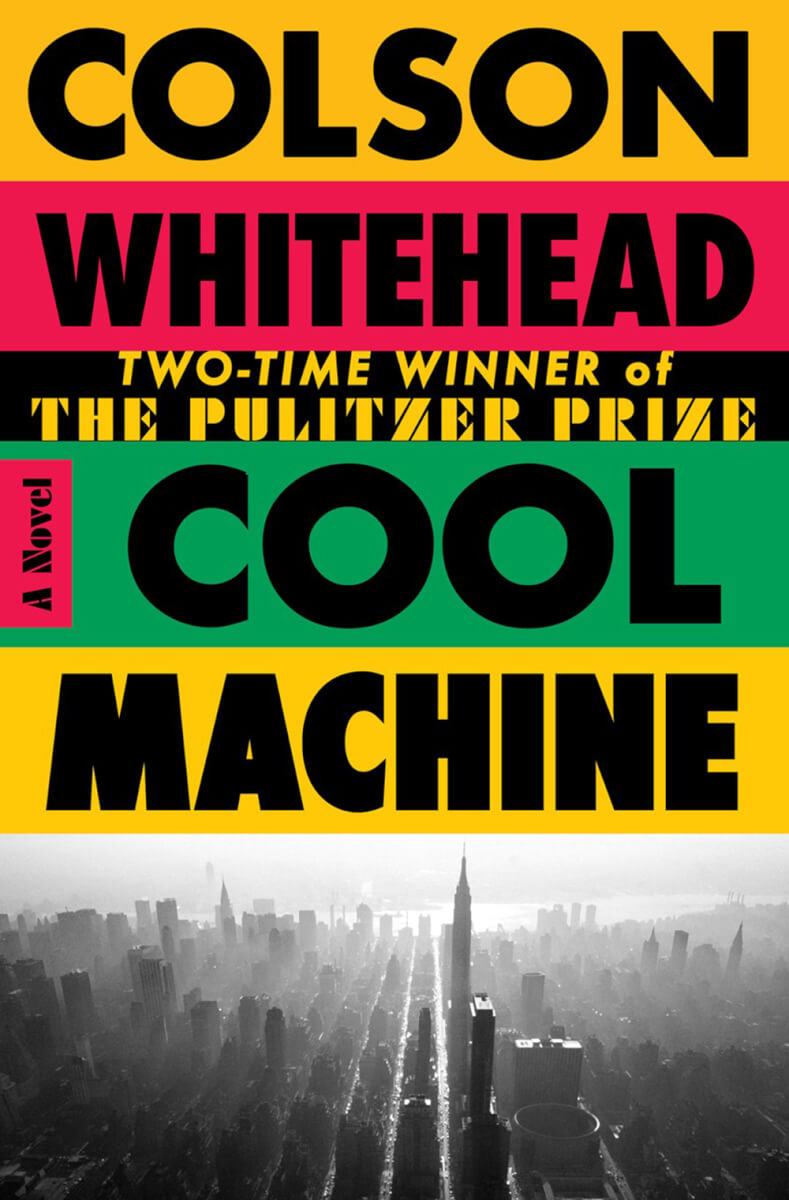
As they approach the ends of their careers, writers, like criminals, often dream of one last big strike: the cherry on top of the sundae, the defining moment that will stand as the pinnacle of their craft. While we’re happy to report that Colson Whitehead has, by any reasonable measure, decades of writing ahead, his latest novel, Cool Machine, seems a bit like that grand finale. Maybe it’s because this is the last volume of the Harlem Trilogy that began with 2021’s Harlem Shuffle and continued two years later with Crook Manifesto. Maybe it’s because the arc of furniture salesman and occasional fence Ray Carney, which began in 1959 in the first book and runs through 1986 in this one, feels like it’s reached a logical conclusion. In any event, the two-time winner of the Pulitzer Prize for fiction has swung for the fences and connected solidly.
Like the first two novels in the trilogy, Cool Machine comprises three episodes, linked by Ray’s shifting fortunes and his inability to fully embrace the straighter side of life afforded to him by his furniture business. In the first, set in 1981, Ray finds himself in need of some quick cash when his wife’s faltering travel agency is unable to procure the loan that will keep it afloat. He wants to be a good husband and sees himself as a provider, and when the opportunity arises to hook up with a legendary criminal’s crew for one “money job” and one “personal job,” he takes it.
Ray is largely out of the picture in the second of the three episodes, in which his irascible friend Pepper takes on a bodyguard gig for a shady art collector. When the payoff goes sideways, Pepper finds himself both hunter and prey in a deadly cat-and-mouse game involving a brutal thug known only as the “Melancholy Hitman.”
To close out the novel, Ray attempts to fulfill a perceived obligation when his late cousin’s son is apparently being fitted for a murder frame and needs help navigating the mean streets of Manhattan, with which Ray is only too familiar.
In many ways, Ray plays the East Coast counterpart to Walter Mosely’s Easy Rawlins, both very much products of their environments (Harlem and Watts, respectively), both keen observers of the larger societal forces that alternately lift them up and smack them down.
And maybe, just like a criminal aiming for the ultimate score, Whitehead will hit the Pulitzer trifecta with this urban masterpiece.