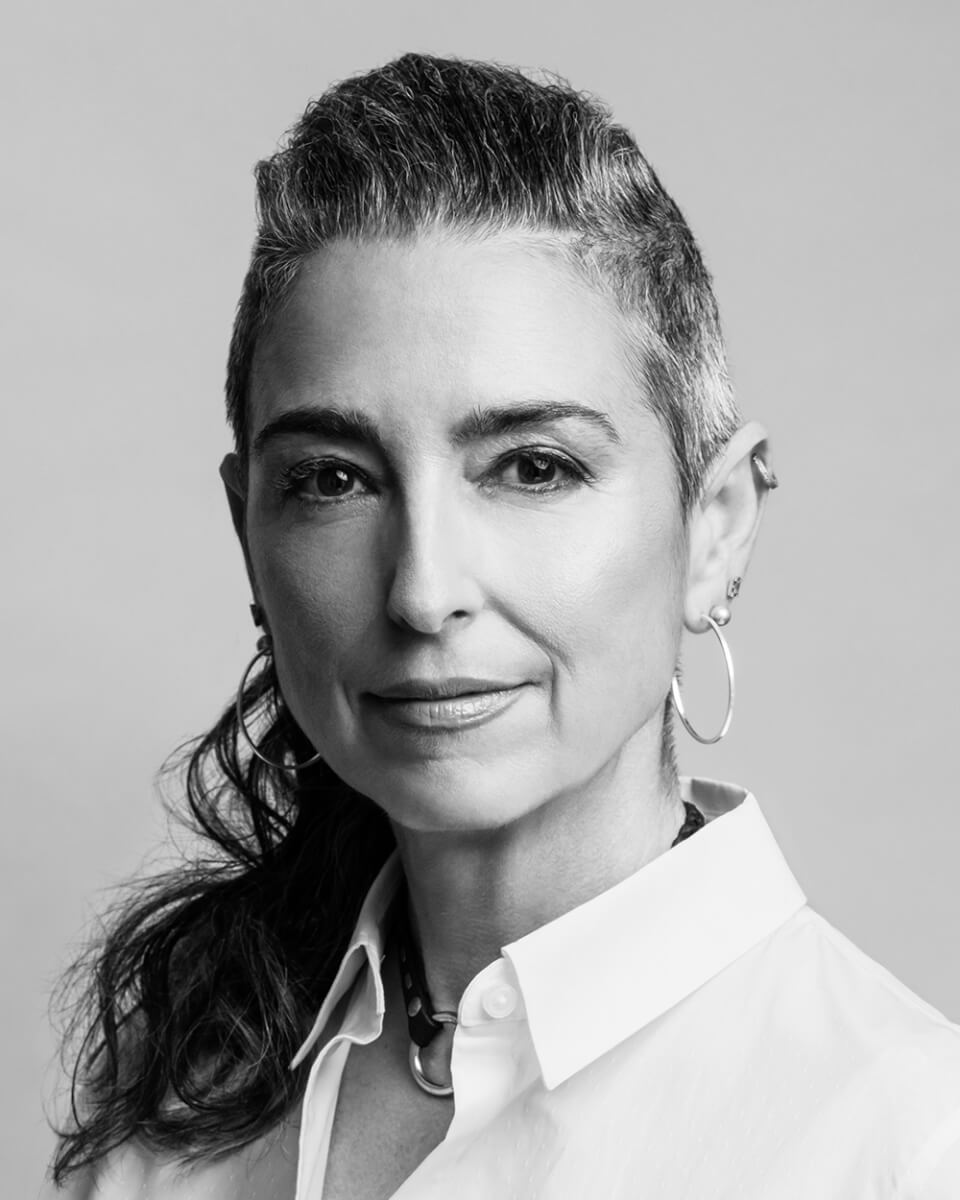
Celebrating America’s 250th isn’t just about the Founding Fathers, as Denise Kiernan reminds us in her impressive Obstinate Daughters: The Rebels, Writers, and Renegade Women Who Ignited the American Revolution. Engaging, informative and surprising, Obstinate Daughters goes beyond documenting the transformative events of the American Revolution to ask questions about America today—and who belongs in history.
You trace your love of history back to your girlhood. What inspired you to turn your attention to the women of the Revolutionary era?
The bicentennial made an impression on me as a child that never really left. I’ve written about the signers of the Declaration of Independence and Constitution in the past, and noted how the women in their lives were often presented as afterthoughts and asides. I wanted to bring my curiosity about the time period together with my desire to amplify marginalized voices and experiences. I had been gathering individual stories for years and finally decided to create a narrative of the founding of the United States as seen through the eyes of people who normally don’t get a lot of attention, but whose contributions were critical.
You write of “a pyramid of remembrance” with “important” people on top. Can you say how this notion informed the way you approached this project?
In a lot of ways, I thought about one of my earlier works, The Girls of Atomic City, while I was thinking about how this book might take shape. The thousands of young women who worked on the first atomic bomb were a crucial part of that project, but most histories focus on a handful of key individuals—Oppenheimer, Groves, Fermi, Szilard, etc. Much in the same way, the story of the American Revolution is usually told through battles and events and the roles that people like Washington, Jefferson, Adams, Lafayette and others played. I wanted to shift the perspective, to fill in the gaps and add some of these other stories into the narrative. It takes a lot of people and sacrifices to shape a nation. Nothing happens in a vacuum.
The book includes personal sections detailing your research journeys, a sort of historian’s travelogue. Was structuring your book this way part of your original vision?
Yes and no . . . and yes again. I always wanted there to be a travelogue element, something that allowed me to share what I learned while spending time in some of these places in the present day. As someone who writes about history from underexplored points of view, I am always curious about whose stories we choose to remember and how we do—or do not—share them with future generations. I was not sure, however, how those modern-day sections would fit into the overall historical narrative, and I changed the structure and placement of road trip elements a couple times. The final structure is, however, what I originally had in mind. I guess I had to move away from it just to come back to it again with a bit more confidence.
“I had been gathering individual stories for years and finally decided to create a narrative of the founding of the United States as seen through the eyes of people who normally don’t get a lot of attention, but whose contributions were critical.”
While some of the women in your book are well-known, others, such as the Cherokee leader Nanye’hi, whose English name was Nancy Ward, may be less familiar. Did you know much about her before you began this project?
What information I saw here and there of Nanye’hi/Nancy Ward was very focused on her role assisting the patriot cause. I was equally interested in what her choices meant to the Cherokee people. That is a more complicated and nuanced story, and it allowed me to examine the significant role women played in all Indigenous communities, and highlight the challenges and difficult decisions faced by all individuals during a time of war.
Of all the women that appear, was there one whose life and story touched or inspired you more than any other?
It is hard to pick just one person—so many of these women inspire me to no end. I’ve been interested in Eliza Pinckney and her role in the indigo market for more than a decade. The fortitude of women like Elizabeth Freeman and Mary Perth despite their enslavement is remarkable. Maybe it’s because I’m a journalist at heart, but Mary Katharine Goddard is someone whose story has always stuck with me. Goddard published a major newspaper during a time of war, sold stationery supplies, handled the mail, printing and correspondence for the Continental Congress, and eventually served as the first woman postmaster of the united colonies, yet she has never had a postage stamp in her honor. And she remains the only woman to have her name printed on an official copy of the Declaration of Independence—the first copy, in fact, that listed the names of all the signers. She was smart, hardworking, outspoken, groundbreaking, and I think she deserves a lot more attention.
In the course of your research, did you uncover new information about well-known historical figures that surprised you?
I was often surprised how the lives of well-known figures intersected with people and communities in Revolutionary history that we don’t often discuss. I didn’t know that George Washington corresponded with poet Phillis Wheatley, or that on the eve of the crossing of the Delaware, he sat in his tent writing a letter to the Passamaquoddy people because he wanted their support. I did not know Thomas Jefferson wrote about Nanye’hi/Nancy Ward in his correspondence. I didn’t know John Adams asked [writer and pamphleteer] Mercy Otis Warren her opinion on the evolving government. And while Abigail and John Adams are well-known for their incredible correspondence, the quote we often hear from Abigail is “remember the ladies.” Great quote, for sure. But she also wrote to her husband indicating disapproval about the removal of language related to enslavement from the final draft of the Declaration.
“It takes a lot of people and sacrifices to shape a nation. Nothing happens in a vacuum.”
Usually we read about Lucy Knox as a footnote to the story of her husband, Henry Knox. What about her life made you want to write about her?
Lucy seemed larger than life—vivacious, independent, someone who spoke her mind and made an impression. A couple of things intrigued me about Lucy. She was very privileged and chose to spend her life with a working-class bookseller of little means. She was from a staunchly loyalist family and followed her heart to be with a man who joined the patriot cause. She had the option to stay away from battle in relative comfort but more often than not chose to travel to be with her “Harry.” Also, in nonfiction, the sources you have available can impact your choices. Lucy and Henry’s letters provided a unique look at life, love, motherhood and more during that time period.
Your book is impeccably researched. How long did it take you to write it, and did you complete your research before writing or did they overlap?
It took almost as long as the Revolutionary War—literally—and that’s because large book projects always collide with real life. There was COVID, death in the family, illness and caretaking, Hurricane Helene. The bigger the book, the longer the timeline, the more likely it is that the rest of your life will upend a few things. Writing and research always overlap for me, though the distribution of my time shifts depending on where I am in a project: much more research than writing at the beginning, then it shifts, kind of like writing and research are sitting on a seesaw. I always work from a detailed outline. That outline may change—it usually does—but I have a road map. While I’m researching, though, if something jumps out at me—intersecting storylines, a fabulous quote, a factoid I think might enrich the story—I stop and write about it. Maybe just a sentence or a short note, maybe a paragraph or two. I also keep researching while I’m writing. New things always come to light. Projects sometimes overlap as well. Because I do this nonstop, there are times I’m editing or promoting one book while I’m researching or exploring another—or several others.
If you could somehow sit down and ask questions of one of the women in the book, who would it be and why?
Oh, Peggy Shippen Arnold. I would fly over to London and sit down with her, ply her full of cask-conditioned ale and get all the ins and outs about what went on between her, Benedict Arnold and John André. The treason of Benedict Arnold had such an impact on American culture that people to this day still refer to anyone who betrays another as a “Benedict Arnold.” What really happened? What was Peggy’s role in all of it? How did she feel about it before, during and after everything came out and fell apart? I would love some answers. And I don’t think I’m alone.
In your epilogue, you reflect that freedom and independence meant different things to the various women in your book. As America celebrates its 250th anniversary, what are your thoughts on these concepts today?
I feel as if today, as it was long ago, there are issues that unite us all, and that focusing on what unites is far more empowering than focusing on what separates us. We all desire to feel safe and accepted, and we want to keep those who are close to us safe and happy as well. We want to live a life in which we can explore our full potential and feel supported and encouraged as we do. “Life, liberty and the pursuit of happiness” remain three very powerful aspirations. Ensuring them for all—no matter who they are or where they’re from or how they may be different from us—remains the key to the kind of prosperity that raises a people to greater heights. It’s been 250 years since those words were written and shared with a nation in turmoil. Those words have lasted. We owe it to ourselves and to future generations to try to live up to them.
Read our starred review of ‘Obstinate Daughters’ by Denise Kiernan.
Photo of Denise Kiernan ©Beowulf Sheehan