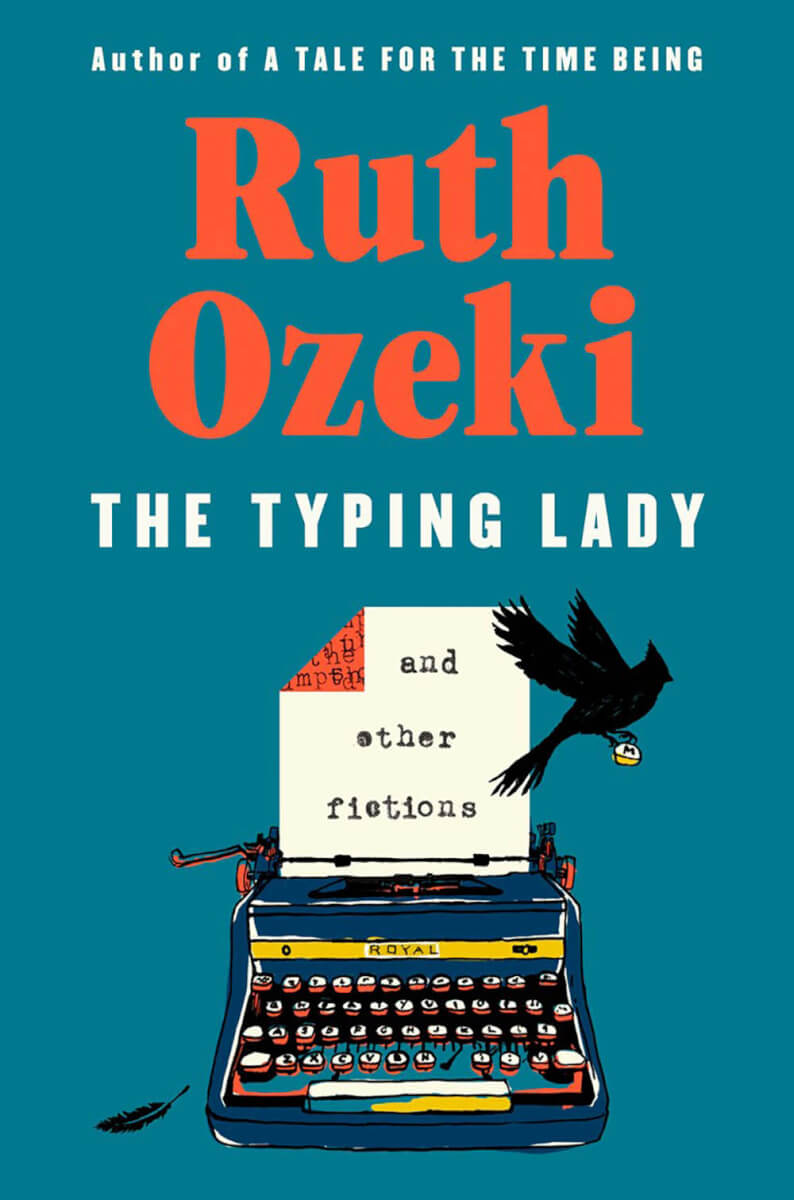
Ruth Ozeki is known and acclaimed for her long, substantial novels, including The Book of Form and Emptiness, A Tale for the Time Being and My Year of Meats. But she’s also a short story writer, and The Typing Lady: And Other Fictions collects 11 of her stories published over the past two decades.
The title story, which opens the book, situates the reader in Ruth Ozeki territory: playful, fable-like and metafictional. The narrator notices a woman at the library, always typing. “The woman herself was nondescript: oldish, in her late fifties or early sixties, Asian-looking, with black-framed glasses and gray-streaked hair,” the narrator notes. Check out her author photo and you’ll see that this description could apply to Ozeki herself (though she is now 70). Later, the narrator goes to a bookstore event for the typing lady’s new book, where the typing lady reads a story about a writer who begins to bring old typewriters into her life.
Often running underneath these stories’ playfulness are themes of longing and loss. A standout story “Leafblower” follows Mel, a desperate MFA graduate who has broken up with her partner and lives with a retired professor and his wife. In exchange for reduced rent, she cares for the professor’s wife, Dr. Fae, a retired oncologist with dementia. The beautiful, restrained tale references Thomas Malory’s The Death of Arthur: Mel’s full name is Malory, Dr. Fae’s name recalls Morgan le Fay and a small army of yard workers serve as wayward Knights of the Round Table.
Another standout is “The Problem of the Body,” a funny, surprising and moving tale about a writer whose granddaughter Maddie lives with her. The two jokingly plan methods for the grandmother to fake her own death to avoid a book tour. It’s a taking-stock story, as the narrator grieves the deaths of her husband and of her daughter, who died of breast cancer when Maddie was a baby. And in the droll “Dead Beat Poet,” Allen Ginsberg’s ghost visits a young woman who’s a publishing assistant. The ghost, demonic but kind, wreaks havoc as he urges her to begin writing. Although it’s fantastical, it’s spot-on about publishing and 2020s-era New York City.
Many of these stories also feature a typewriter, which sounds like a gimmick, but feels organic. The Typing Lady is a welcome addition to Ozeki’s inimitable oeuvre.