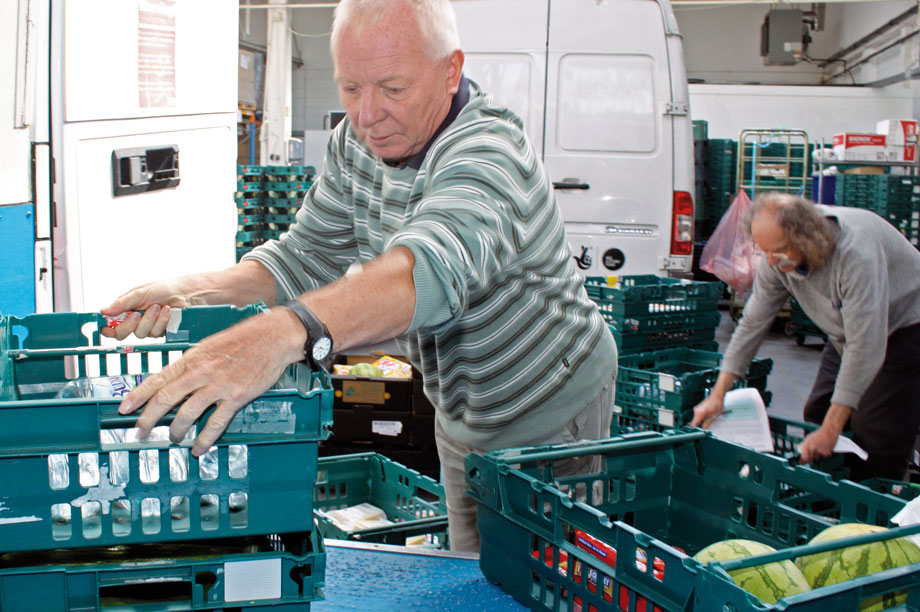
Legacy income at the food distribution charity Trussell grew by more than 5,000 per cent in five years after the charity began legacy marketing in 2020, exclusive research from Third Sector has found.
The Legacy Map analysed data taken from the accounts of 100 leading charities to explore how legacies performed over a five-year period.
Total legacy income grew from £1.43bn in the first reporting year, which for most charities related to late 2020 or early 2021, to almost £2bn in the most recent year, an increase of 38 per cent.
The report also found significant increases in legacy income among individual charities. Trussell saw the biggest percentage jump, with income growing from £30,000 in the first reporting year to £1.76m in the most recent year: an increase of 5,767 per cent.
Commenting on the findings, Christianne McKenzie, head of individual giving at Trussell, told Third Sector the charity was focused on “‘drip-drip’ consistent legacy marketing throughout our comms”.
“Legacy income is always a long game, so you can’t attribute it to a single campaign,” she said.
“The marked change from 2020 onwards is really that we started doing legacy marketing; before that it was an untapped and undiscussed area.”
McKenzie also stressed that legacies can be a temperamental income channel, adding: “It’s really important for me to set expectations [among senior leadership] that we had this one fantastic year, but as a charity we are immature in this area. Legacy giving is incredibly volatile, and some of it is just luck.”
She said: “In our legacy fundraising, we have focused on consistently giving supporters a simple, respectful way to consider a gift in their will by providing clear guidance and regular mentions in our supporter communications and response forms.
“Our priority now is to keep improving our supporter experience by providing practical information and thoughtful stewardship over time that shows how our supporters’ generosity is helping us work towards our vision of a future without the need for food banks.”
Other charities that recorded significant growth over the five-year period include the funder Comic Relief, which saw legacy income rise by 2,302 per cent, and the animal hospital charity Brooke, which saw legacy income grow from £931,010 in the first reporting year to £14.18m – an increase of 1,423 per cent.
According to Brooke’s accounts for the year ending March 2025, legacy income had decreased by £2.1m on the previous year, when it received “a few high-value legacy payments”.
But the charity said it had a “robust” legacy pipeline of £18.1m not included in its accounts due to income recognition criteria not being met.
Jasvir Kaur, international director of fundraising and communications at Brooke, said legacies “play a vital role in enabling us to plan long-term and deliver lasting change for working animals”.
She said: “Looking ahead, we’re continuing to invest in legacy consideration and stewardship of all our supporters so more people understand the impact a legacy gift can make, helping to secure this essential income for the future.”
Emily Ding, gifts in wills manager at the Canal and River Trust, which saw legacy income increase by 1,385 per cent in five years, said a key factor of the growth was “showing the impact of support first-hand”.
She said: “These experiences bring to life how legacy gifts make a real, lasting difference.
“Looking ahead, we’ll continue to put supporters at the heart of our legacy programme – creating more opportunities to engage with our work [and] demonstrating the tangible impact of gifts in wills.”
More than three-quarters (77 per cent) of the 100 charities in the sample saw legacy income grow by 10 per cent or more in five years. Legacy income at 13 organisations fell by more than 10 per cent in the same period.
The full findings of The Legacy Map, available to members of Third Sector’s top subscription tier, includes analysis of sector-wide trends and individual legacy data for each of the 100 charities featured.
The report also includes an interactive data tracker that allows users to explore legacy figures across the sample of charities and directly compare trends for up to five different organisations at a time.
To learn more about The Legacy Map, click here.