Milan Design Week has long been recognised as a global platform for contemporary design, where fashion houses, automotive brands and furniture ateliers converge across the city’s palazzi and historic spaces. This year’s presentations moved between archival references and future-facing experimentation, with immersive environments and cross-disciplinary collaborations shaping how design is experienced and displayed, alongside a heightened focus on materiality and scenographic installation. From new homeware and interior extensions to boundary-pushing furniture design, the event reaffirmed Milan’s position at the centre of global design innovation.
Dior
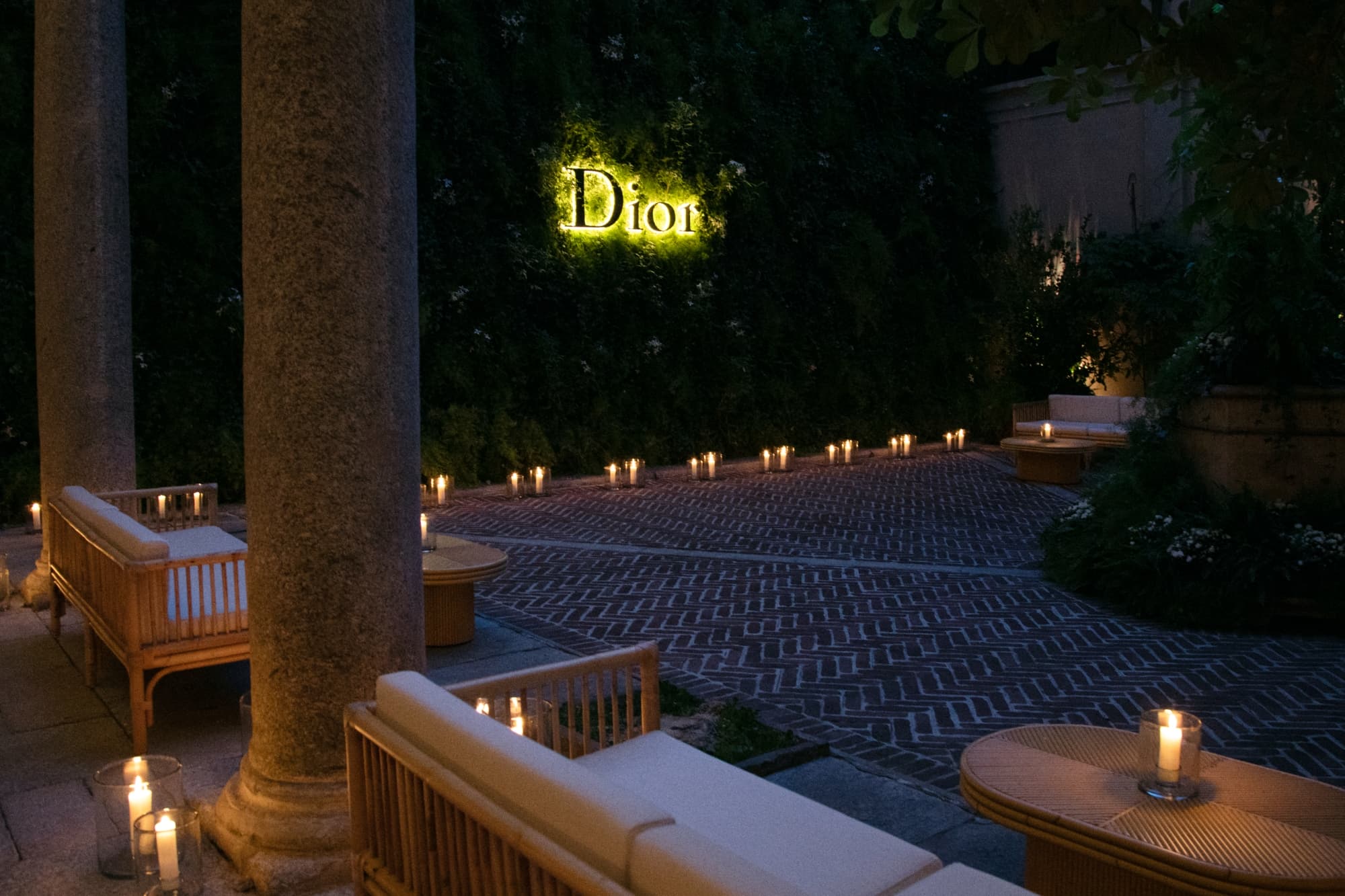
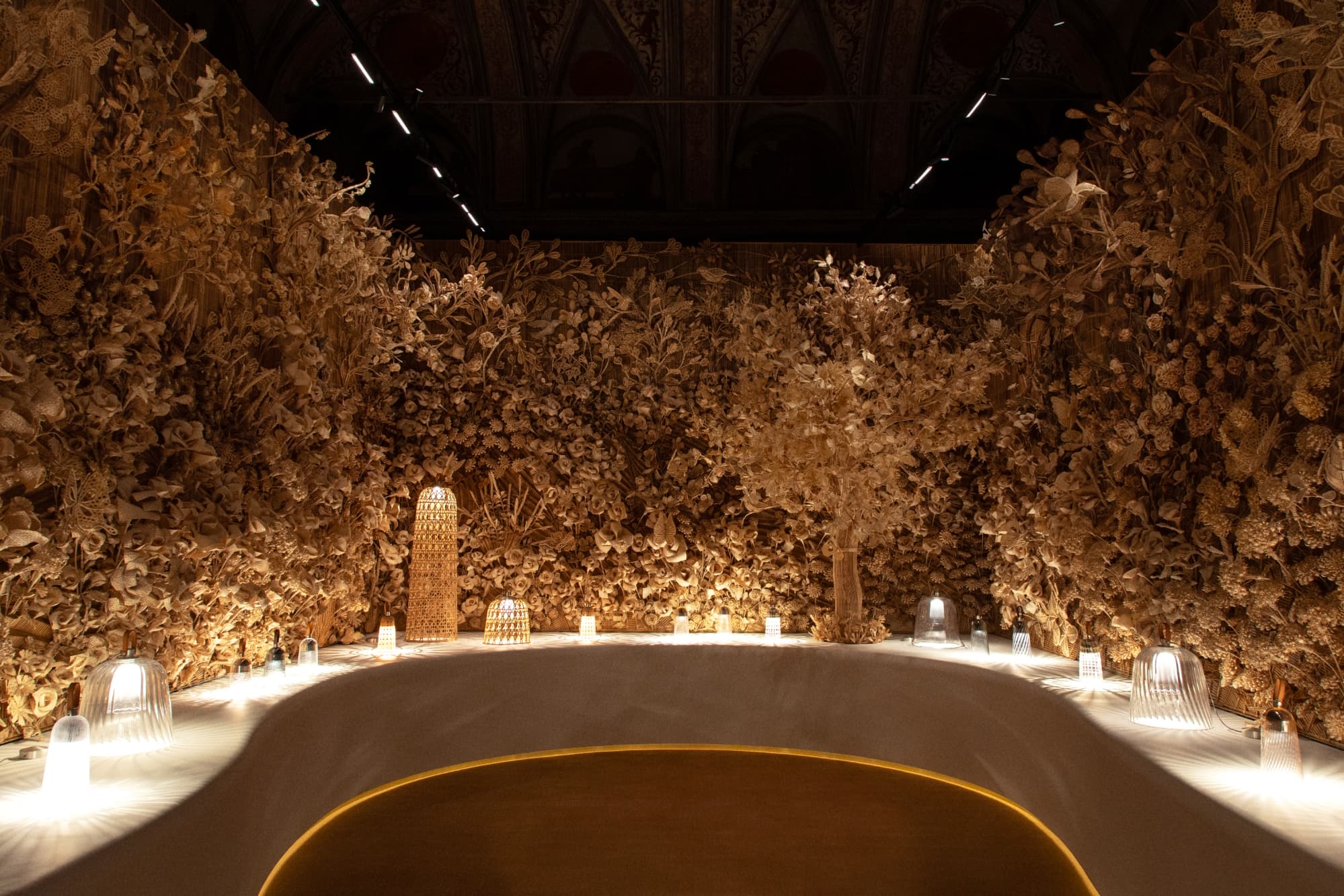
For Salone del Mobile 2026, Dior presented a new series of Corolle lamps by Noé Duchaufour-Lawrance, extending the house’s ongoing dialogue between couture heritage and contemporary design. Unveiled at Palazzo Landriani in the Brera district, the collection draws on the renowned “Corolle” line from Christian Dior’s 1947 New Look, translating its sculptural silhouettes into lighting. The lamps are crafted from mouth-blown Murano glass, with forms that echo the movement of pleated and draped fabric — while additional pieces incorporate woven madake bamboo, referencing traditional cannage techniques.
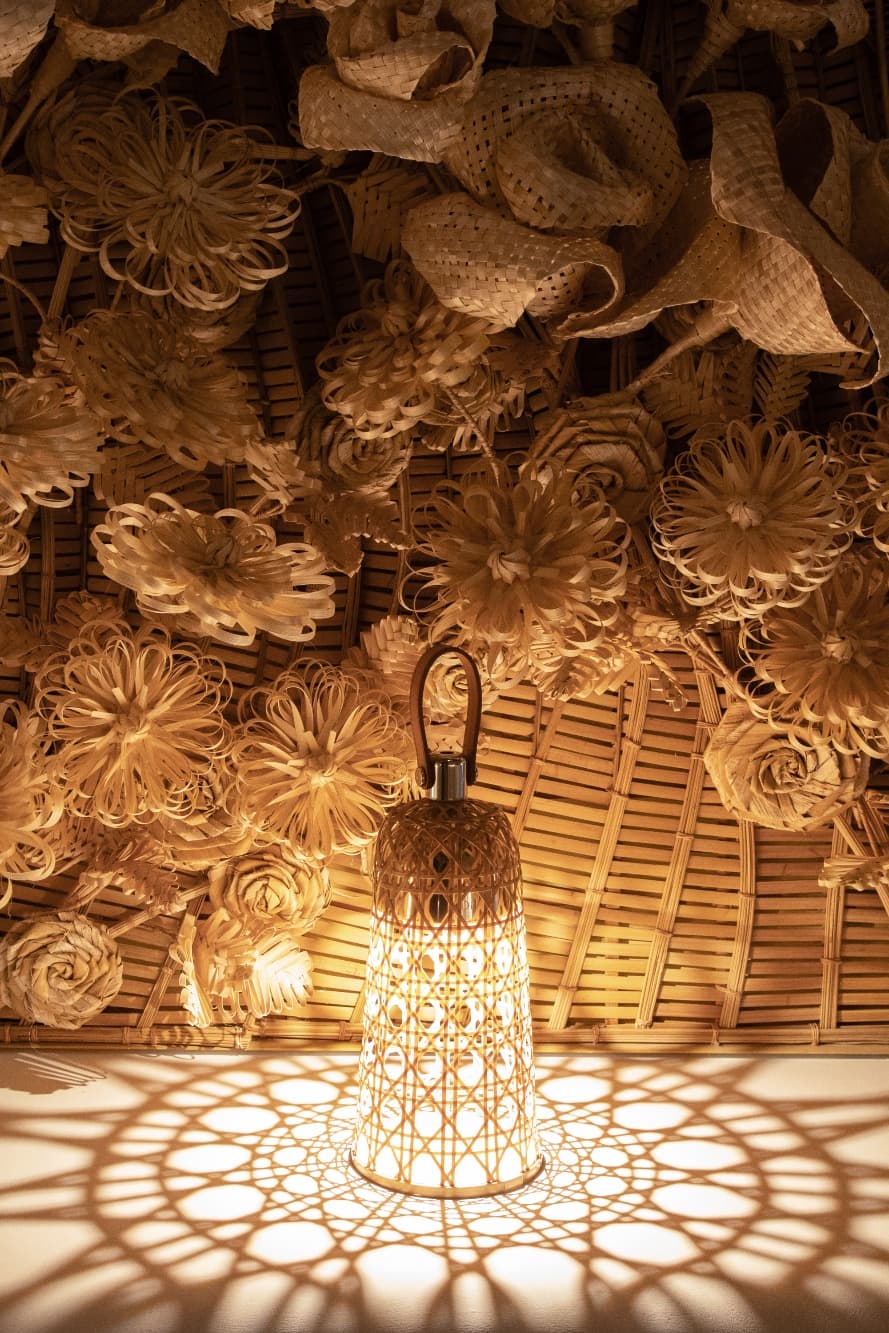
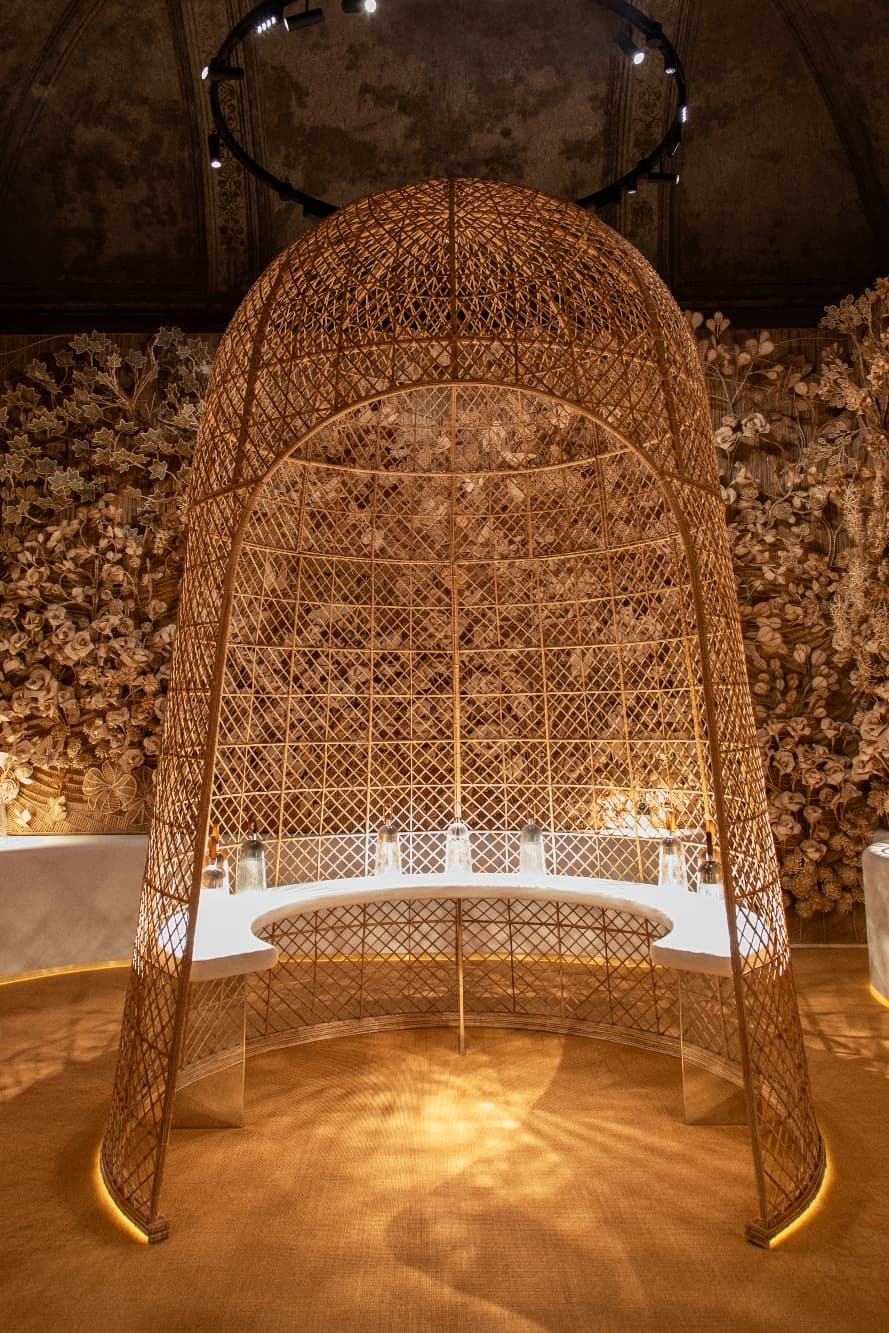
The scenography — inspired by Dior’s childhood home Villa Les Rhumbs — has been reinterpreted by Thai artists Korakot Aromdee and Vasana Saima, creating an immersive setting that sees both organic and graphic elements. The collection will also be available exclusively at Dior’s Montenapoleone boutique during the fair.
Louis Vuitton
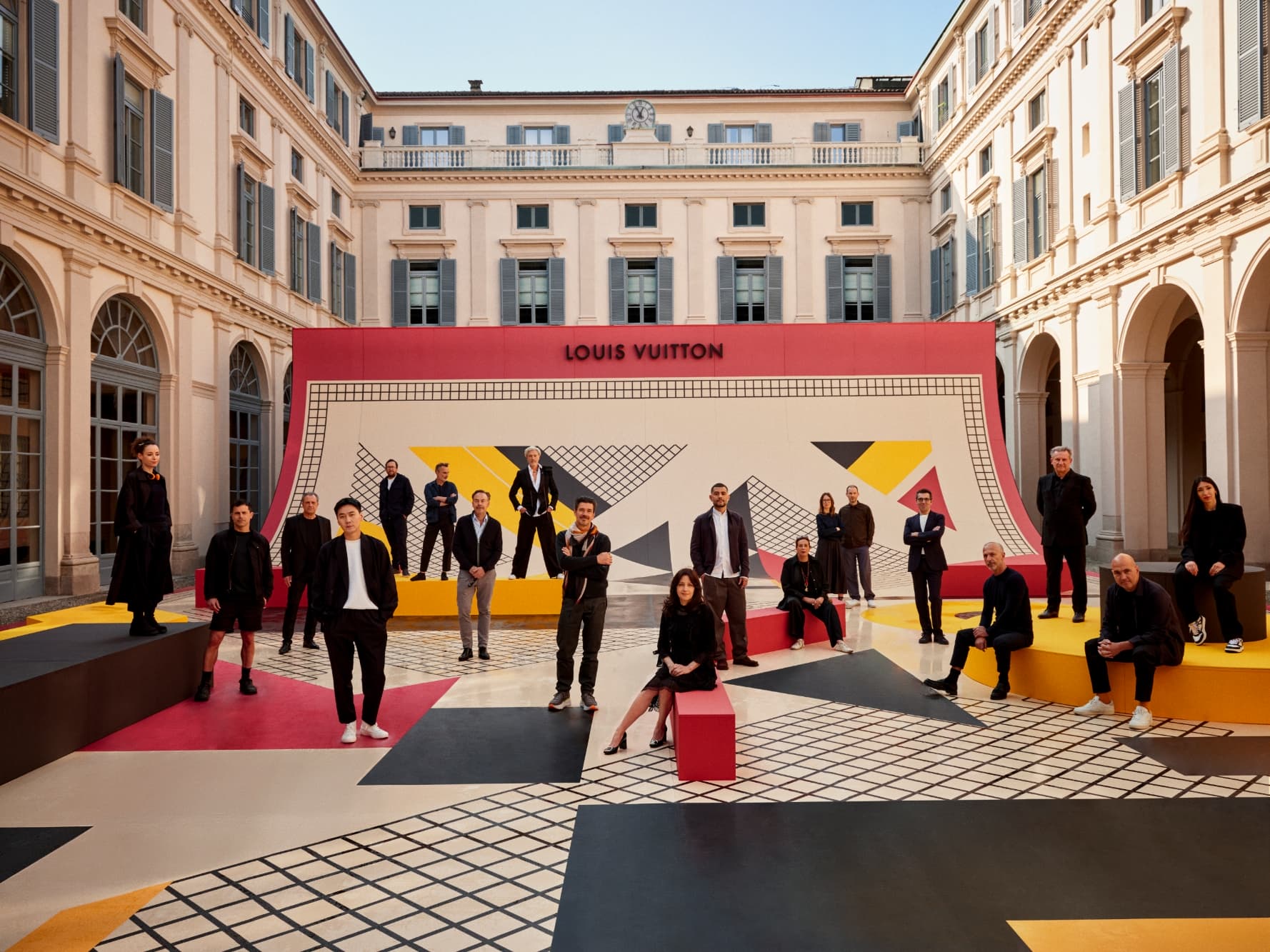
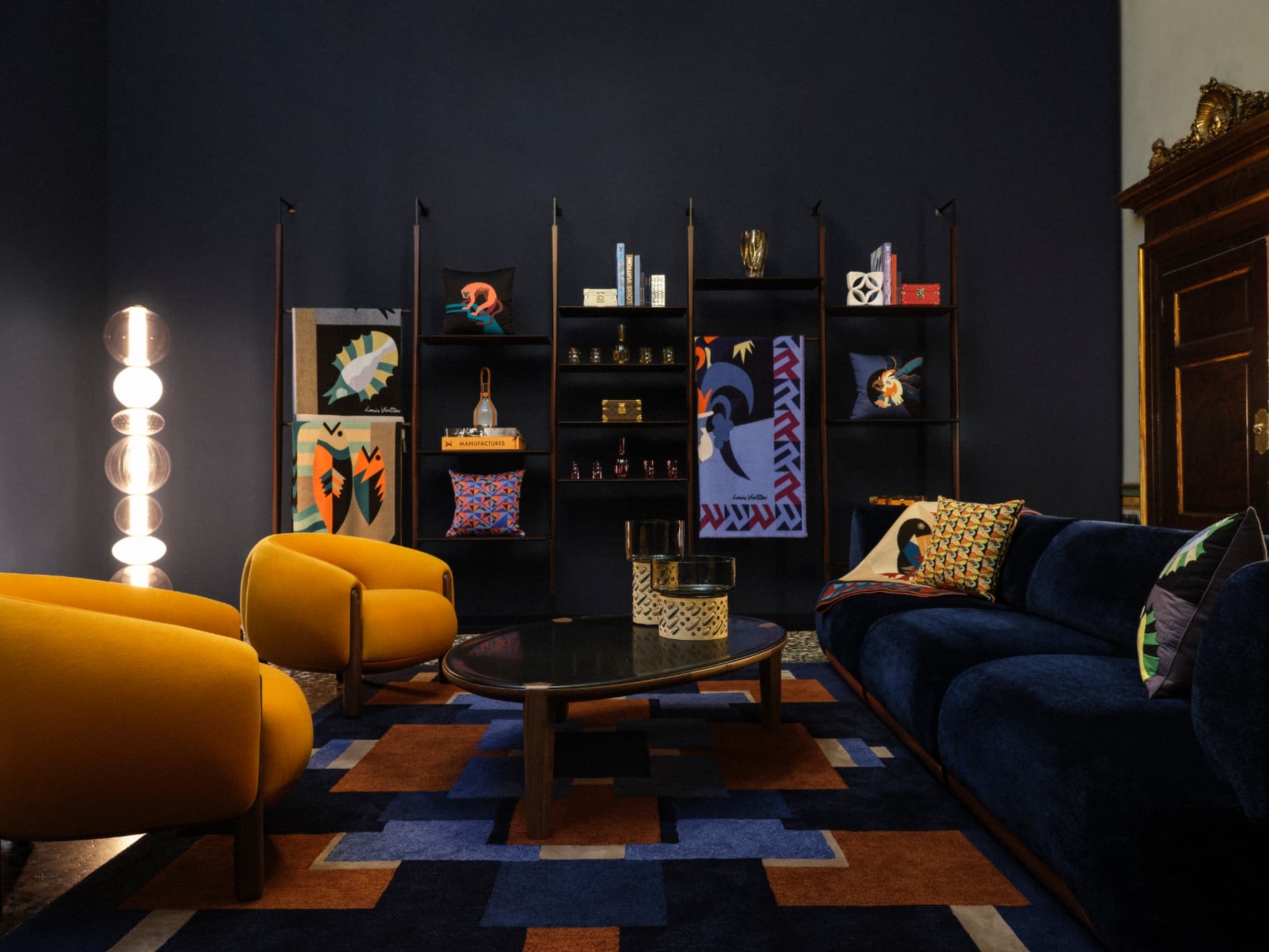
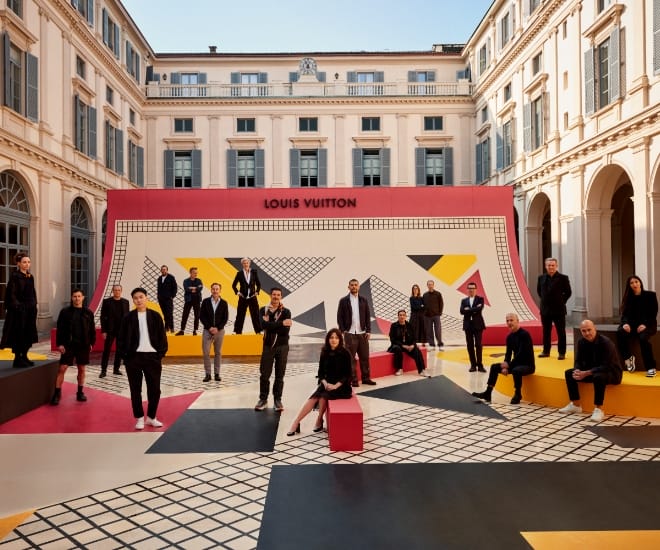
Louis Vuitton presented an expansive exhibition at Palazzo Serbelloni, bringing together its Objets Nomades collection, archival pieces and trunks. The exhibition unfolds across a series of rooms, each anchored in a distinct colour palette and narrative. It begins with a tribute to Pierre Legrain, whose work informs much of the presentation. Archival objects from the House — including early trunks, travel accessories and illustrated documents — are displayed in a scenography inspired by a 1920s train carriage, reinforcing Louis Vuitton’s long-standing association with travel and craftsmanship.
From there, the Objets Nomades collection is presented in increasingly immersive environments. Furniture, textiles and objects are arranged across spaces conceived as living, dining and library settings, where bold colour combinations and graphic motifs create a cohesive visual language. Pieces from recent collections sit alongside earlier designs, highlighting the evolution of the programme while maintaining a consistent emphasis on material innovation and collaboration with international designers.
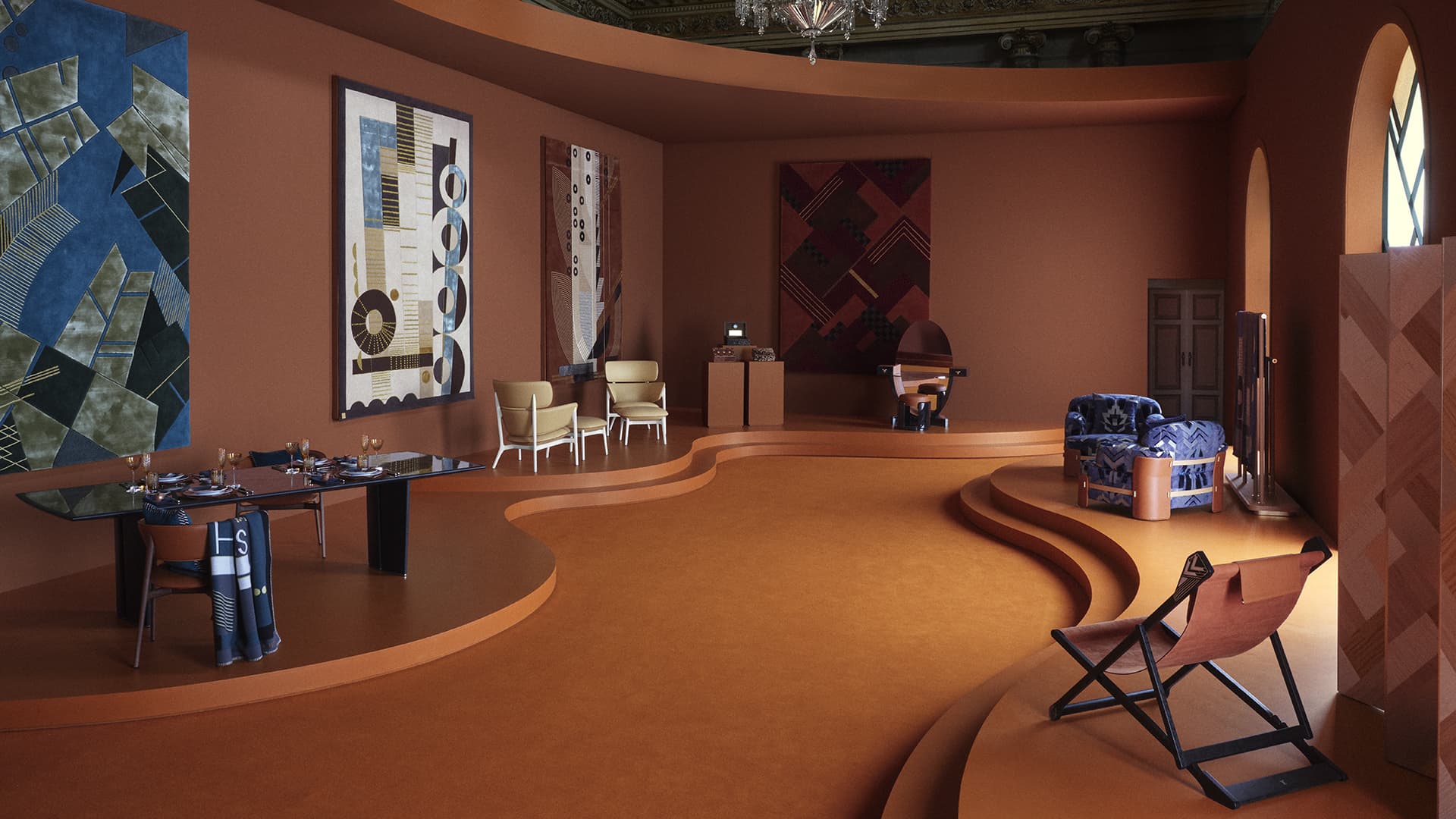
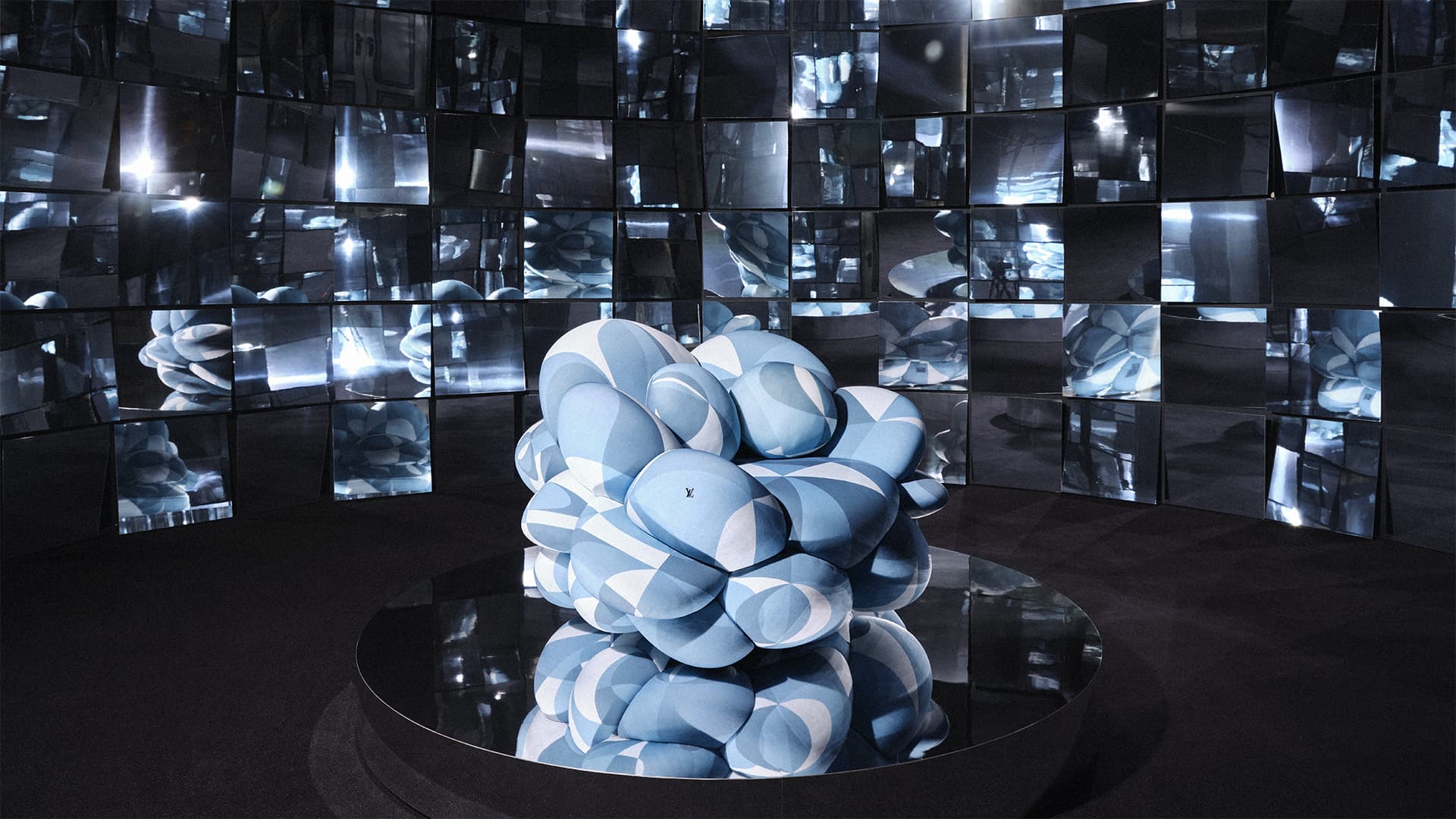
A number of rooms focus more directly on reinterpretations of historical references. Textiles and furniture draw on Legrain’s geometric compositions, while others reference the work of Charlotte Perriand through updated patterns and forms adapted for contemporary interiors. Among the more sculptural works, the presentation includes standout pieces such as the Cabinet Kaléidoscope and a reimagined Baby-foot table by Estudio Campana, alongside the Cocoon Dichroic — developed with Géraldine Gonzalez, which explores iridescent surfaces and layered construction. In the central foyer, the Stella armchair by Raw Edges introduces a more experimental dimension, using textile and optical effects to reshape the perception of volume and comfort.
The exhibition extends beyond the interiors into the courtyard, where a large-scale installation — developed in collaboration with the Accademia di Belle Arti di Brera — translates Legrain’s graphic language into a monumental, site-specific work. Alongside the main presentation, Louis Vuitton’s boutique on Via Montenapoleone showcases a series of trunks that underline the house’s technical heritage. These include the Malle Courrier Lozine Maison de Famille, crafted in stained glass and inspired by the Art Nouveau details of the family home in Asnières, as well as the Malle Paravent and the Malle Lit — the latter a contemporary reinterpretation of a travel bed first conceived in the 19th century. Across both locations, the exhibition underscores how Louis Vuitton’s identity is defined by a constant dialogue between past and present, with historical references serving as a foundation for ongoing experimentation.
Hermès
Hermès approached its presentation at Milan Design Week 2026 with a scenographic installation. Conceived by Charlotte Macaux Perelman alongside Alexis Fabry, the space is structured through a series of thirty rectangular columns in plaster and beechwood, varying in height and arranged to create shifting sightlines and pathways. The effect encourages visitors to move through the installation slowly, encountering each piece in sequence rather than all at once. Within this architectural framework, Hermès presents a collection that continues its exploration of material dialogue with marble, leather, metal, wood and textile.
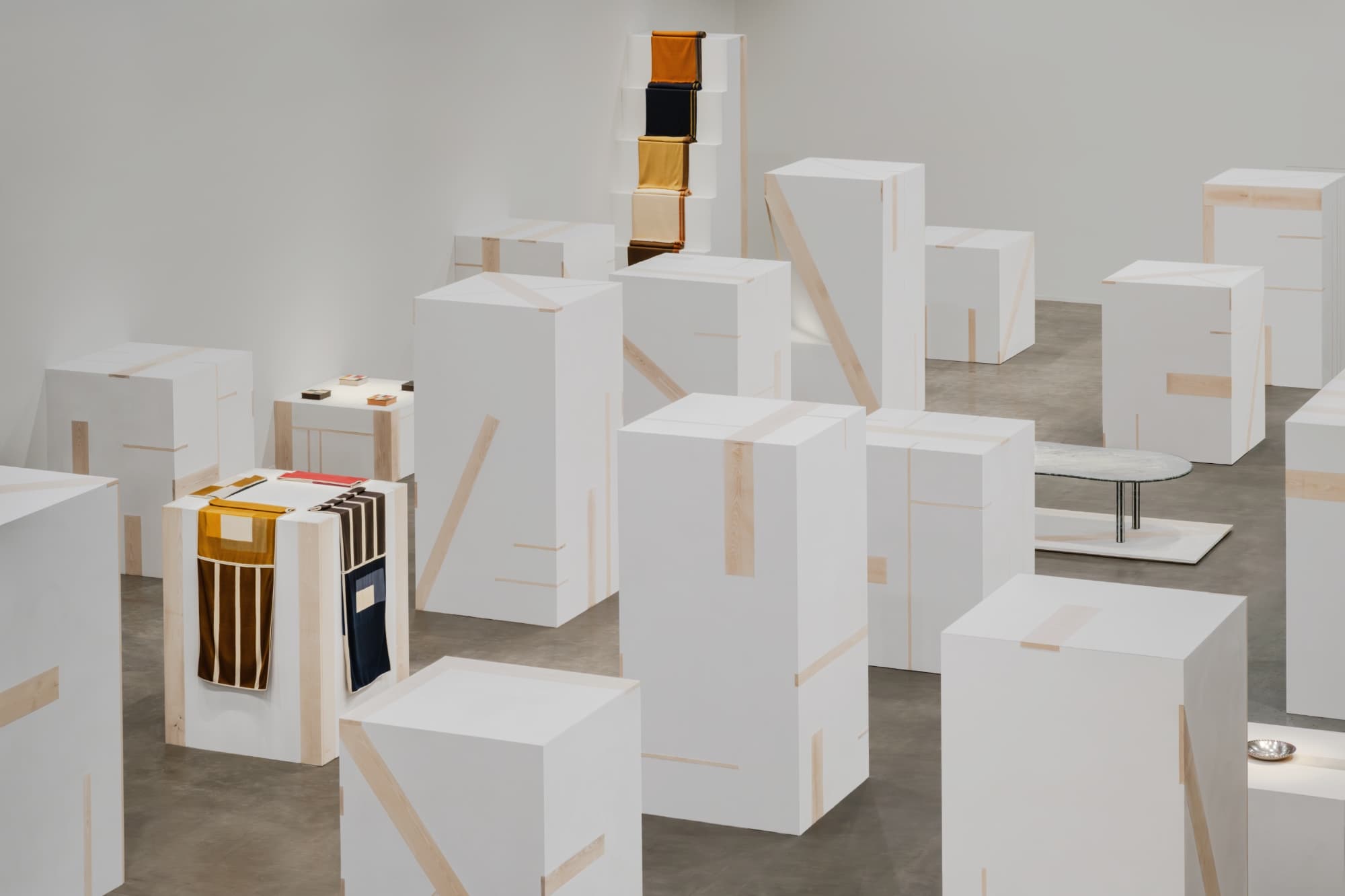
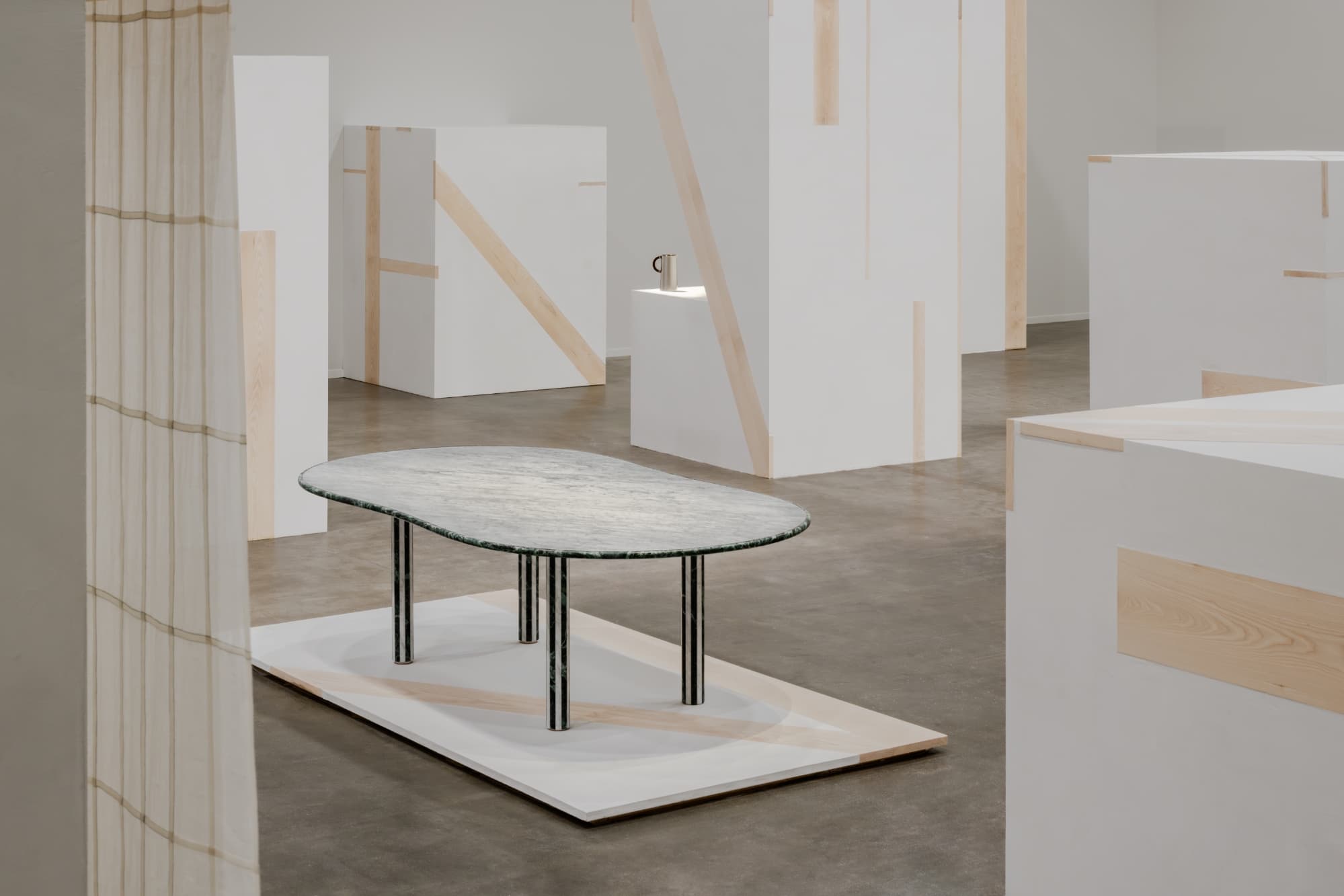
Among the highlights is the Stadium d’Hermès table by Edward Barber and Jay Osgerby, its elongated, curved form recalling both a racetrack and the line of a horse’s back — a subtle reference to the House’s equestrian origins. Executed in marble marquetry, it combines Carrara stone with deep green Verde Alpi, offset by graphic, almost architectural legs that introduce a sense of lightness despite the material weight.
The Palladion d’Hermès collection also explores the interplay between metal and organic materials. Hand-hammered palladium-finish surfaces — used across vases, centrepieces and a sculptural jug — are paired with elements such as leather, cassia wood and horsehair. The treatment of the metal is intentionally expressive, catching and diffusing light to create a shifting, almost tactile surface, while the addition of leather detailing references the house’s foundational expertise in harness-making.
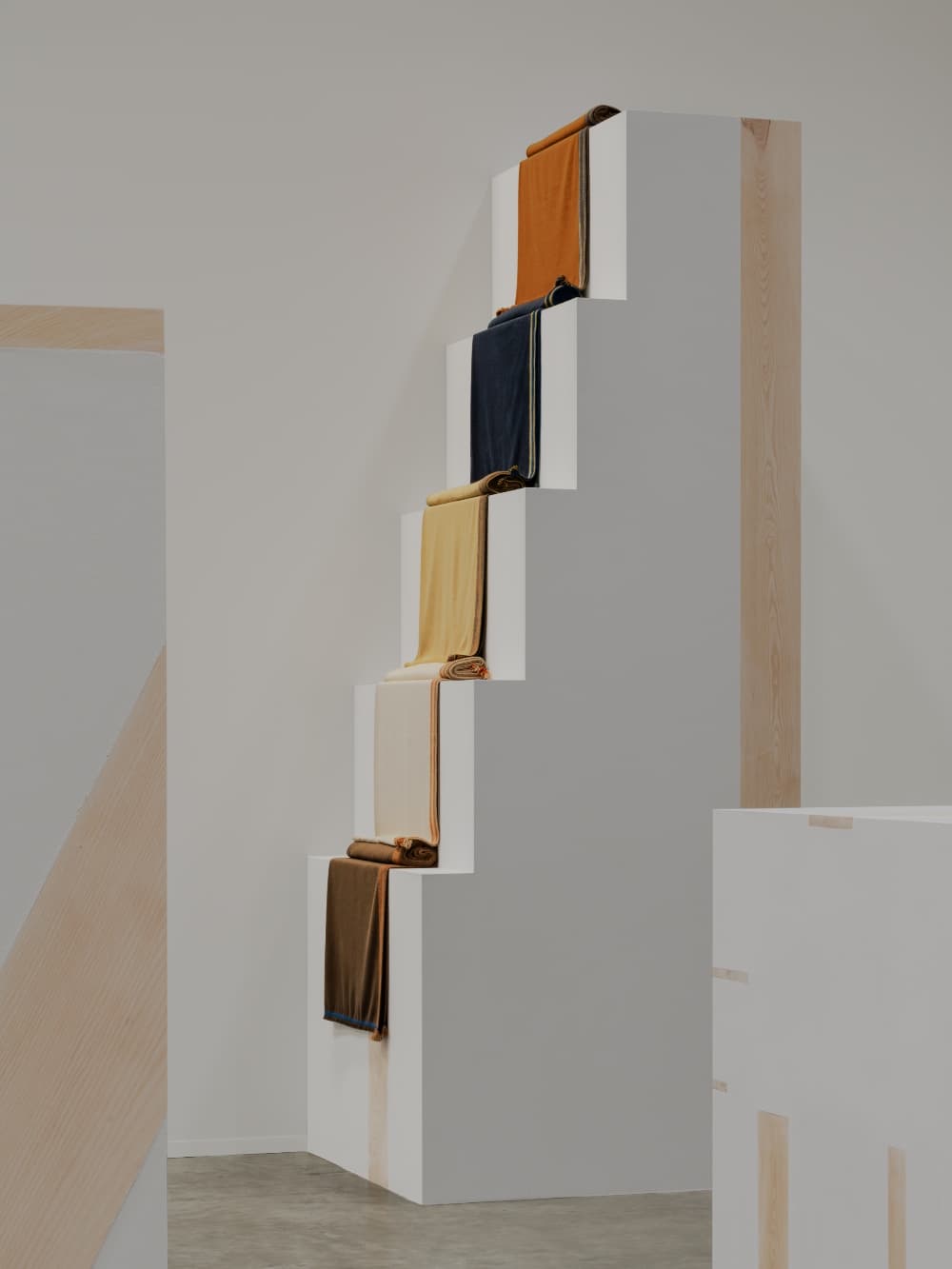
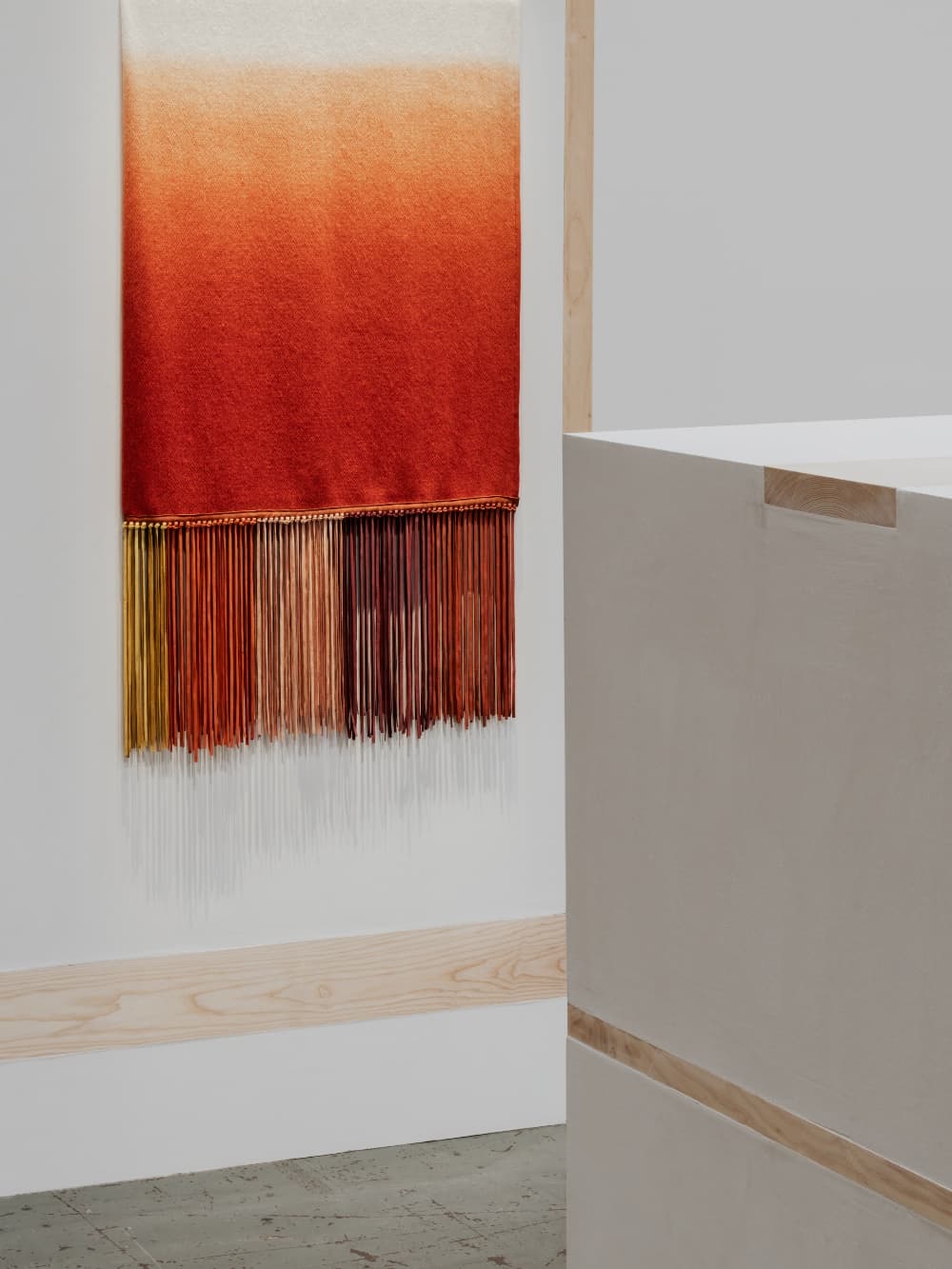
Smaller objects continue this focus on precision and material nuance. The Piano boxes use intricate leather marquetry to build colour compositions that range from restrained to vivid, while the Confettis basket introduces a lighter, more playful note through perforated calfskin and stitched appliqué. Textiles remain a central part of the Hermès home universe. Cashmere throws — often hand-woven and resist-dyed — explore geometry, transparency and layering through techniques such as embroidery stitching and the Korean art of bojagi.
FENDI
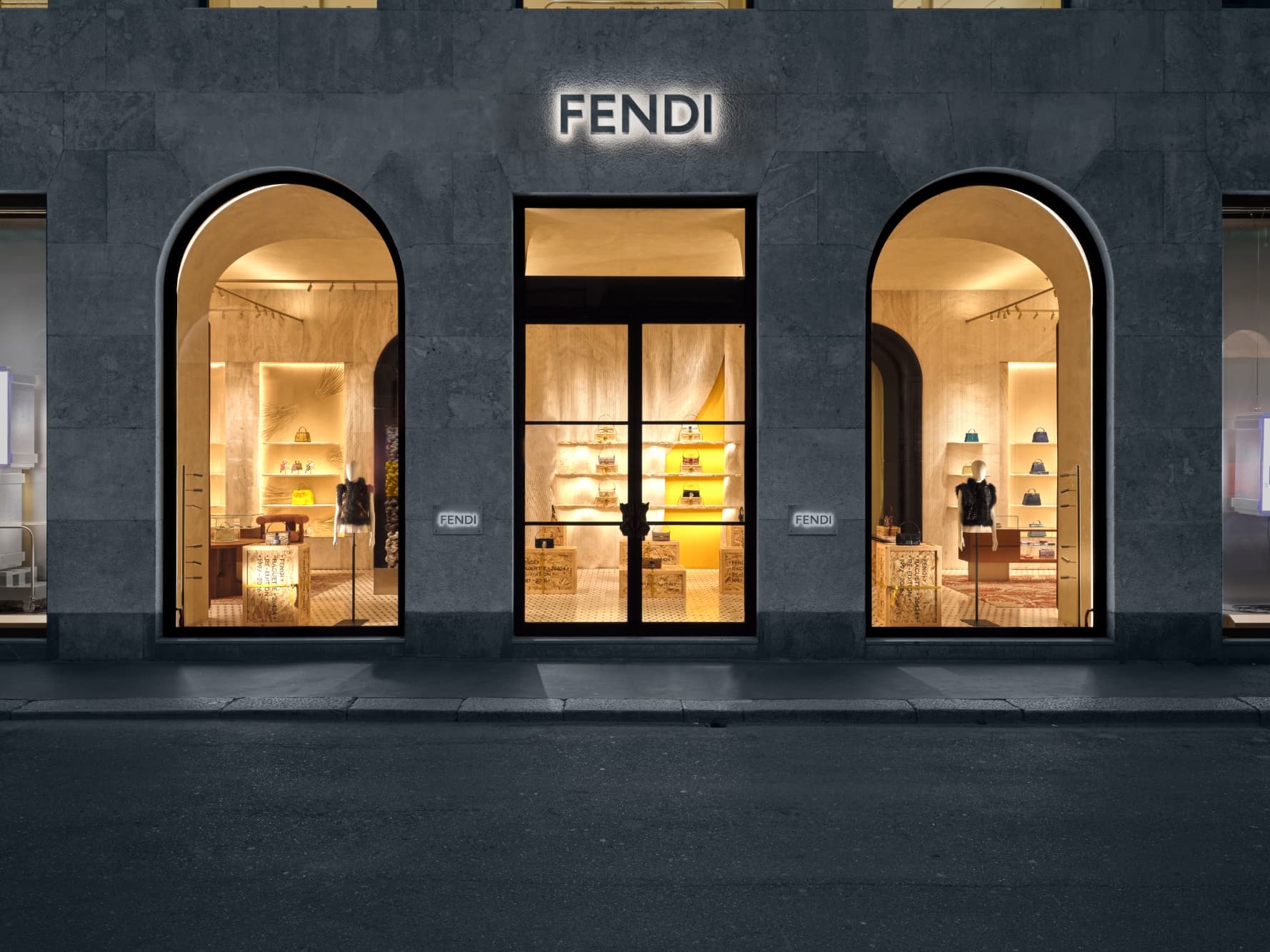
Fendi presented the Baguette 26424 Re-Edition line at Palazzo FENDI Milano from 17 April, introducing a new series of interpretations of the House’s famed 1997 Baguette design. The collection was developed from Fendi archives and revisited the original Baguette silhouette with a softer construction and an adjusted form designed to enhance its under-the-arm wearability. Across the series, twenty different versions were presented — including six Milan City exclusives created specifically for the occasion.
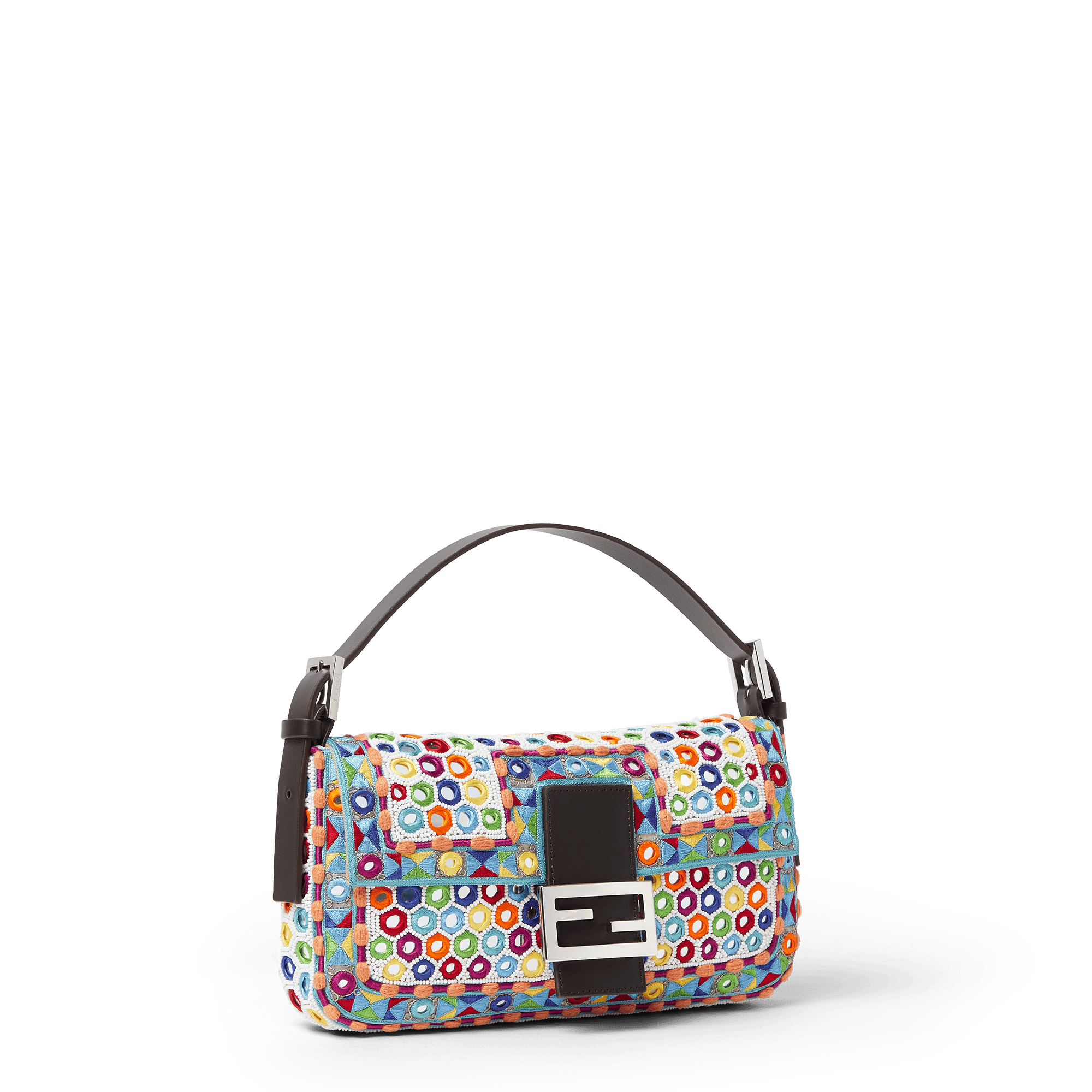
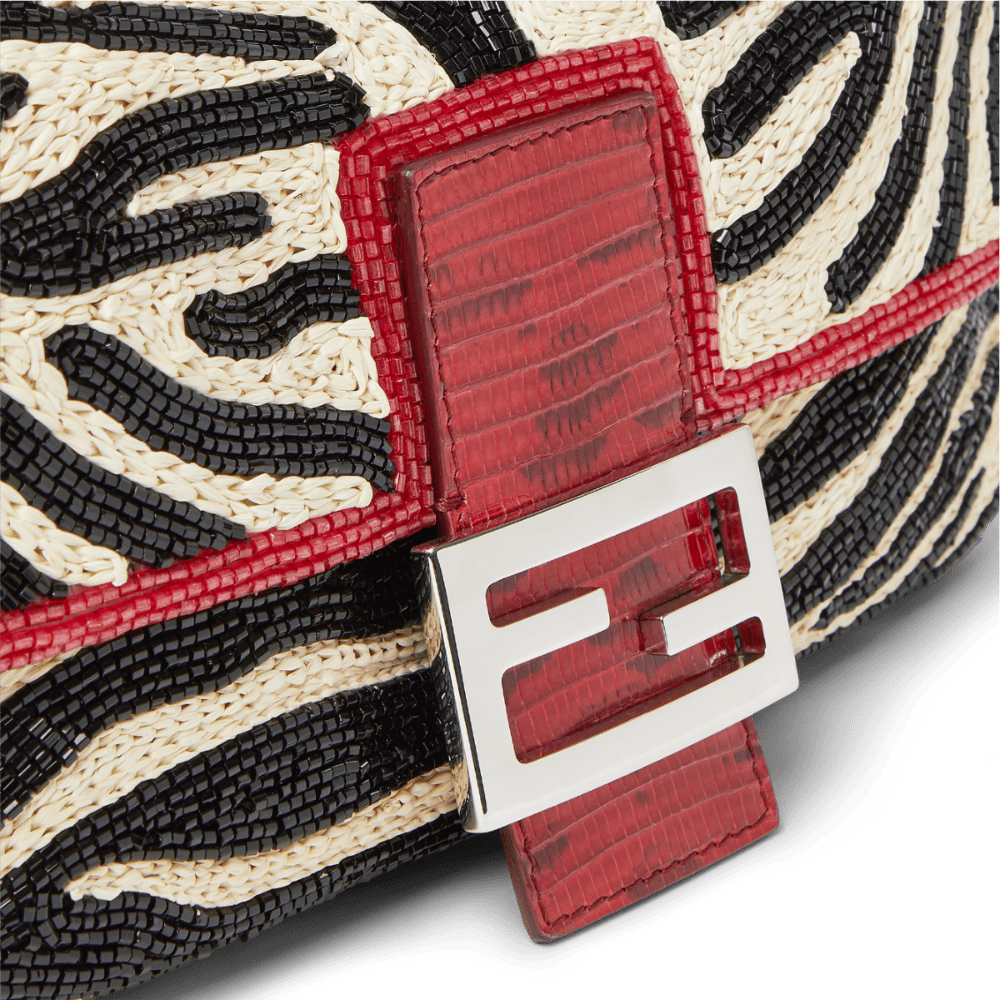
Each Baguette in the Re-Edition line featured a dedicated metal tag and was presented in custom wooden box packaging designed to evoke art crates. The boxes were finished with stencil-style prints and secured with a yellow canvas belt and metal logo buckle, reinforcing the object-like presentation of each piece. The project expanded the original language of the Baguette through variation in construction and finish, presenting multiple interpretations within a single design framework and revisiting one of Fendi’s most recognisable silhouettes in an updated form for 2026.
Bottega Veneta
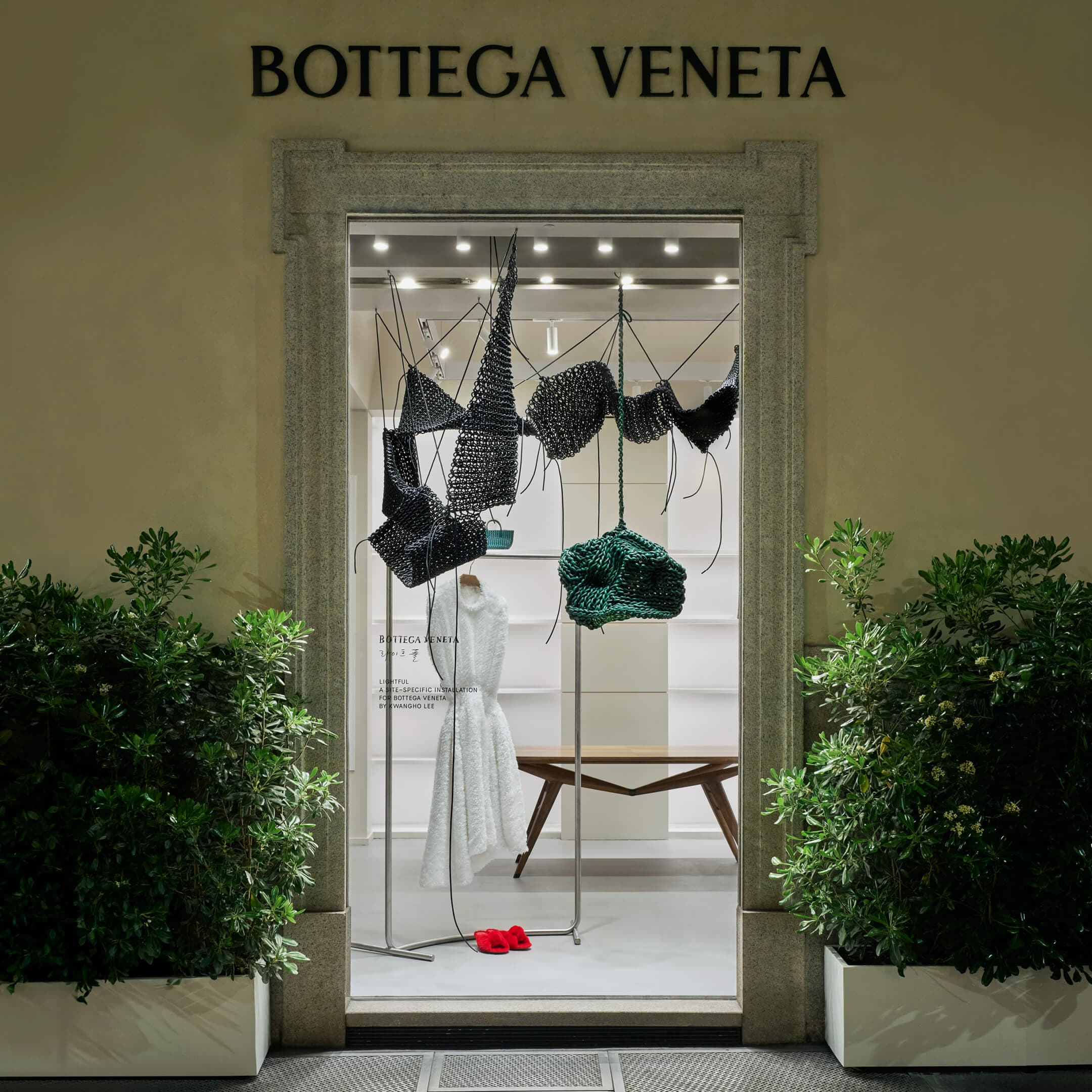
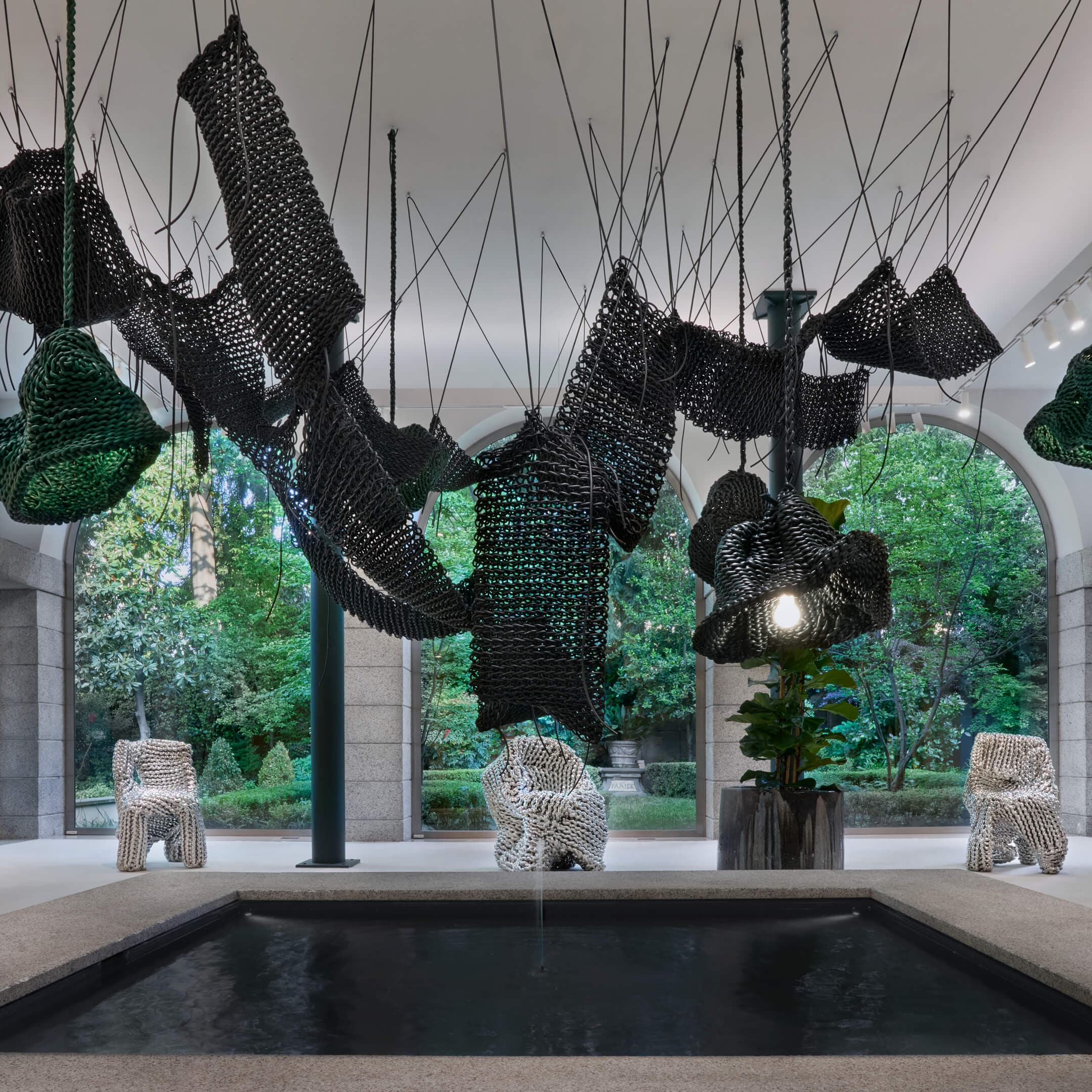
For Milan Design Week 2026, Bottega Veneta collaborated with Korean artist Kwangho Lee on a site-specific installation titled “Lightful”, presented at the house’s Via Sant’Andrea store — alongside a series of activations across Milan. The installation combined a suspended woven structure characteristic of Lee’s practice with new light sculptures woven from Bottega Veneta leather fettucce. Developed in bespoke black and green tones selected by creative director Louise Trotter, the sculptural forms took on varied organic shapes, shaped through Lee’s material-led approach and the interaction between weaving, structure and illumination. Light and shadow played across the works, extending his ongoing exploration of how materials behave when combined with new elements.
“Lightful” marked the third collaboration between Bottega Veneta and Kwangho Lee under Trotter’s creative direction. Previous projects included Lee’s contribution to the Summer 2026 show space and the exhibition “Weaving the World: The Language of Intrecciato”, presented in Seoul in June 2025. As part of the development process, Lee also visited the Bottega Veneta atelier in Montebello Vicentino, where the House’s leather craftsmanship is preserved and developed.
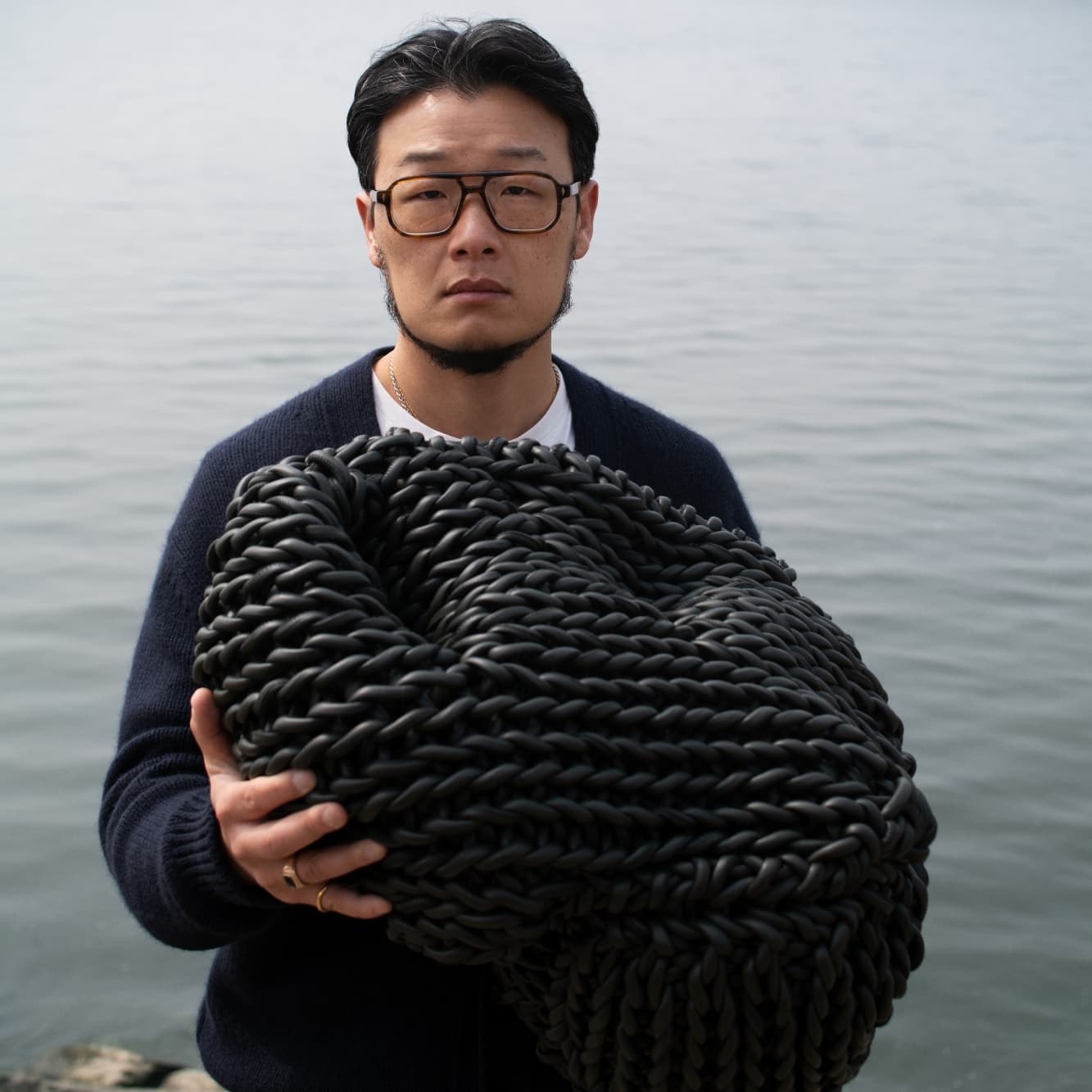
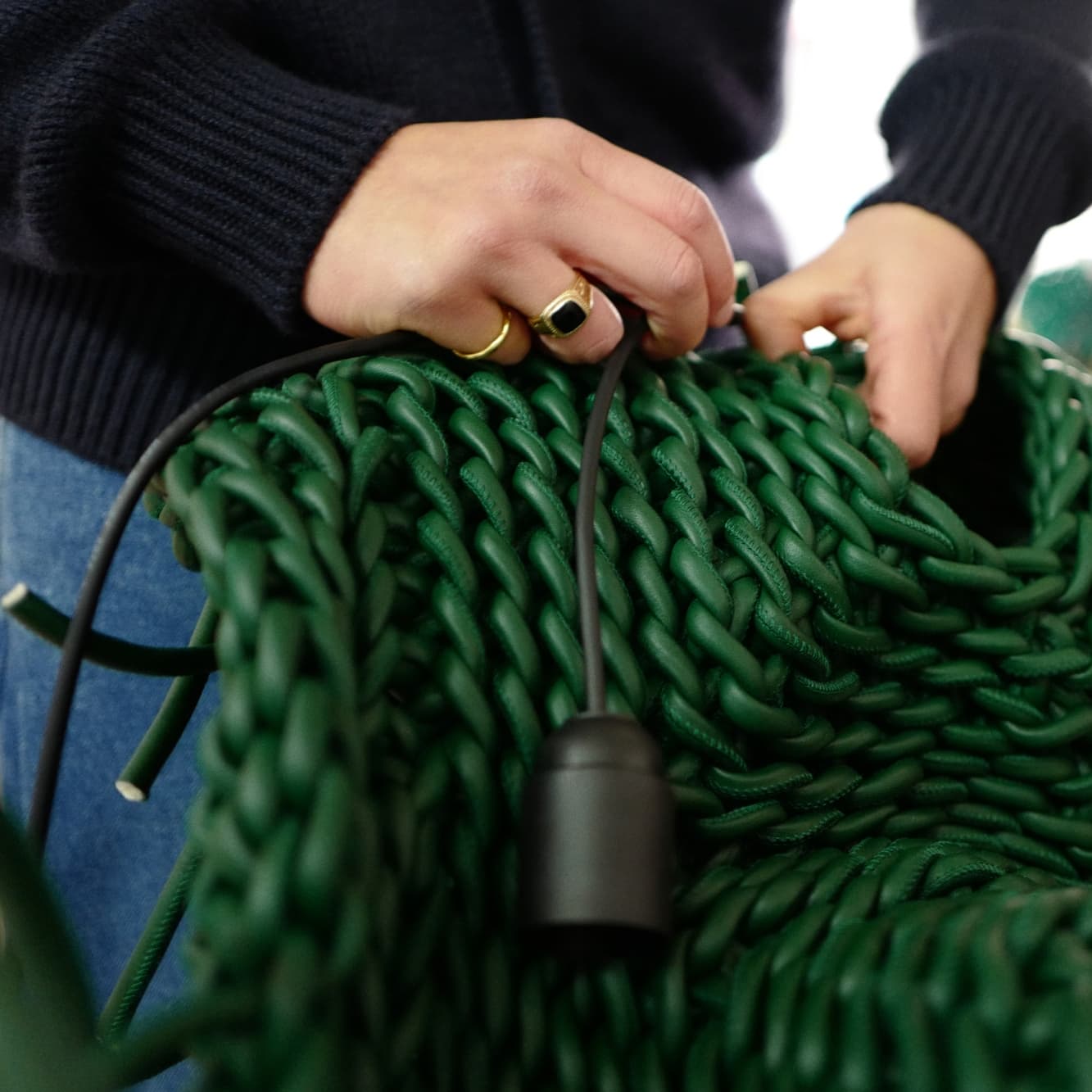
Lee’s practice is rooted in material experimentation and traditional techniques such as weaving, basketry and enamelling, which informed the conceptual direction of the installation. His work spans materials including metal, marble, enamel, steel and natural fibres, often exploring how different surfaces and structures interact when brought together. This focus on encounter and transformation aligned with Bottega Veneta’s own design language, which is defined by its leather craftsmanship and the Intrecciato weaving technique.
Loro Piana
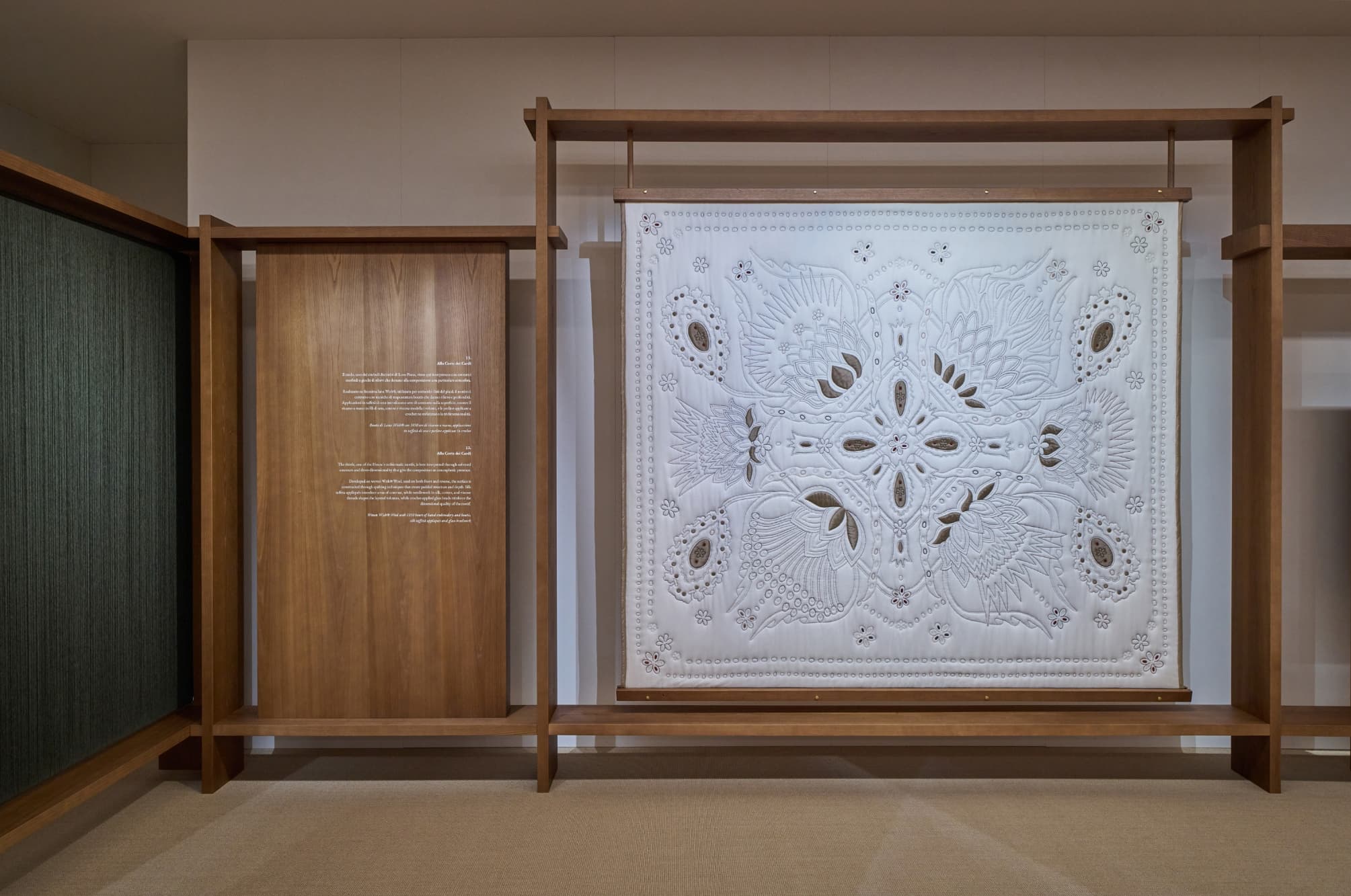
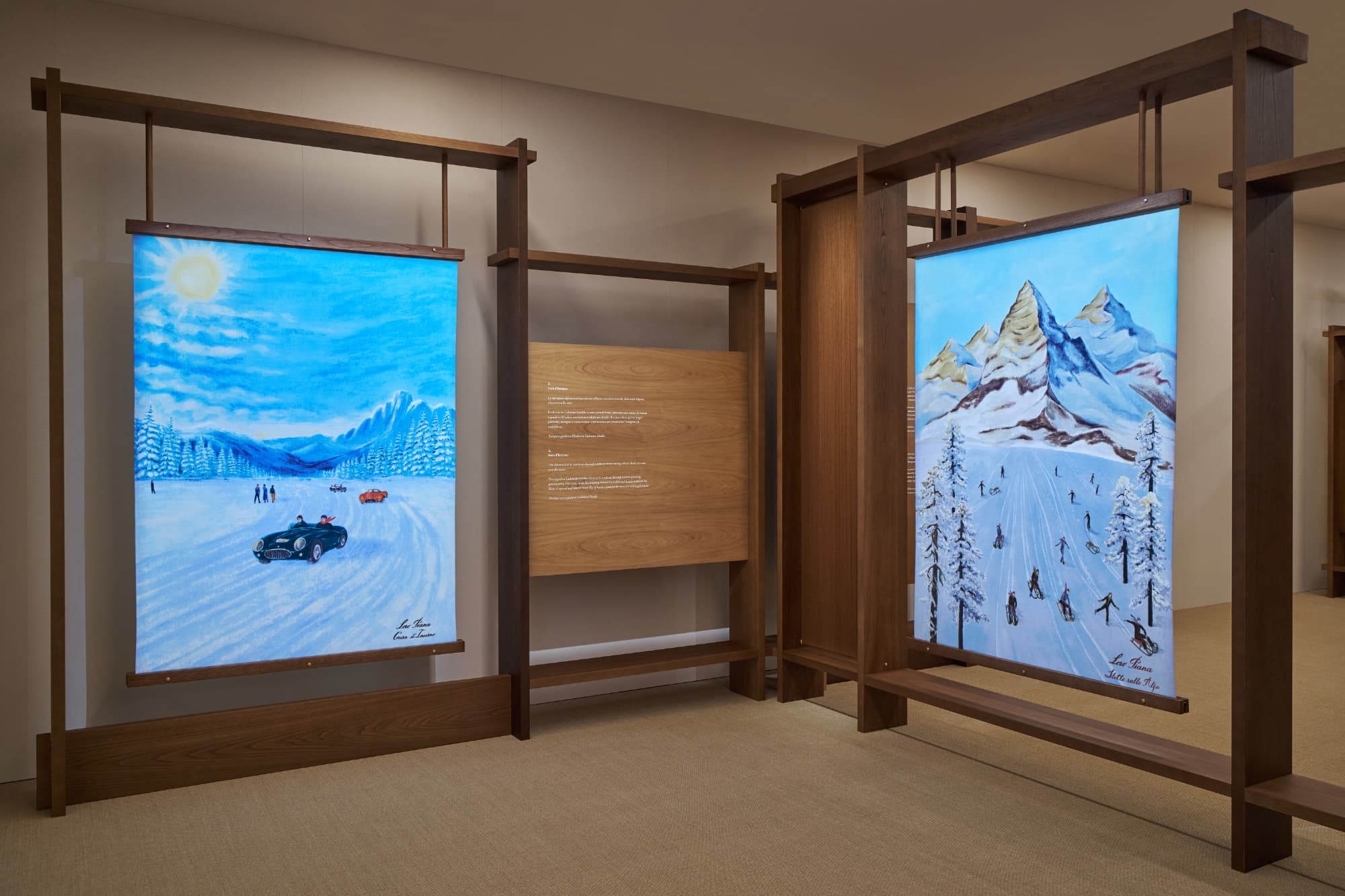
For this year’s installation, Loro Piana presented “Studies, Chapter One: On the Plaid” at its Cortile della Seta headquarters. The exhibition was dedicated to the plaid as a central object in the House’s textile vocabulary since the mid-1980s, when it first emerged as one of Loro Piana’s earliest finished products alongside scarves. The display brought together 24 plaids, each treated as an individual study, and arranged across a structured journey of five thematic sections. “Loro Piana Sceneries” opened the exhibition with landscapes evoking Valsesia — the House’s founding region — alongside mountain environments tied to winter sports and travel in classic cars across snow-covered terrain. “Codes of the House” focused on signature motifs, including the Belt pattern originally developed as a garment lining and the Suitcase Stripe first created for travel trunks used to carry fabric samples.
“Botanic Repertoire” explored the thistle flower — present in the House’s coat of arms since 1951 and historically used to raise the fibres of wool and cashmere — alongside flax references linked to linen production. “Cardo Paisley” revisited paisley motifs from the archives, introduced into Loro Piana fabric collections in the late 1960s, while “Textured Abstractions” shifted toward non-figurative compositions defined by surface, density and fibre structure rather than motif. Across the exhibition, each plaid was constructed using techniques including handloom weaving, jacquard weaving, needle punching, appliqué, hand embroidery and screen printing. Materials included Vicuña, Baby Cashmere, Cashmere, The Gift of Kings®, Loro Piana Royal Lightness®, linen, Wish® wool and Pecora Nera® wool, with archival motifs reworked into new textile compositions.
MCM
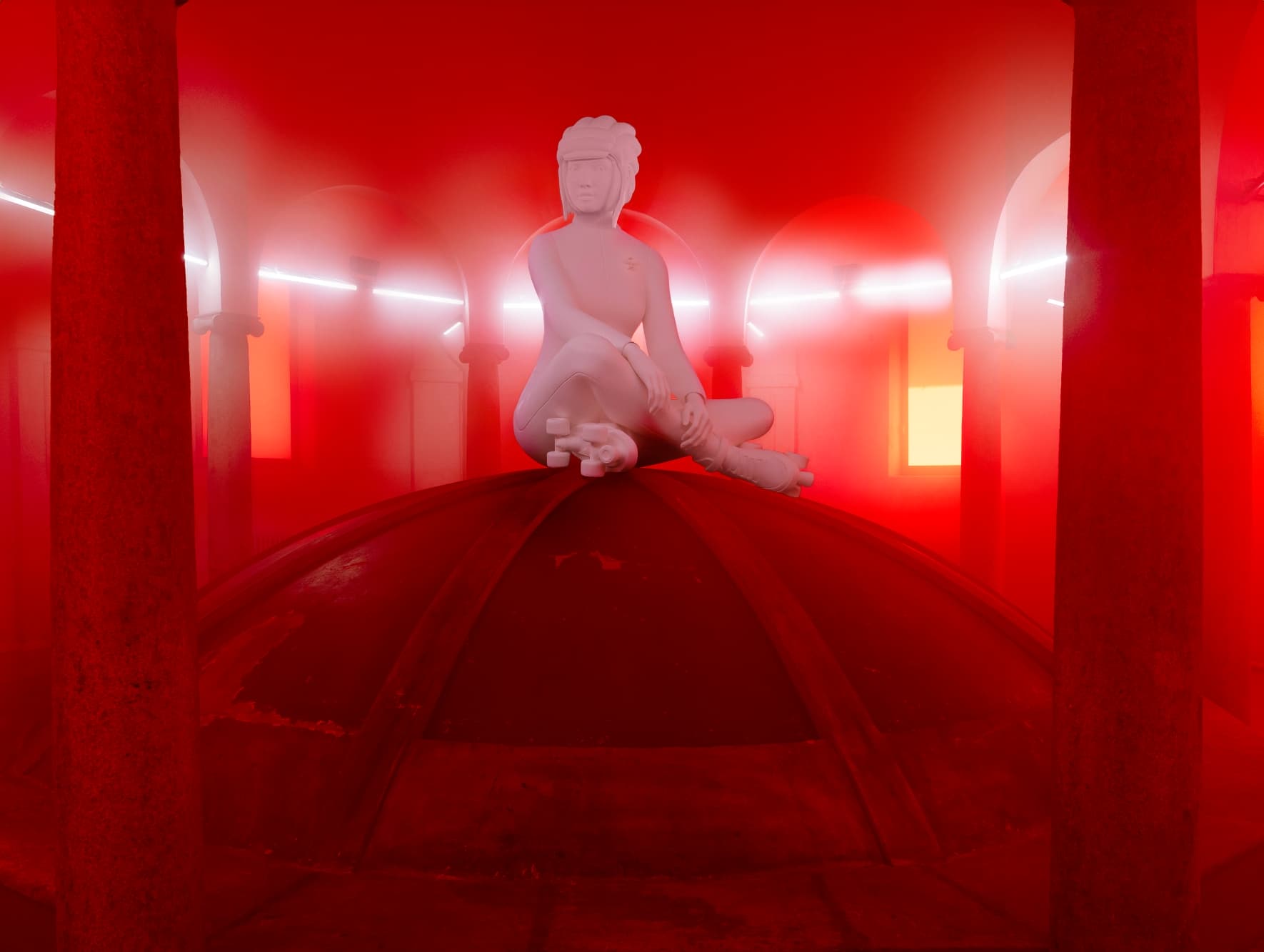
MCM marked the third consecutive year of participation at Milan Design Week with “Disco on Mars”, an immersive exhibition created in collaboration with Atelier Biagetti and staged at the Rotonda del Pellegrini — opening the first chapter of the Haus’ 50th anniversary celebrations under its long-running “From Munich to Mars” narrative. The project extended MCM’s exploration of mobility and technology into an interplanetary setting, positioning the exhibition as a multi-sensory journey across design, sound and performance.
The installation unfolded across three distinct levels. The first presented a speculative design lab featuring limited-edition objects developed for the project. The second transformed the space into a roller-skating disco animated by a robot DJ — shifting the atmosphere into a performative, music-driven environment. The final level culminated in a celestial dome where operatic performance was reimagined through a futuristic lens, closing the experience in a more atmospheric, immersive register.
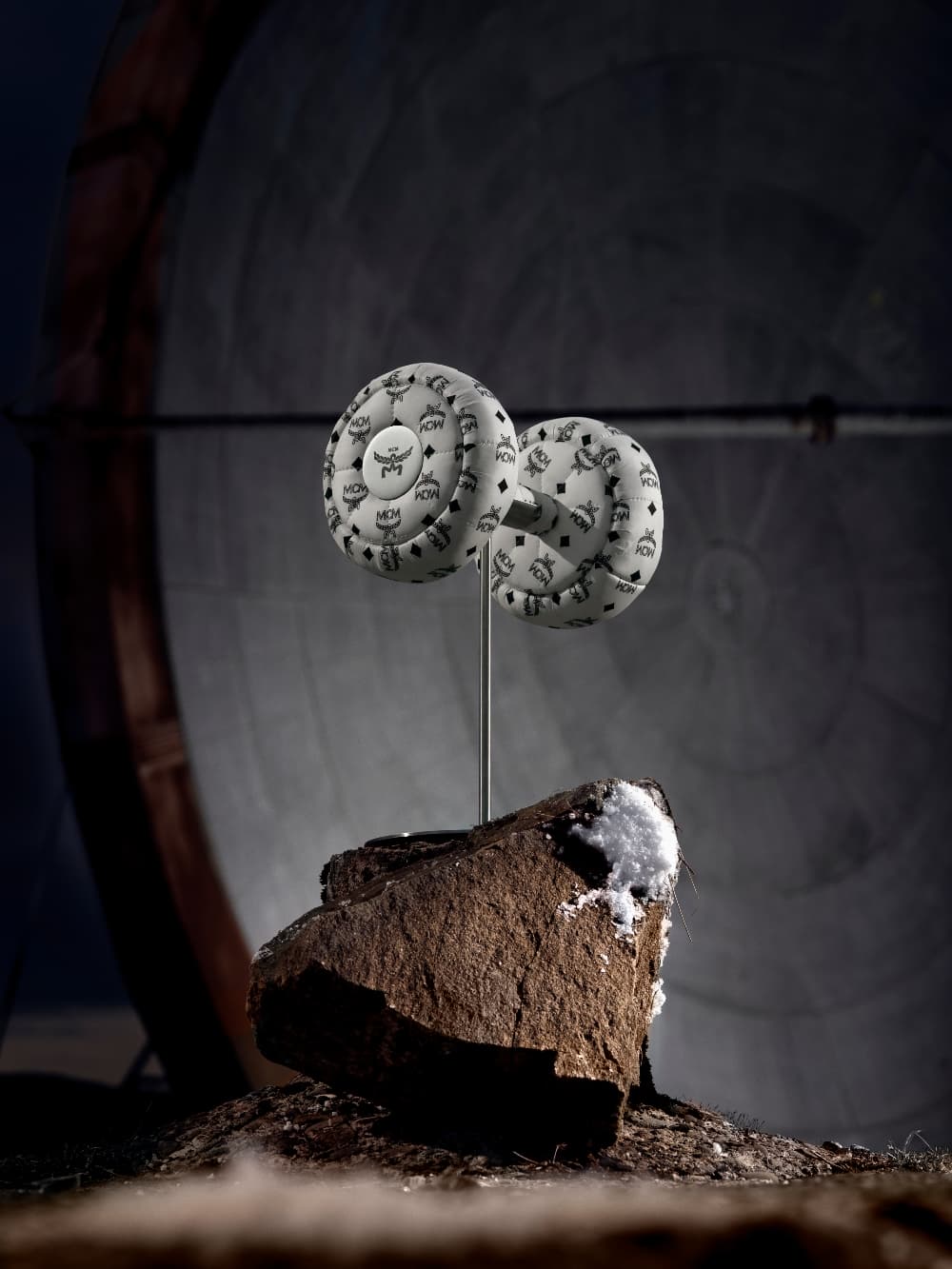
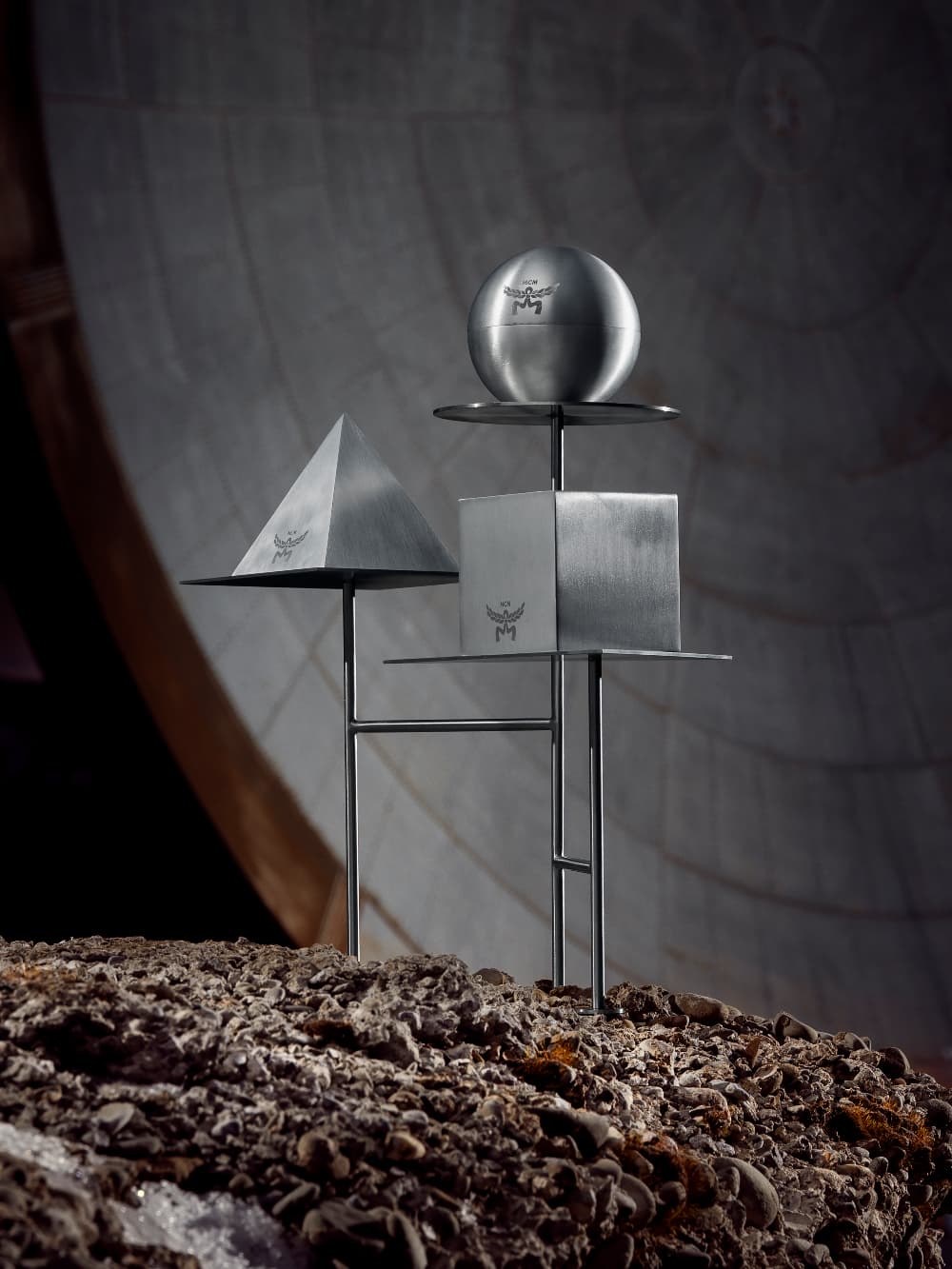
Central to the exhibition were pieces designed by Atelier Biagetti and upcycled using MCM’s Visetos monogram, including “Orbit” — a robot-inspired pouf; “Gravity” — a hand-weight designed to evoke weightlessness; “Mach-1” — a space-inspired helmet; and “Alphabet” — a series of sculptural candles. Together, these objects extended the installation’s narrative into functional design pieces that echoed its interplanetary themes.
Ralph Lauren
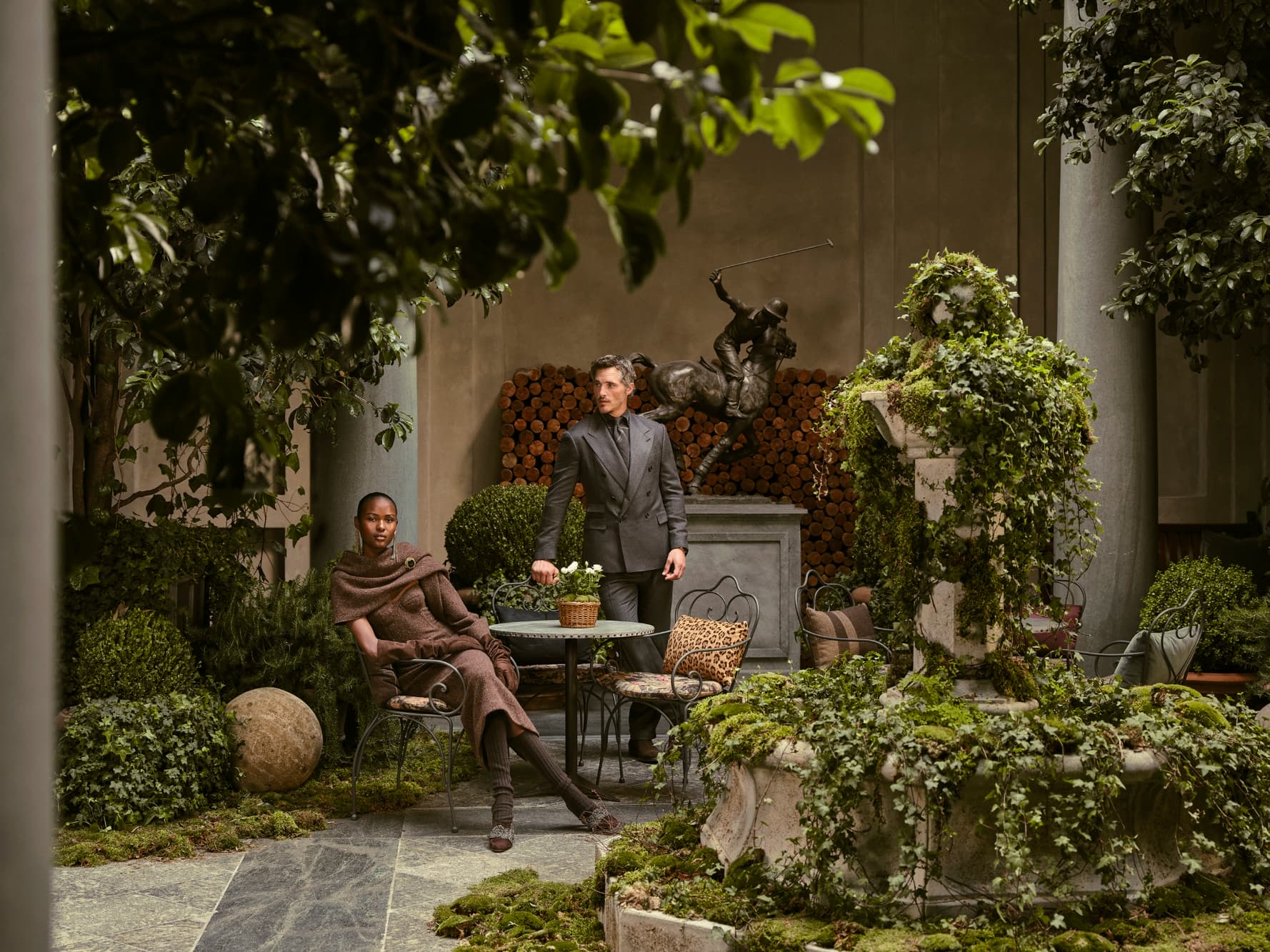
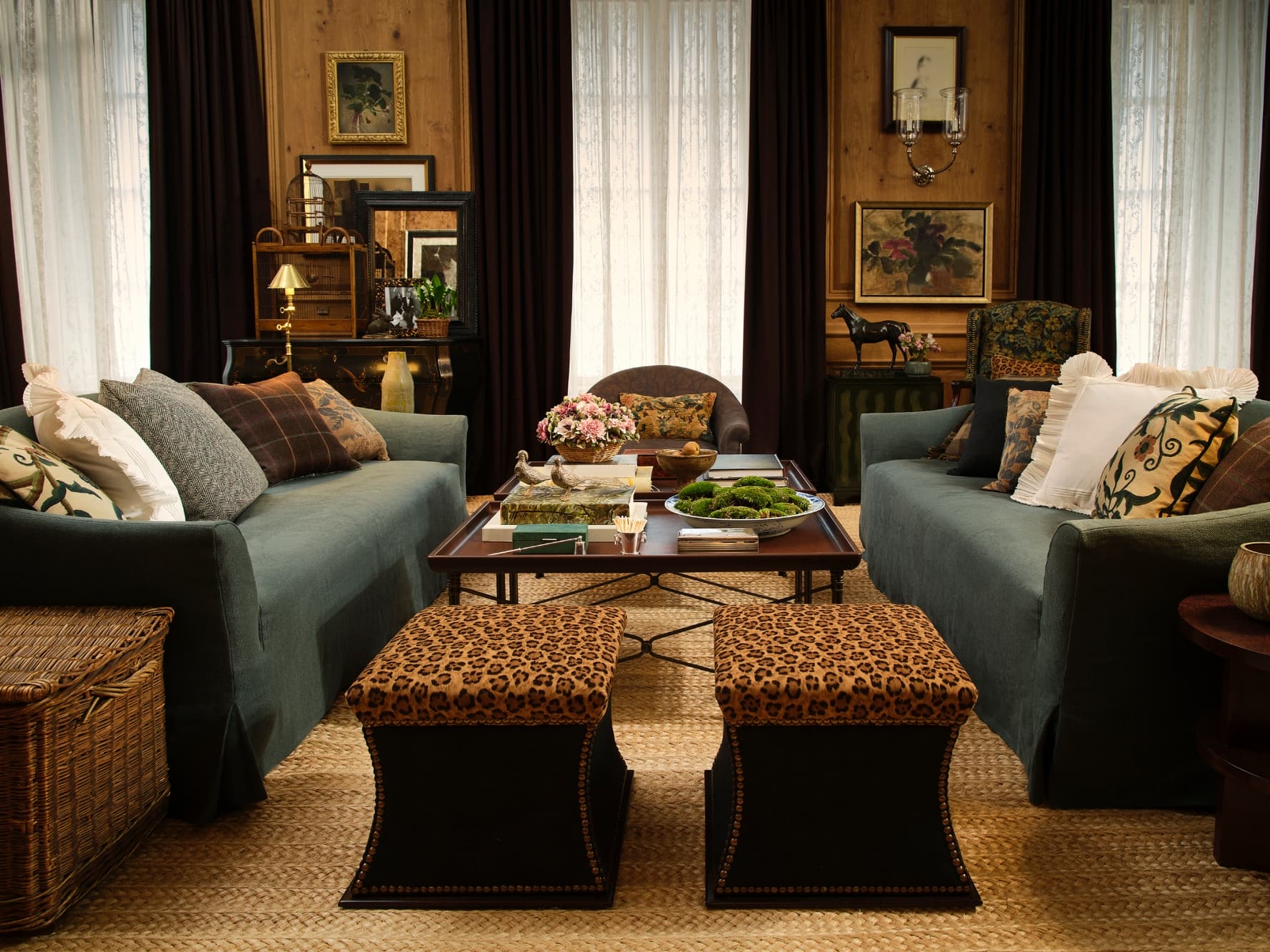
Ralph Lauren presented its Fall 2026 Home Collection in Milan through an immersive presentation staged inside a historic palazzo, offering a cinematic journey from country estate to city penthouse that reflects Ralph Lauren’s long-standing vision of a unified lifestyle across fashion and home. The experience introduced two key worlds within the collection — “Saddlebrook” and “Sterling Square” — designed to express the contrast between romantic rural living and refined urban interiors.
The presentation began with “Saddlebrook” — a country-inspired environment defined by oak-panelled interiors draped in leopard and deep blue velvets, amber jacquard florals and aubergine-toned tapestries. The space featured furniture such as the Beacon Bar Cabinet in oak with Brutalist and Art Deco influences, the Parlor Dining Table in bleached mahogany with Biedermeier references, and the Marquise Cocktail Table combining cast bronze and tooled leather. Upholstery and textiles layered wool plaids, ticking stripes and tapestry florals, alongside signature pieces such as the curved Lloyd Sofa in slate green and the Saddlebrook four-poster bed in bleached mahogany with a black horsehair headboard woven using 19th-century techniques. Lighting and decorative objects included the hand-painted Halpern Table Lamp with wildflower motifs, the Whitlock Chandelier inspired by rhododendron forms, Isabella floral dinnerware, and lacquer frames and boxes in emerald green.
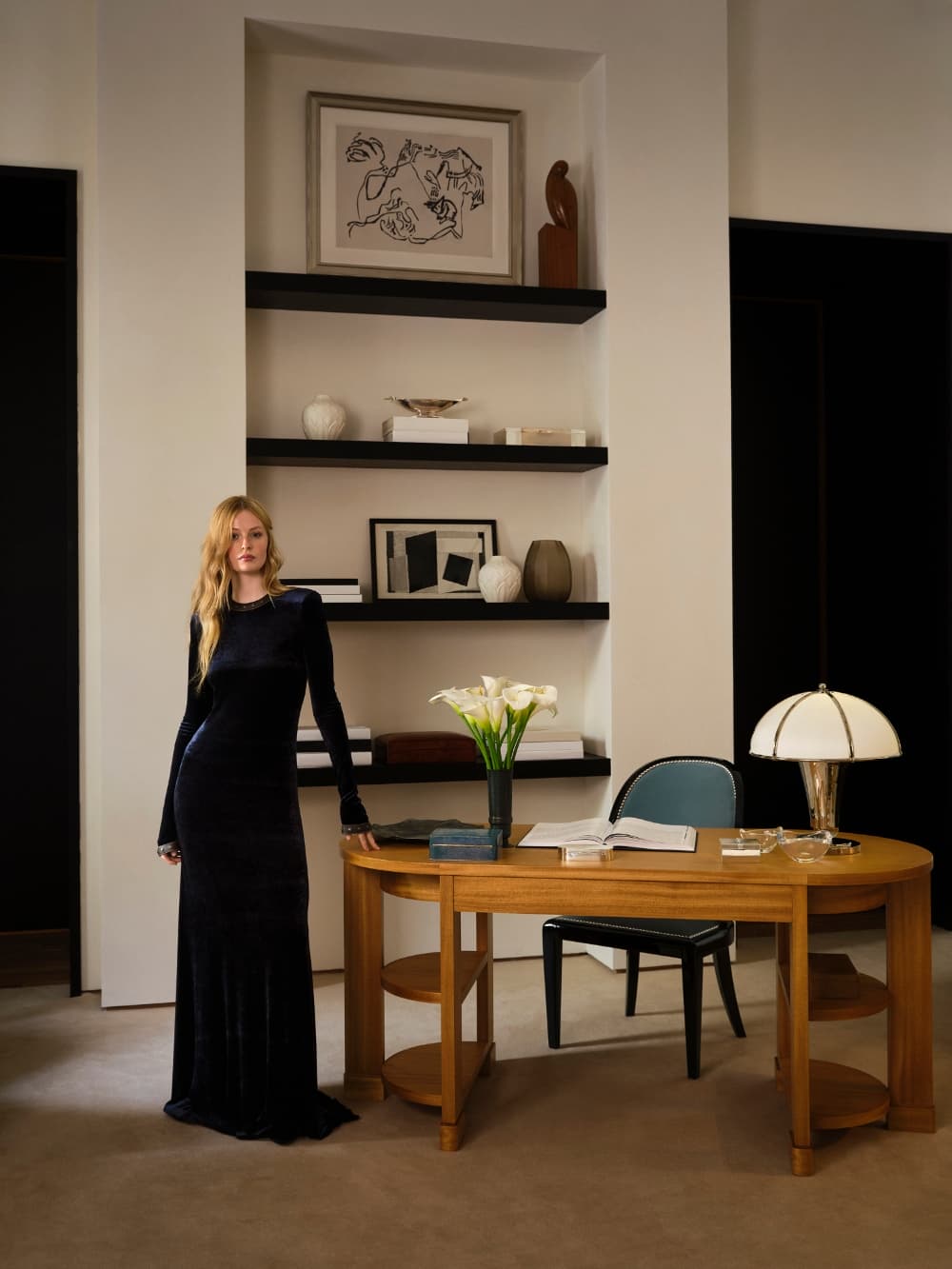
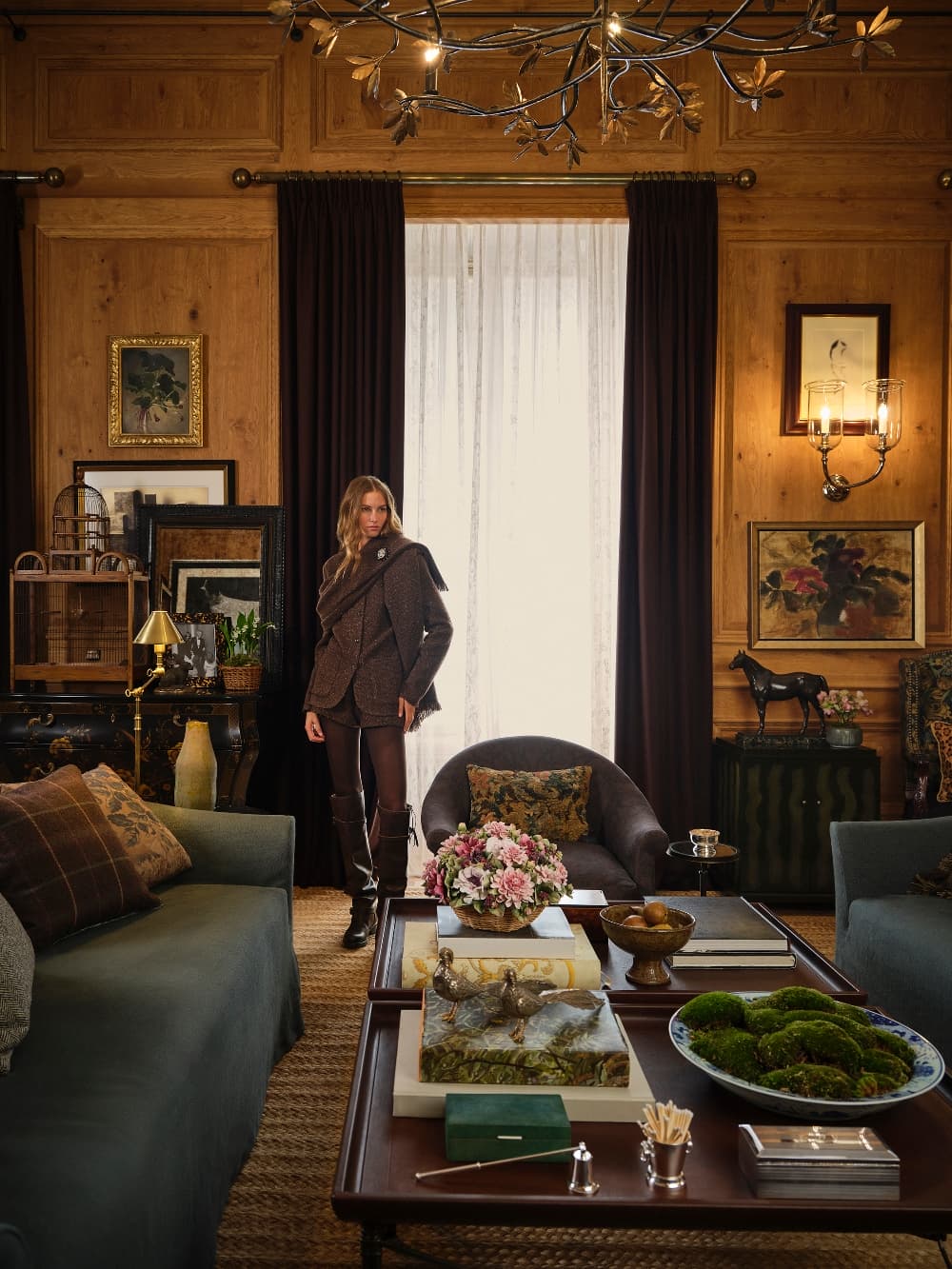
The journey continued into “Sterling Square” — a city penthouse setting defined by grand columns, draped interiors and a palette of cream, camel and celadon. Here, Art Deco influences shaped furniture such as the Cote d’Azur Bed in camel velvet, the Duke Dresser in black lacquer and the Bristol Cocktail Table with patinated silver detailing, alongside the Hammond Desk in bleached mahogany. Lighting pieces included the Bexley Table Lamp inspired by 1930s French vases and the Belmore Sconce with alabaster and ribbed detailing, while accessories and textiles featured straw marquetry boxes, lacquer tortoiseshell frames and cashmere throws produced in collaboration with historic mills, including Johnstons of Elgin and the English Pewter Company.
For the first time at Milan Design Week, models wearing Ralph Lauren’s Women’s Collection and Purple Label Menswear moved through the space, reinforcing the brand’s approach to fashion, interiors and hospitality as a single connected world. The presentation also marked the announcement of Ralph Lauren’s first standalone Home Store, set to open on Via della Spiga in Milan, expanding its lifestyle universe within the city.
MARNI x CUCCHI
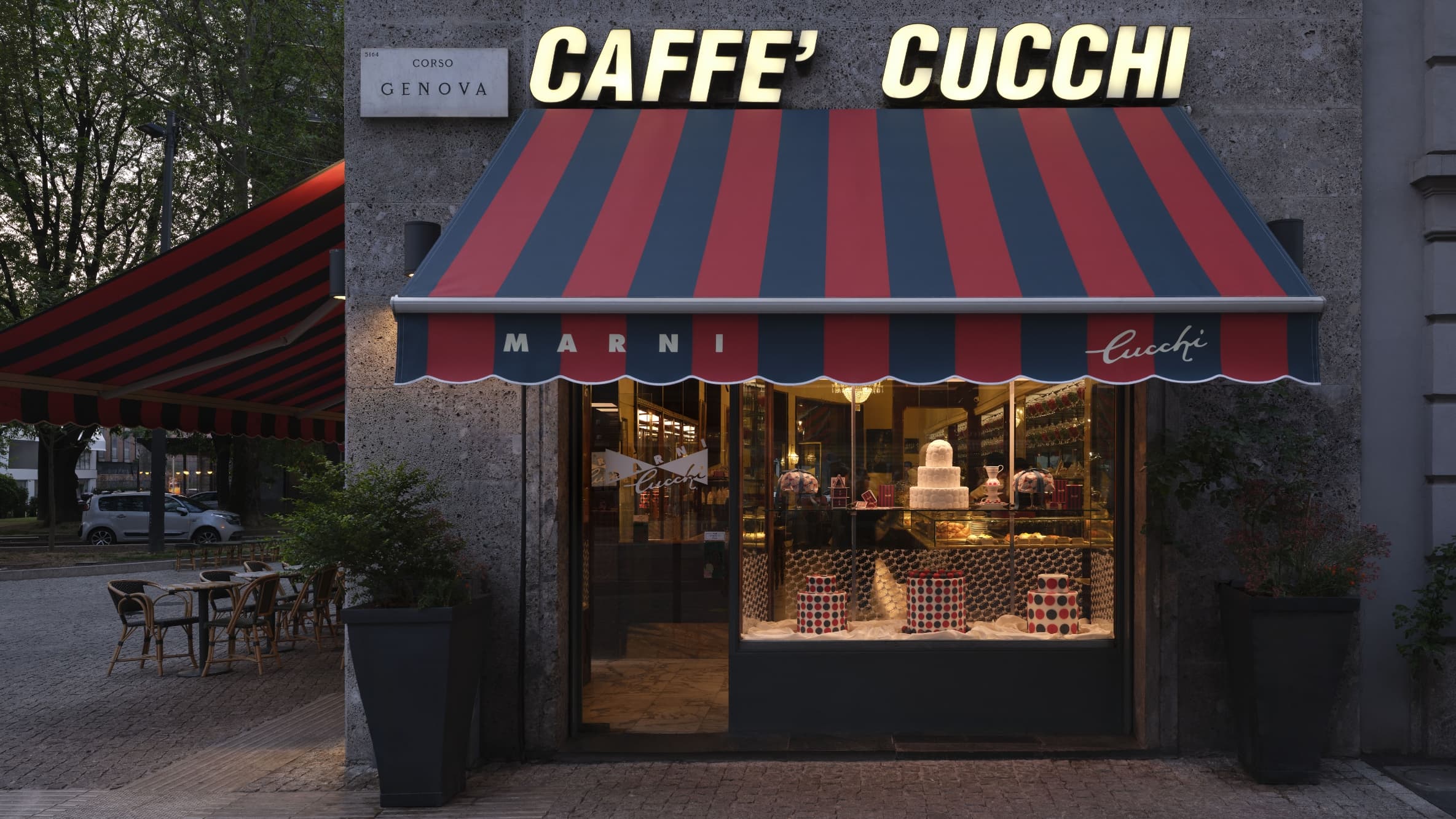
Marni presented MARNI x CUCCHI — an immersive project developed with Pasticceria Cucchi and designed by RedDuo Studio, reinterpreting one of Milan’s historic social destinations through Marni’s creative language. Opened ahead of Design Week and running until 15 July 2026, the project transformed the café into a contemporary stage for Milanese rituals — from morning cappuccino to aperitivo.
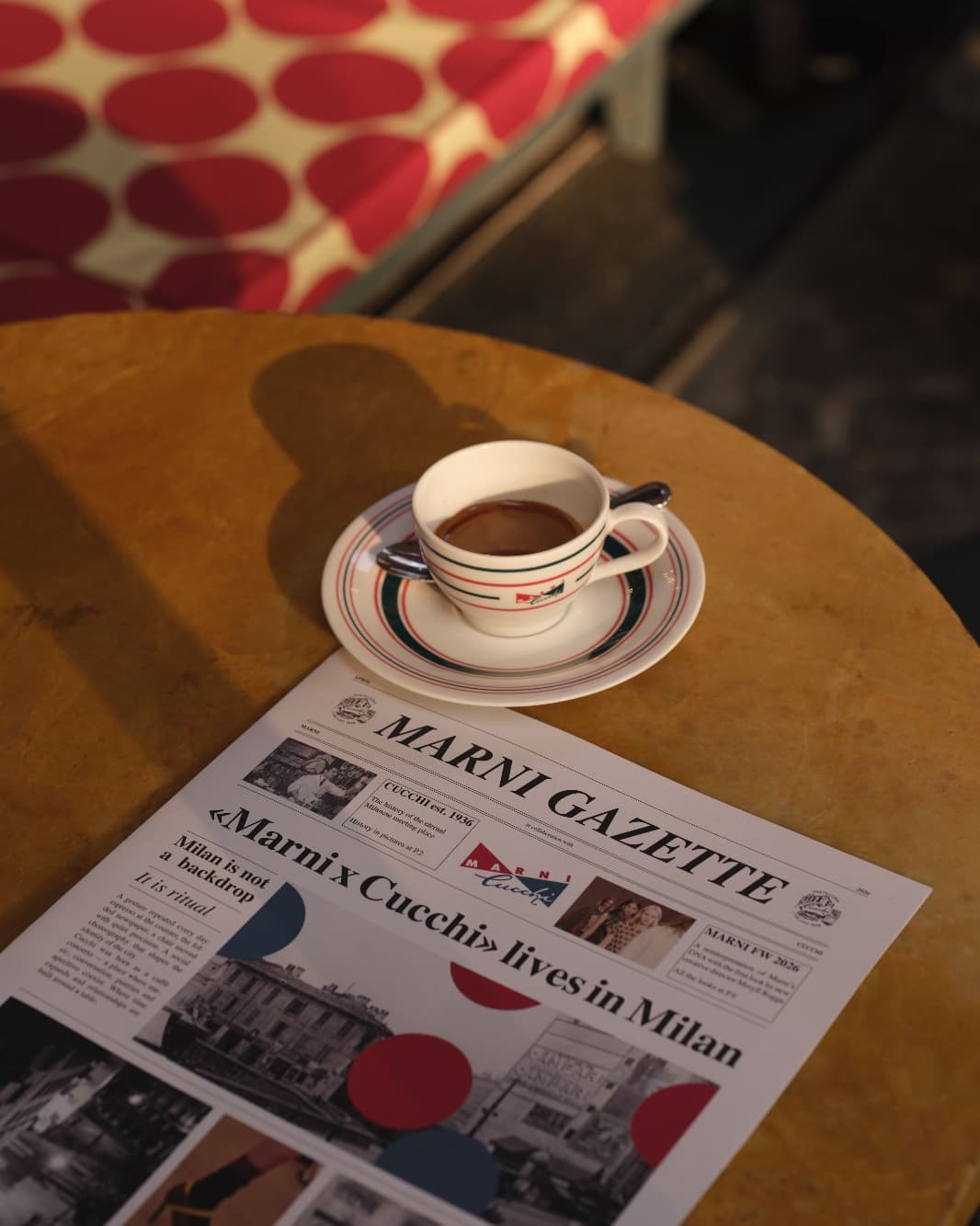
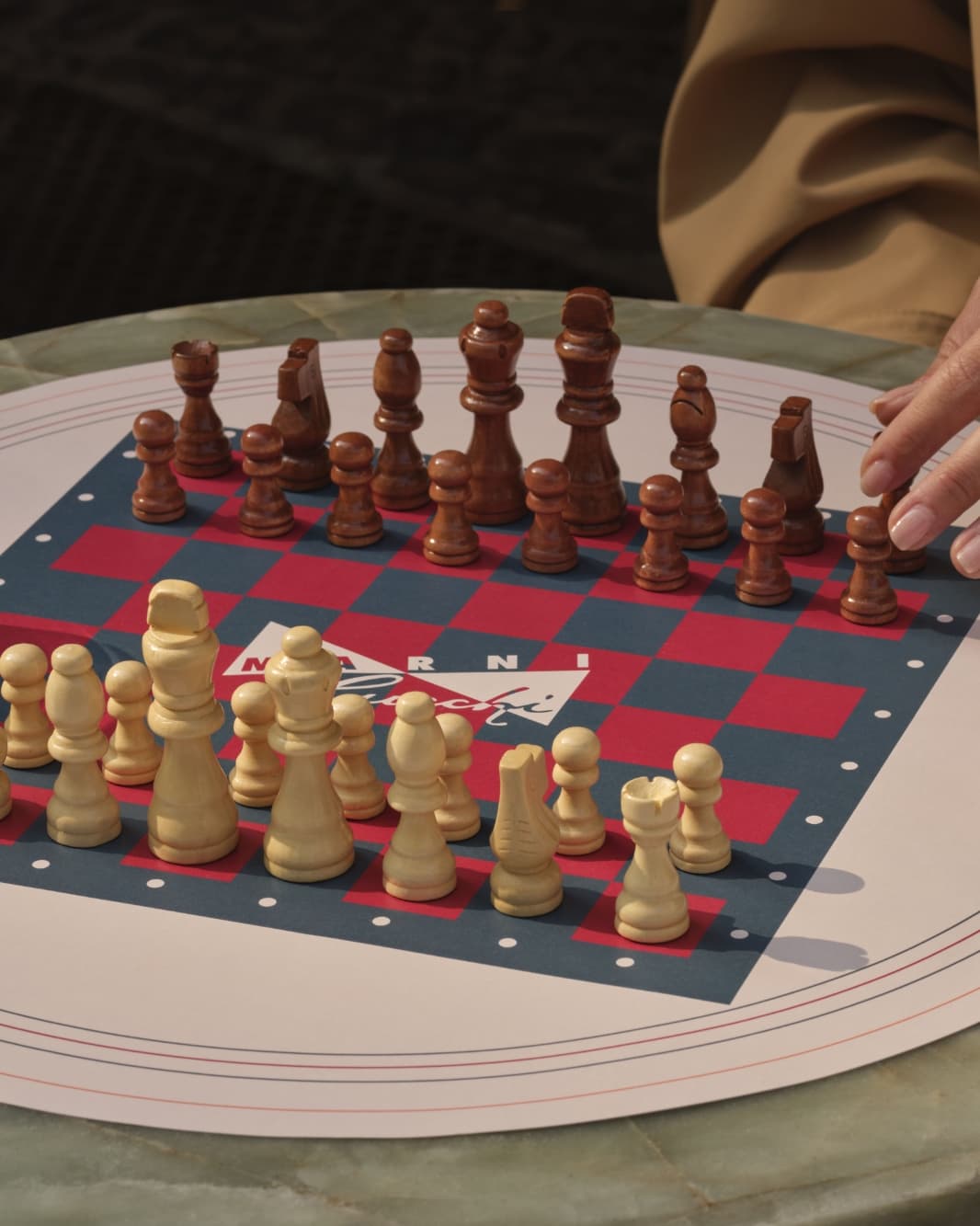
The intervention brought together Marni’s visual codes and Cucchi’s historic identity through a shared aesthetic vocabulary developed by RedDuo Studio. The space was defined by alternating red and green tones, retro-inspired stripes and polka dots and a unifying bow-tie motif used as a hybrid logo for the collaboration. Across the space, these elements were applied consistently to interiors, tableware, packaging and staff uniforms, reinforcing the café as a total designed space rather than a single installation. MARNI x CUCCHI reframed the café as an evolving cultural space, preserving its historical identity while reworking its visual and social codes through Marni’s design perspective and RedDuo’s spatial language.
Roberto Cavalli
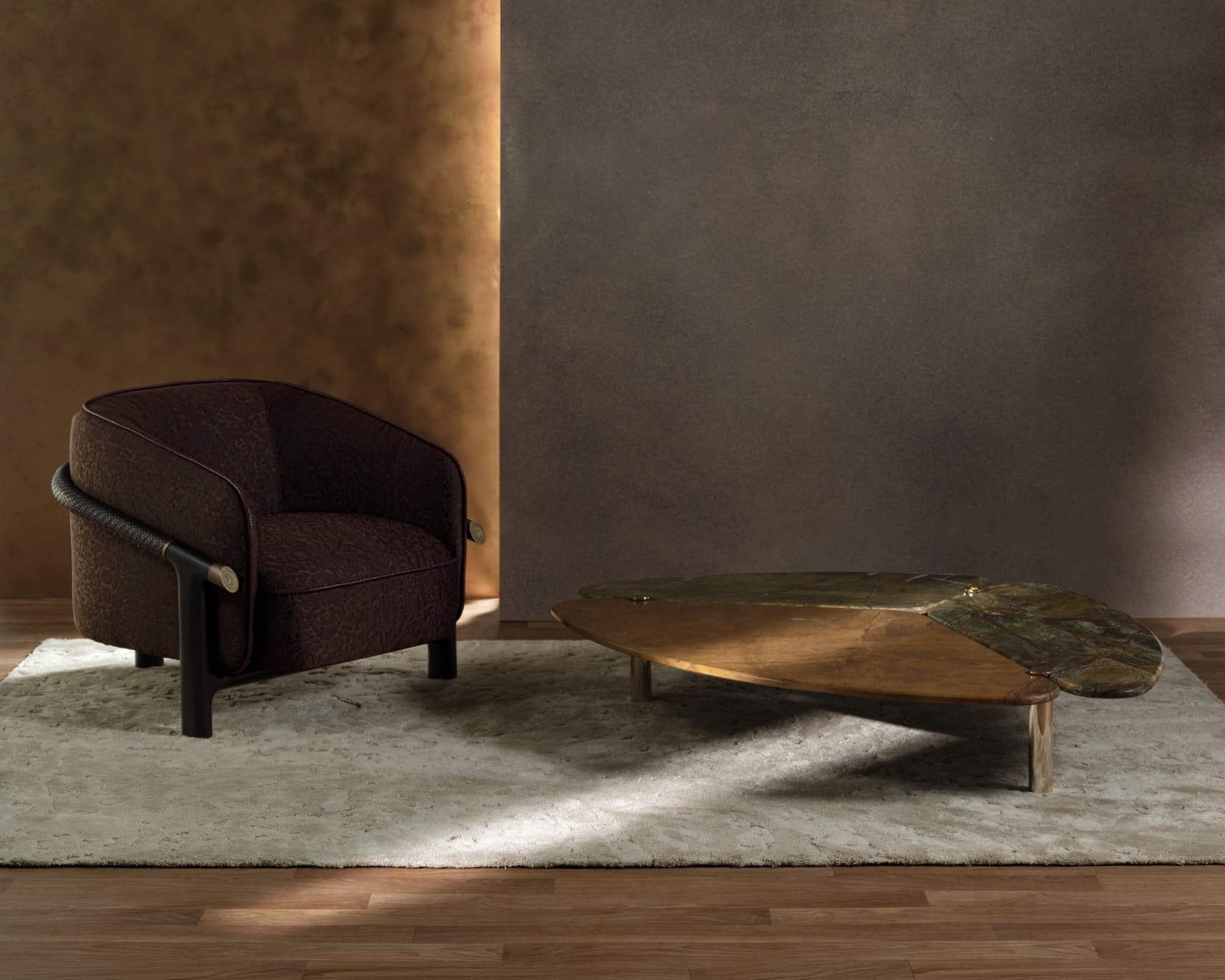
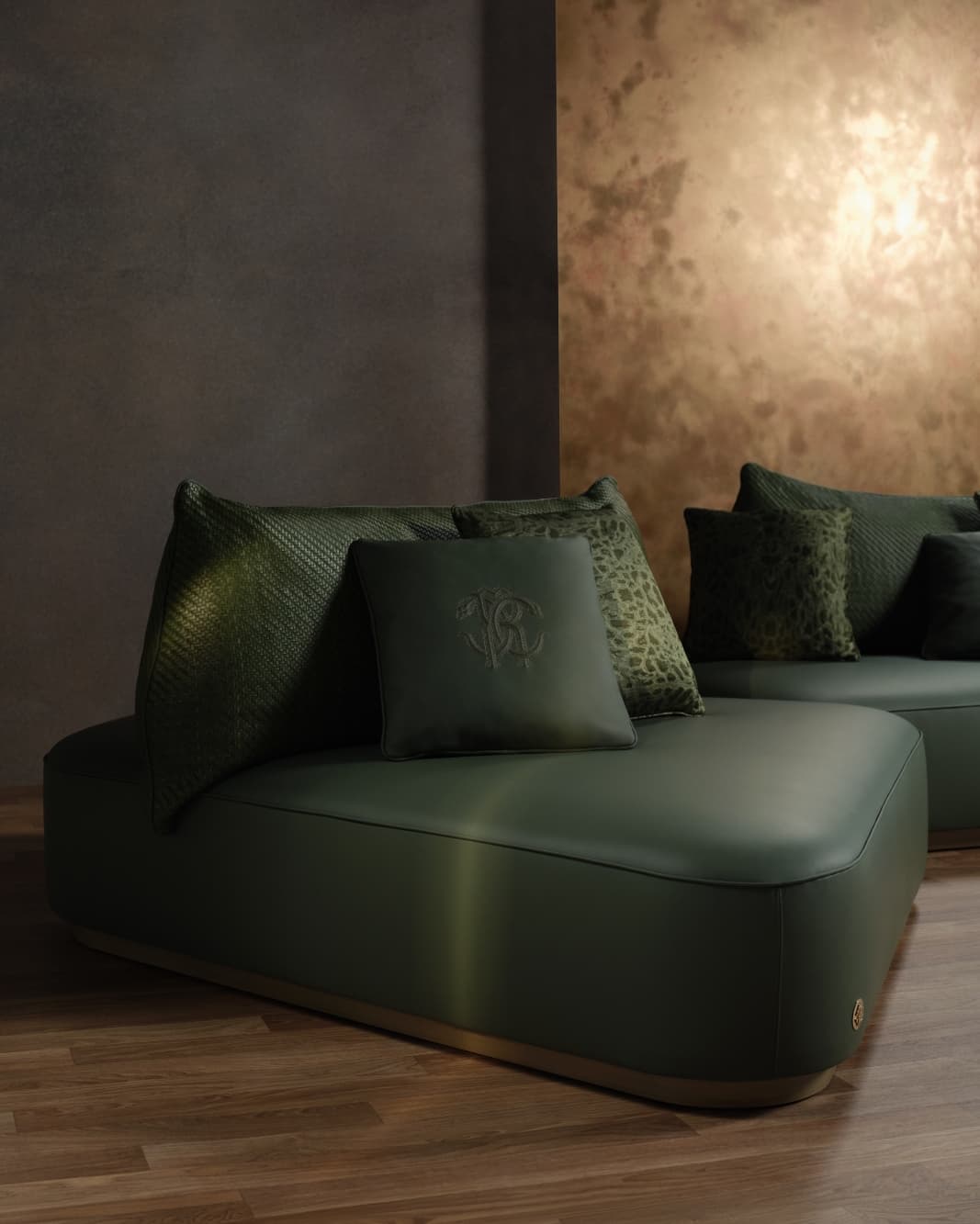
Roberto Cavalli Home presented “Mediterranean Heritage”, an immersive collection that reinterpreted the brand’s Mediterranean roots through a contemporary approach to living. The living area was defined by the Eivissa system, featuring organically shaped wooden structures with upholstered volumes and tubular backrests finished with geometric leather weaving, alongside the Mitjana bookcase and Galdana bar cabinet in metal and glass — designed to reflect light and evoke the surface of the sea. In the dining space, the Boswellia line was reintroduced with sculptural tables in Rain Forest Green marble and integrated metal detailing — including the “Snake” monogram — while the Martinica line combined beech wood, woven leather and aged metal across bar and lounge pieces.
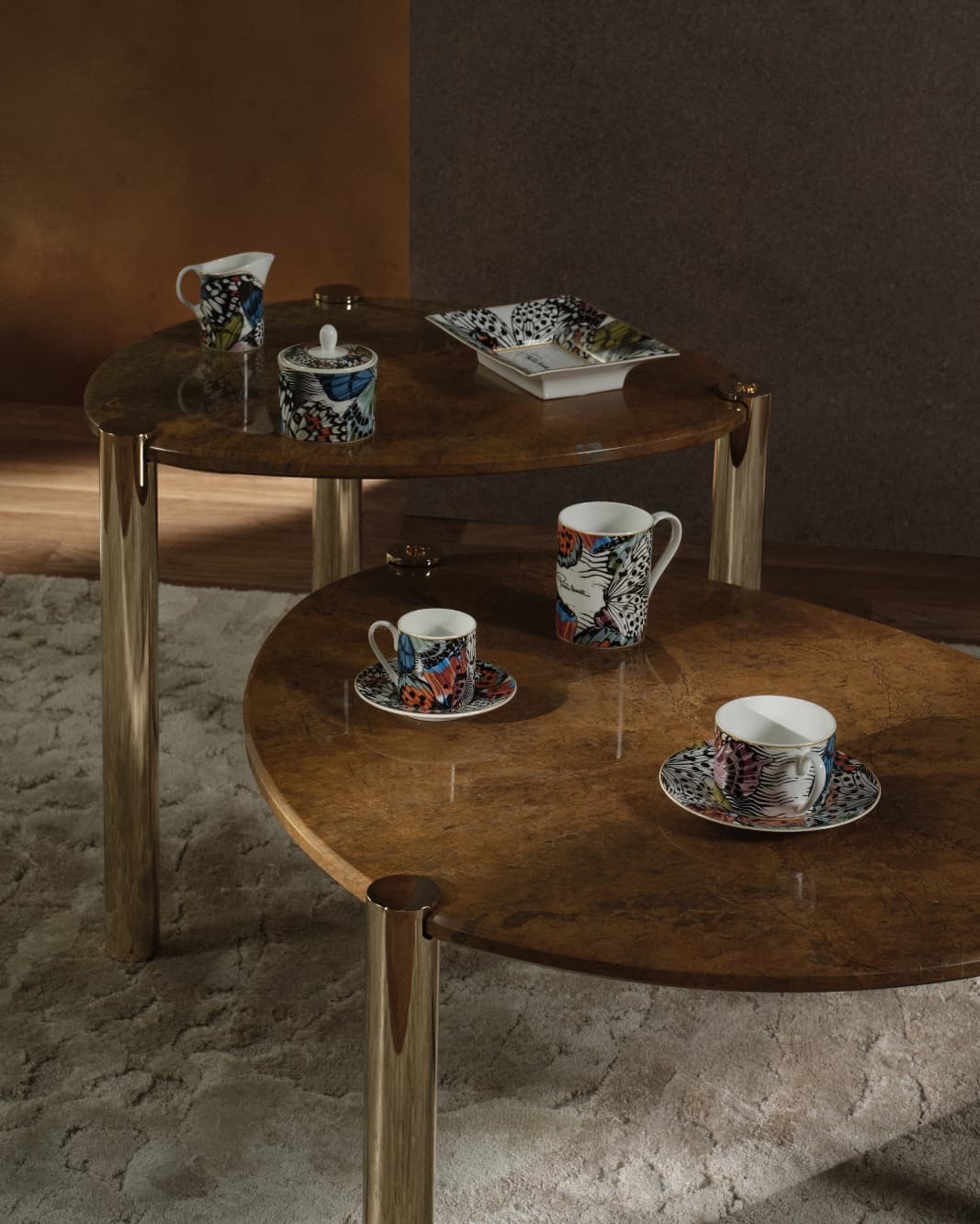
The textile offering expanded the narrative through two contrasting collections: “Winter Forest”, with dense floral motifs and bird details rendered in deep, painterly tones and “Moonlight”, which introduced cooler, more subdued shades designed to evoke a Mediterranean night atmosphere through lightweight, double-face bedding. The presentation was completed by the Mariposa tableware collection, defined by butterfly-wing inlays and subtle animalier accents applied across coffee, tea and serving pieces.
Special Mention
Lamborghini


Lamborghini introduced the Urus SE “Tettonero” Capsule — a limited series of 630 units of its hybrid Super SUV, powered by an 800 CV drivetrain and presented in two launch configurations, Viola Pasifae and Verde Mercurius. Developed by Lamborghini Centro Stile with the Ad Personam studio, the project pushes personalisation to its most extensive expression yet, offering more than 70 possible combinations across exterior and interior configurations.
The exterior programme expands through six body colours, including new additions for the Urus range such as Giallo Tenerife and Verde Mercurius, paired with a contrasting Nero Shiny upper section covering the roof, pillars, spoiler and exhaust details. These are further combined with six dedicated livery options and multiple wheel designs in 21”, 22” and 23”, alongside brake calipers available in six colours and optional “63” branding referencing the company’s founding year.

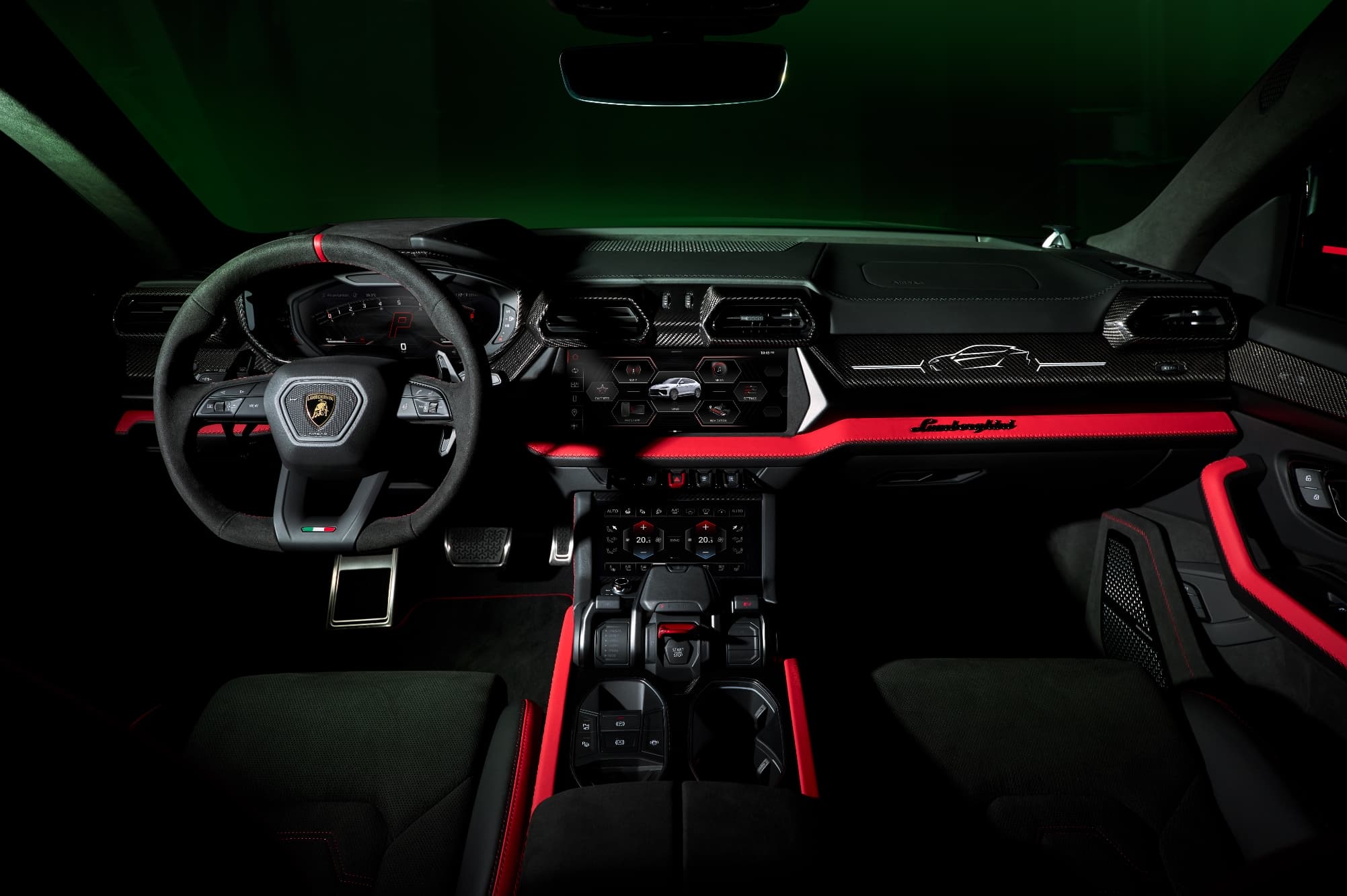
Mechanically, the Urus SE “Tettonero” Capsule combines a 4.0-litre twin-turbo V8 with a rear-mounted electric motor and 25.9 kWh battery, enabling up to 60 km of electric range. The system delivers 800 CV and 950 Nm of torque, accelerating from 0–100 km/h in 3.4 seconds and reaching a top speed of 312 km/h. A torque-splitting system and electronically controlled rear differential allow variable distribution of power and adaptive handling across different driving conditions.
The capsule also highlights Lamborghini’s Ad Personam programme as a core expression of its design strategy, positioning each configuration as a highly individual specification within a limited production run. The first images of the model were shot at Pirelli HangarBicocca in Milan.
For more on the latest in luxury design reads, click here.