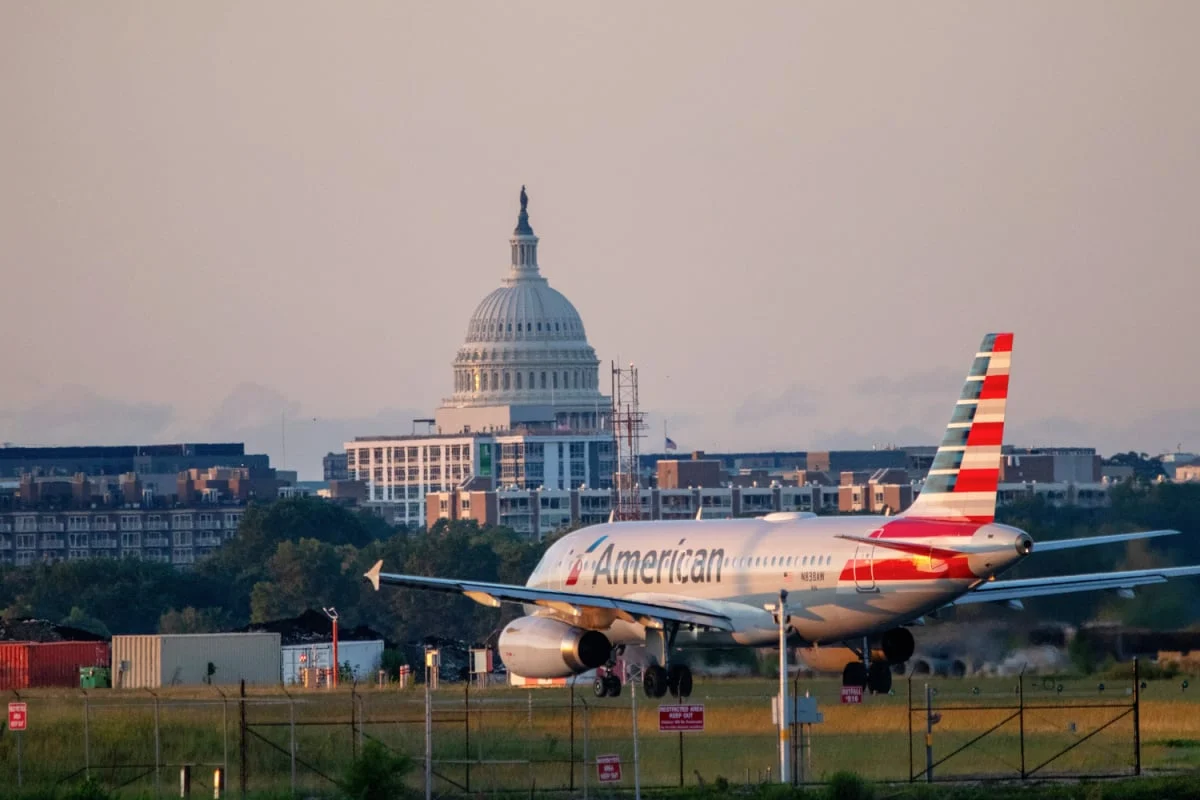
Navigating the airspace around the nation’s capital has become a grind for frequent flyers. If you book a flight into Ronald Reagan Washington National Airport (DCA), you are entering one of the most congested and delay-prone corridors in the country, fighting for runway space alongside constant military drills and VIP airspace restrictions.
This was my home airport for a year, and it felt like every time I flew out I was met with some kind of delay.
If you opt for Washington Dulles (IAD), you’re forced to battle toll road traffic and huge terminal crowds just to reach your gate. Baltimore/Washington International (BWI) offers a slight reprieve, but it’s a logistical hike if your final destination is actually downtown D.C. or the affluent suburbs of Northern Virginia.
Travelers have been begging for a low-stress alternative for years, and relief is finally on the way. The D.C. metro area is officially getting a fourth commercial airport, transforming the aviation landscape in Virginia for the first time in over half a century.
The Historic Upgrade To Washington Manassas (HEF)
Enter Washington Manassas Airport. Located about 30 miles outside of the hyper-congested airspace of central D.C., this facility is undergoing a multi-million dollar transformation.
Formerly known strictly as Manassas Regional Airport, the airfield officially rebranded in the spring of 2026 to reflect its upcoming commercial status, maintaining its HEF airport code. For decades, this airstrip was the quiet domain of retired airline pilots, private jet charters, and aviation hobbyists logging weekend hours.
That era is rapidly coming to an end. On August 31, 2026, the facility achieved a monumental milestone by officially securing its FAA Part 139 Airport Operating Certificate.
This is not just a standard bureaucratic rubber stamp; it marks the very first time in 53 years that any airport in the state of Virginia has been granted a new commercial operating certificate by the Federal Aviation Administration.

The Timeline: When Can You Book A Flight?
Building a commercial hub from the ground up requires serious infrastructure, extensive environmental assessments, and precision timing.
Because of the scale of the project, the timeline has been adjusted to ensure a perfectly smooth launch.
The brand-new passenger terminal is currently slated to open its doors in the fall of 2027. This state-of-the-art facility will pave the way for the very first commercial flights to officially take off in November 2027.
Airport leadership is intentionally keeping the initial launch highly manageable to avoid the operational meltdowns we constantly see at major international hubs.
When the doors open next year, travelers can expect a modest three to four daily departures. Once the logistics are locked in, the tarmac is tested, and the operation proves it can run like clockwork, the airport plans to rapidly scale up to a maximum of 24 daily flights.
While heavy negotiations are happening behind closed doors with several domestic carriers, no specific airlines have officially announced routes into HEF just yet.

A Frictionless Traveler Experience
The biggest draw of Washington Manassas Airport isn’t just the location; it’s the lack of friction.
The long-term vision for this airport is to provide passengers with a “curb-to-gate” time of roughly 7 to 12 minutes. You won’t have to navigate giant multi-level parking garages, endure long TSA security lines, or sprint across concourses to make your connection. It’s designed to be a boutique, highly efficient transit experience for domestic travelers who want to bypass the chaos of Dulles entirely.
To support this rapid growth and ensure absolute safety in the busy regional airspace, a huge new 125-foot air traffic control tower is also in the pipeline, with structural completion and full operational status targeted for 2029.
Tip From The Editor (me): While we wait for HEF to open its doors next year, if you‘re forced to fly into Dulles (IAD) this winter, skip the expensive rideshares. The Silver Line Metro extension is fully operational and drops you directly at the terminal via a moving walkway, saving you from sitting in standstill traffic on I-66 and keeping your travel budget happy.

Must-Have Traveler Tools For Going Abroad
If you haven’t traveled internationally in a while, you should know it’s a very different world right now than it was a few years ago. Between complex geopolitical conflicts and tightening visa requirements affecting U.S. passport holders, planning well in advance of a trip is essential to avoid unpleasant surprises down the line.
That’s why we’ve launched a bunch of new free-to-use traveler tools recently:
Enter your email address to subscribe to Travel Off Path’s latest travel news, straight to your inbox
