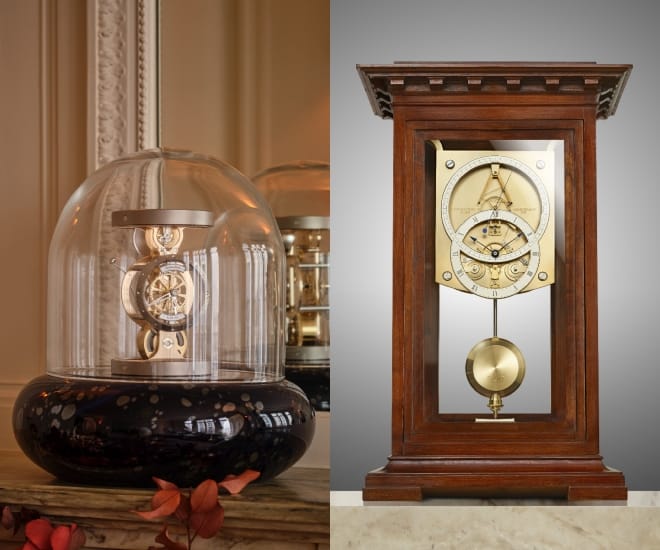
Since the early part of the 20th century, the traditional watchmaking conversation has been dominated by what we wear on our wrists. It is hard to imagine that clockmaking and watchmaking are not synonymous today, or that the wristwatch is not the only form a wearable watch might take (perhaps we will return to pocket watch in a different story). The mechanical desk or standing clock – once the centrepiece of the home and the primary rhythm of daily life – seemed similarly destined to fade into the realm of antiques. However, a quiet but powerful renaissance is underway. In an era defined by digital ubiquity, the mechanical clock is being reimagined not as a tool for telling time, but as a spectacular form of kinetic art.
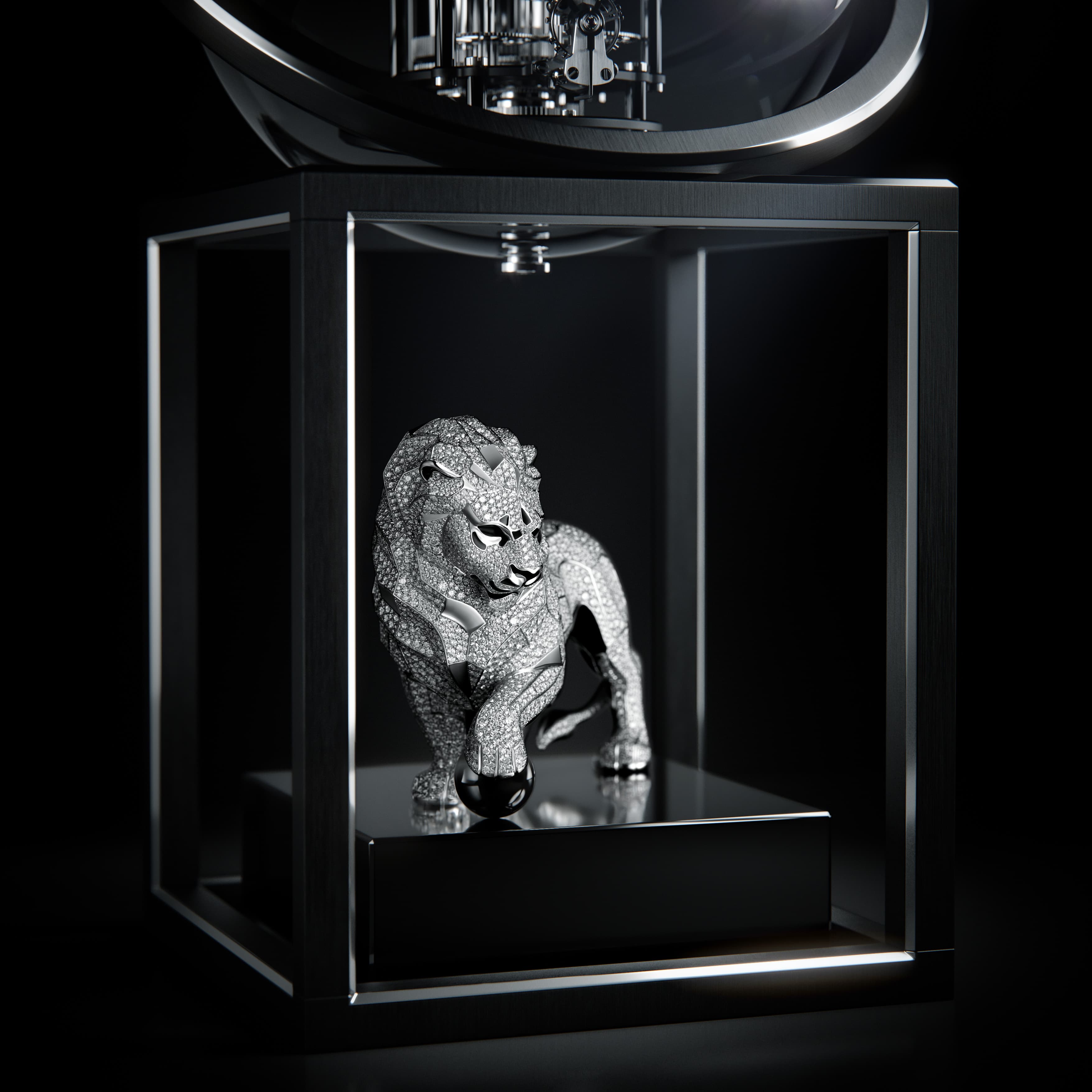
The strongest indicator of this revival is the re-entry of heavyweights into the arena. Luxury powerhouses such as Vacheron Constantin and Chanel have recently joined the race, deploying their sophisticated capabilities to win over collectors. Their contributions are nothing short of monumental: Vacheron Constantin’s astronomical marvel La Quete du Temps and Chanel’s Couture O’clock and Lion Astroclock were years in the making, arriving with a functional and aesthetic impact that has made waves across the industry.
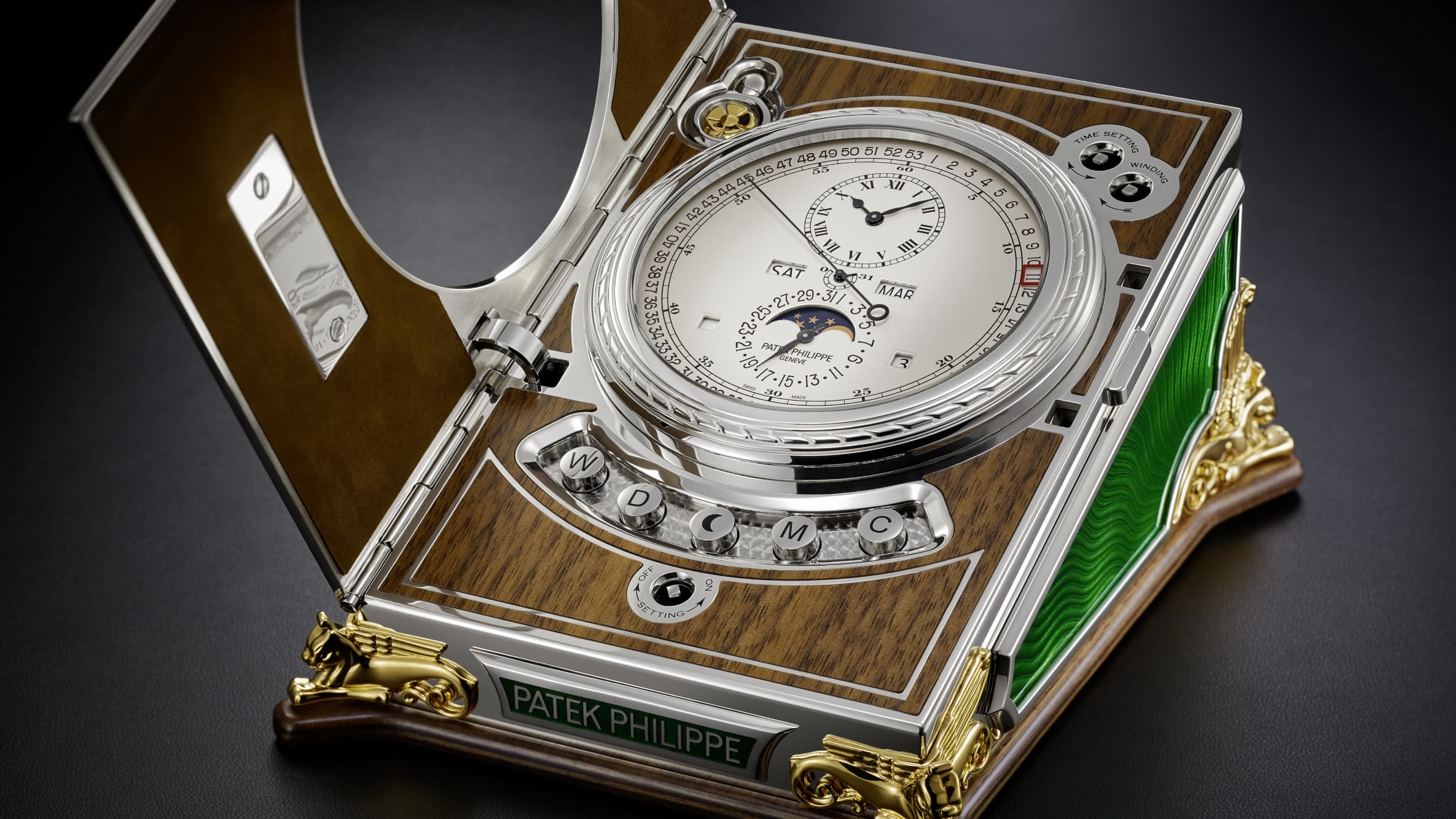
Similarly, the Naissance de l’Amour automaton from Van Cleef & Arpels stands as a coveted example of métiers d’art, adding a “cherry on top” to this growing sector. It is perhaps no accident that Patek Philippe included a desk clock in its slew of novelties last year, Ref. 27000M. This clock was the brand’s standard bearer at Watches and Wonders Geneva, and we covered it multiple times. That being said, to call this a ‘growing sector’ is perhaps a little over-the-top but it is all relative.
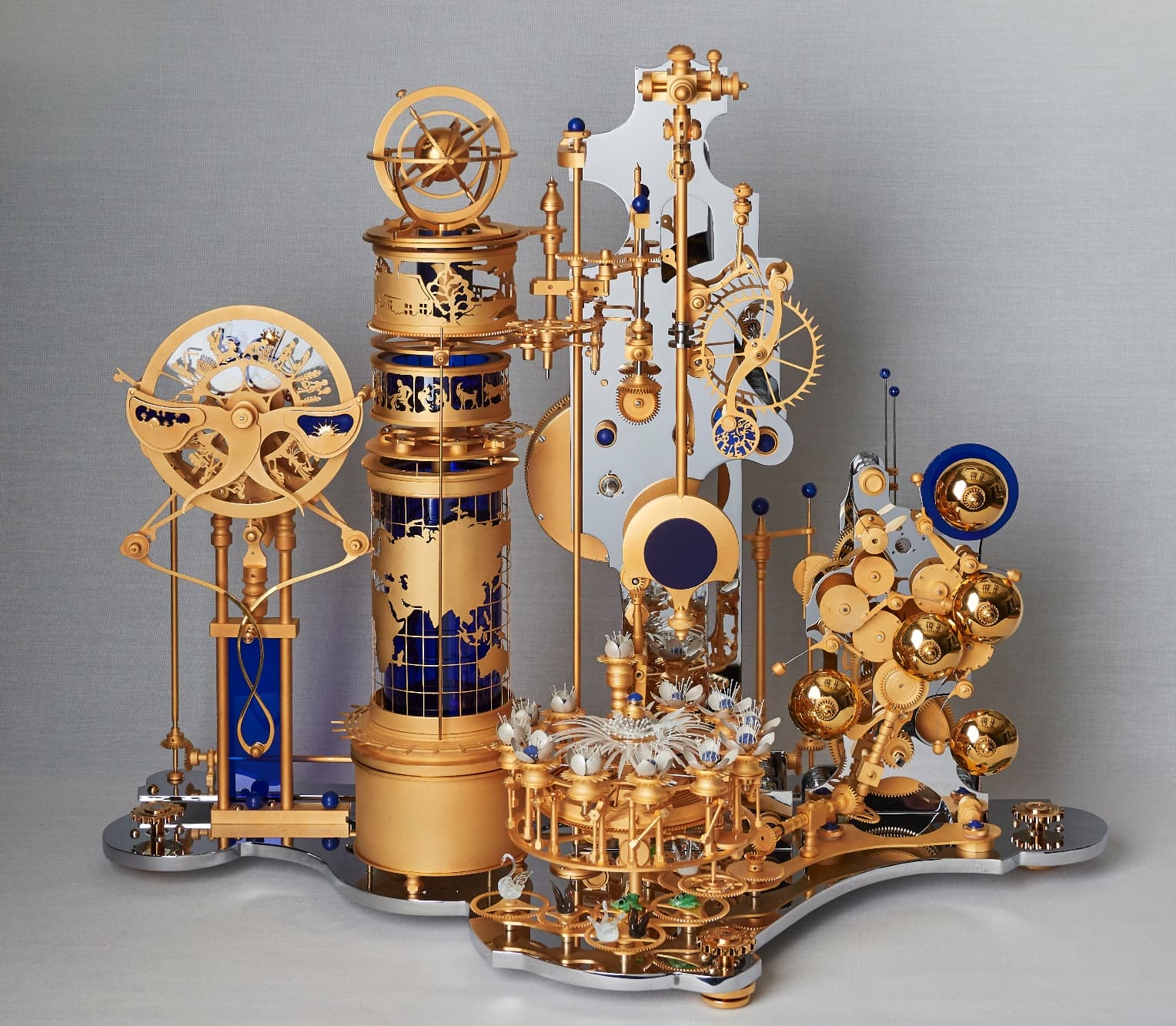
The resurgence we are concerned with here signals a shift in the definition of high-end collecting. Today’s artful clocks have emerged as ideal staging grounds for the elite to express their artistic passion, offering a tangible, mechanical counterpoint to a digitised world. While historical patrons such as Henry Graves Jr. and James Ward Packard once commissioned exquisite timepieces from Patek Philippe, the modern collector is also looking for something new: objects that blend traditional complexity with contemporary daring.
While the established maisons provide validation, the true energy of this movement often stems from a smaller and powerful group of independent creators. These artisans are not merely preserving a craft; they are exploding its boundaries. From offering novices the chance to build their own movements to creating “minute munching” monsters, these independent makers are proving that the static object can be the most dynamic force in horology. Leading this charge is a creator who works not in a factory, but in a world entirely his own.
MIKI ELETA: THE KINETIC ARTIST
When discussing high-end clocks, instead of focussing on brand creations, industrial production, and precision instruments, the discerning collector cannot overlook Miki Eleta, a possible genius in the art of clockmaking. Eleta has developed an inviting world where complicated luxury is the essence of life, going a long way towards supporting a revival of clockmaking.
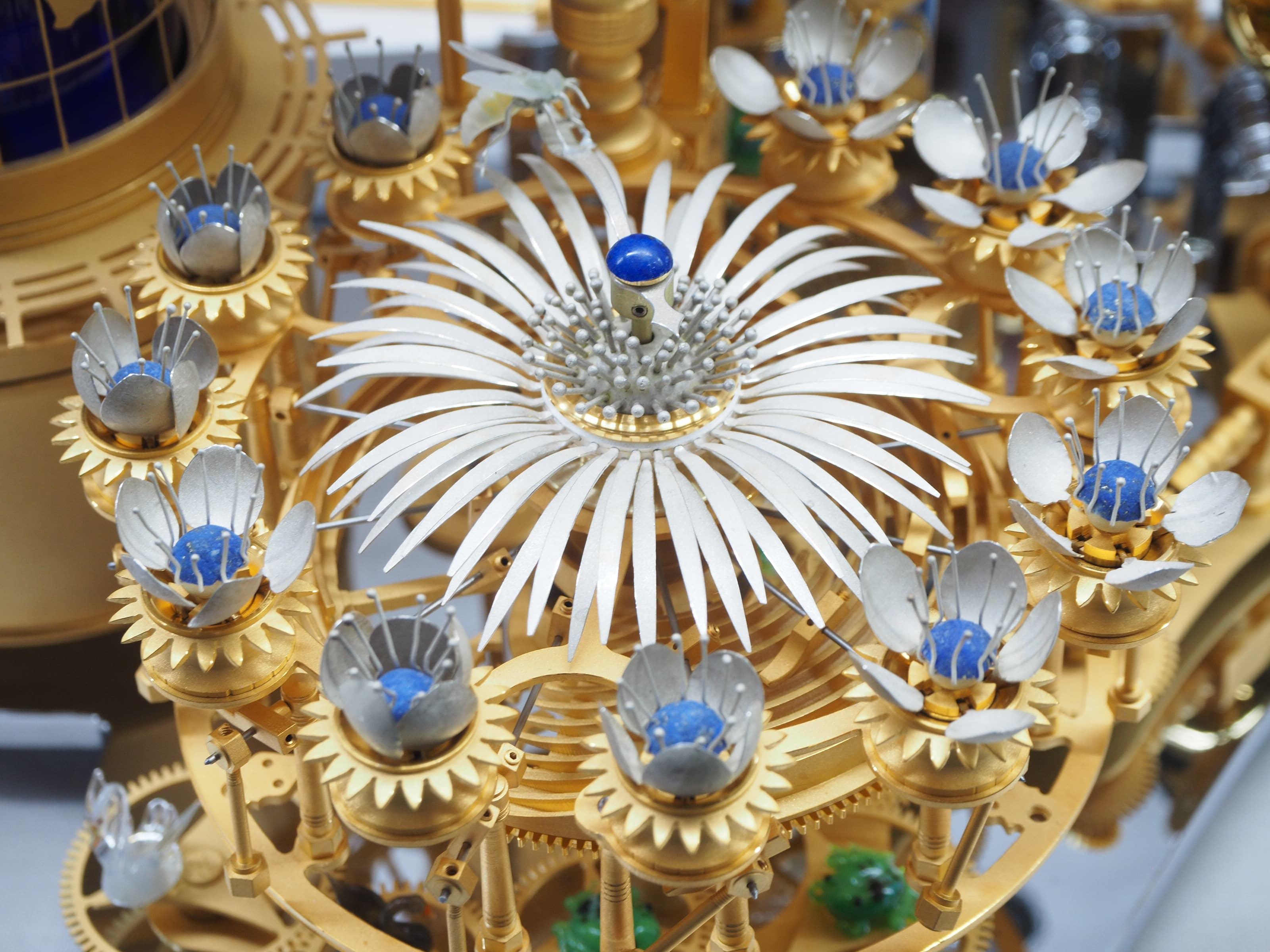
Eleta’s journey began with an unexpected encounter. A sceptic questioned his ability to learn and work accurately, from the perspective of making a timekeeping instrument. This was a challenge that became a life-changing experience. “From then on, my entire focus was on proving him wrong by developing a grand clock of high calibre in the first place,” Eleta recalled.
The path was not easy and, in fact, was cluttered with unknowns. At the time, Eleta was creating kinetic art and possessed some mechanical knowledge, but he admitted, “I still had a lot to learn about building a proper clock.”
Eleta’s clocks are “purely an open canvas” of his realised thoughts; they are intricately playful creations that are (literally) extraordinary inventions. “I love my freedom and feel inspired by it every second… helping me to put my ideas into practice on a scale that’s reflective of complex magnificence,” he said.
Unlike manufacturers who rely on industrial environments, Eleta works in his Zurich atelier without CNC machines or contemporary design tools. “I create every component for my clocks by hand,” he explained. “I create art inspired by certain events, cultures and emotions.” He utilises traditional materials such as brass and steel for their specific properties, alongside precious metals, gemstones, shells, and glass.
Nature remains his primary muse, as seen in the Natuhrzeit clock in these pages. “I believe in living close to nature as it provides everything one needs to stay creatively sharp,” said Eleta. He cited the evening primrose, whose petals open in the twilight, as a fascination. “The physical mechanism involved in the opening of the petals is interesting. As I see it, I ask myself questions like: Why does this phenomenon happen? Could I implement it in a clock with absolute precision?”
Eleta’s work requires originality to convince collectors of their worth, in his opinion. Here are just a few.
Caravan Clock & Horse Race Clock: Exhibited at Dubai Watch Week, the Caravan Clock followed the success of the 2022 Horse Race Clock. Both pieces honour Arab culture and serve as excellent examples of complications with a high-appeal factor.
Svemir: The gold-plated astronomical clock, Svemir (2021), garnered significant attention when the GPHG introduced it in the “Mechanical Clock” category. Eleta noted, “It’s absolutely gratifying to know that they’ve returned to the origins of clockmaking by reintroducing the category thanks to the nomination of this clock”.
Minute Muncher: “Believe it or not, each one of us has such an uncontrollable animal inside that secretly eats away our minutes and we can’t help it. That’s why I love this ugly creature teaching us to value time and use it (with discretion).”
Eleta describes the creative process as an unexpected journey of discovery. “I do not stubbornly stick to my ideas and instead prefer to surrender myself to the realm of the creative process. Often, it’s obstacles that force me to think beyond and open up to new possibilities,” he said.
The physical mechanism involved in the opening of the petals is interesting. As I see it, I ask myself questions like: Why does this phenomenon happen? Could I implement it in a clock with absolute precision?”
— Miki Eleta
MAISON ALCEE: THE DO-IT-YOURSELF LUXURY EXPERIENCE
While France is known for luxury brands such as Cartier – the Mystery Clock remains legendary – both watch and clockmaking have largely faded into the mists of the past. Maison Alcee, founded in 2019 by wife-and-husband duo Alcee and Benoit Montfort, is one the makers seeking to change that.
Maison Alcee is distinct because it invites novices to participate directly in the making of clocks. “We’re the first clockmaking brand tailored to help the enthusiasts in assembling their own timepieces with absolute integrity by providing them a watchmaking kit designed for this very purpose,” Alcee explained.
The presentation box of the Persée clock contains 233 clock parts, specialized tools developed for the uninitiated, and a beautiful book to guide apprentices on their journey. The goal is to ignite passion and provide a meaningful experience where owners gain insight into time itself. Think of Maison Alcee as the Lego of clockmaking.
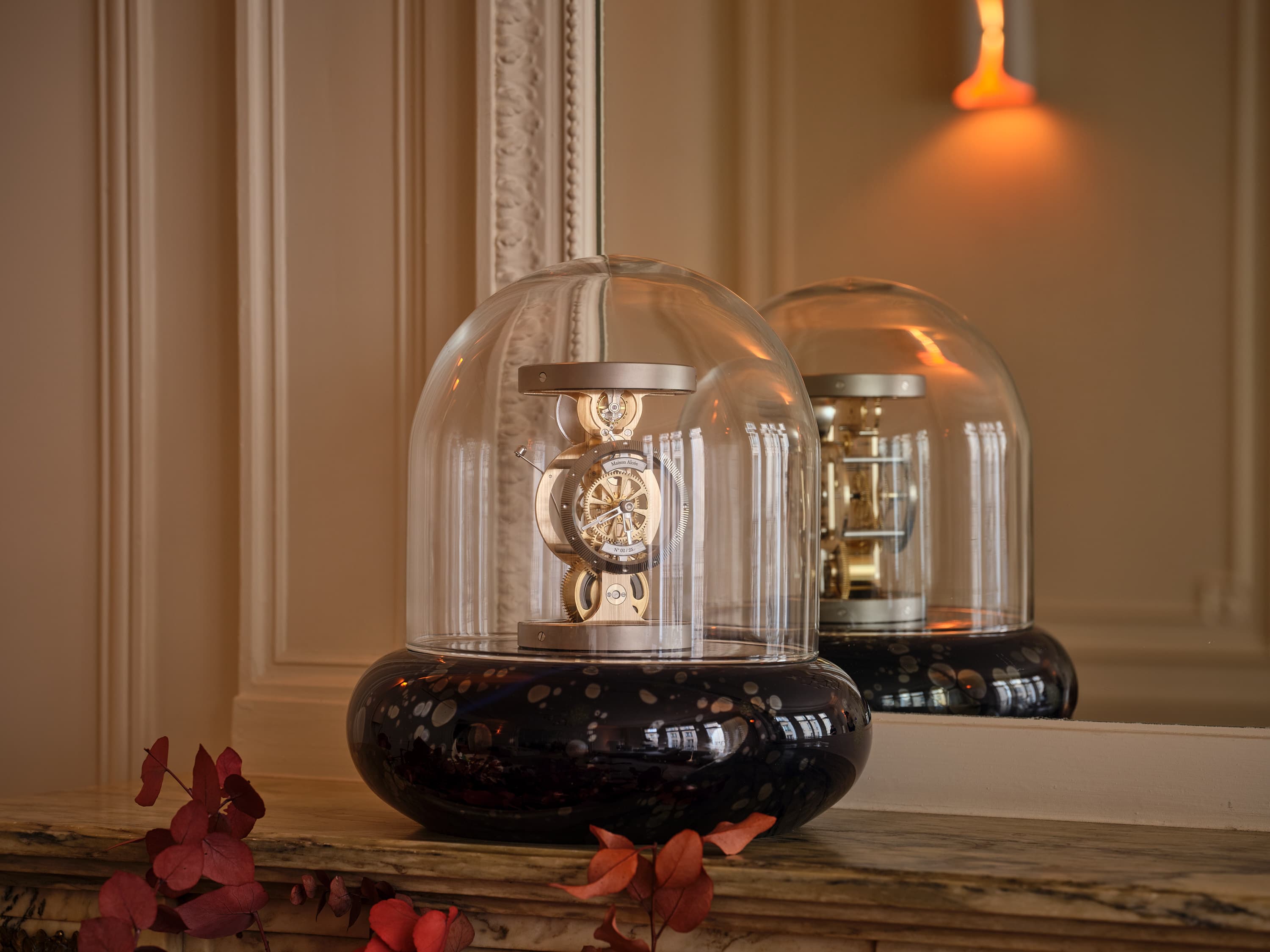
Creating a mechanical movement for this purpose was a significant challenge requiring in-depth knowledge and patience. Alcee reached out to industry experts, including renowned master watchmaker Thierry Ducret, Swiss designer Antoine Tschumi, and watchmaking teacher Jean-Marie Desgrange. These experts were enraptured by her mission to pass on the heritage of clockmaking.
“They all have been a crucial force in making my dream come true,” Alcee said. The resulting mechanical movement is designed so that anyone with passion can fit it inside a clock.
Maison Alcee uses materials such as brass, stainless steel, nickel silver, gold, and ruthenium, and applies PVD treatments to some. More than 90 percent of manufacturing occurs in the Jura region between France and Switzerland, with final finishing and assembly taking place in the brand’s Champagne workshop. To honour traditional craftsmanship, they also utilise a protective mouth-blown glass dome, the Bouclier de Persee, created by a master glassmaker in Burgundy.
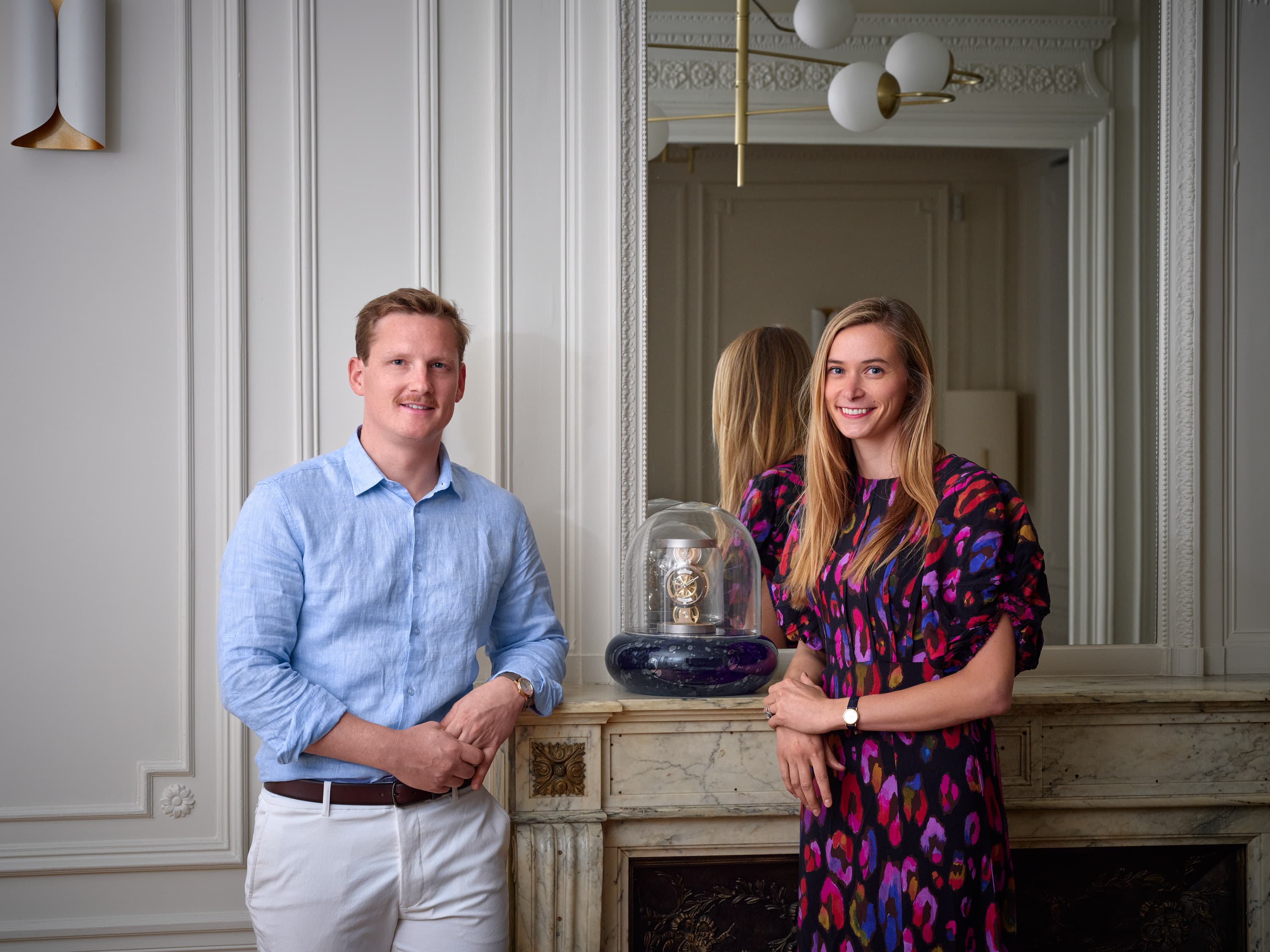
The brand is deeply customer-centric. Owners can have their timepieces signed with their initials, just like professional watchmakers. Alcee recounted a customer who called his Persée clock the most important piece in his living room, a result that she says “speaks volumes about what we do.”
Alcee’s passion was planted 25 years ago. As a child, she loved bringing materials to life and thus trained to become an engineer. Her time at TAG Heuer and Richemont taught her that science and passion are inseparable in timekeeping. Working with artisans, she observed their motivations: reconnecting with reality, elevating humanity through beauty, and the inner pride of work done well. Maison Alcee is built on these pillars.
ALEXIS FRUHAUFF: THE NEXT GENERATION
The future of French clockmaking looks more promising thanks to young talents such as Alcee and Benoit Montfort and, most recently, Alexis Fruhauff, the 2025 F.P. Journe Talent Competition winner. He won the prestigious award for his Pendule à Seconde table clock (above), a piece inspired by the work of 19th-century clockmaker Antide Janvier.
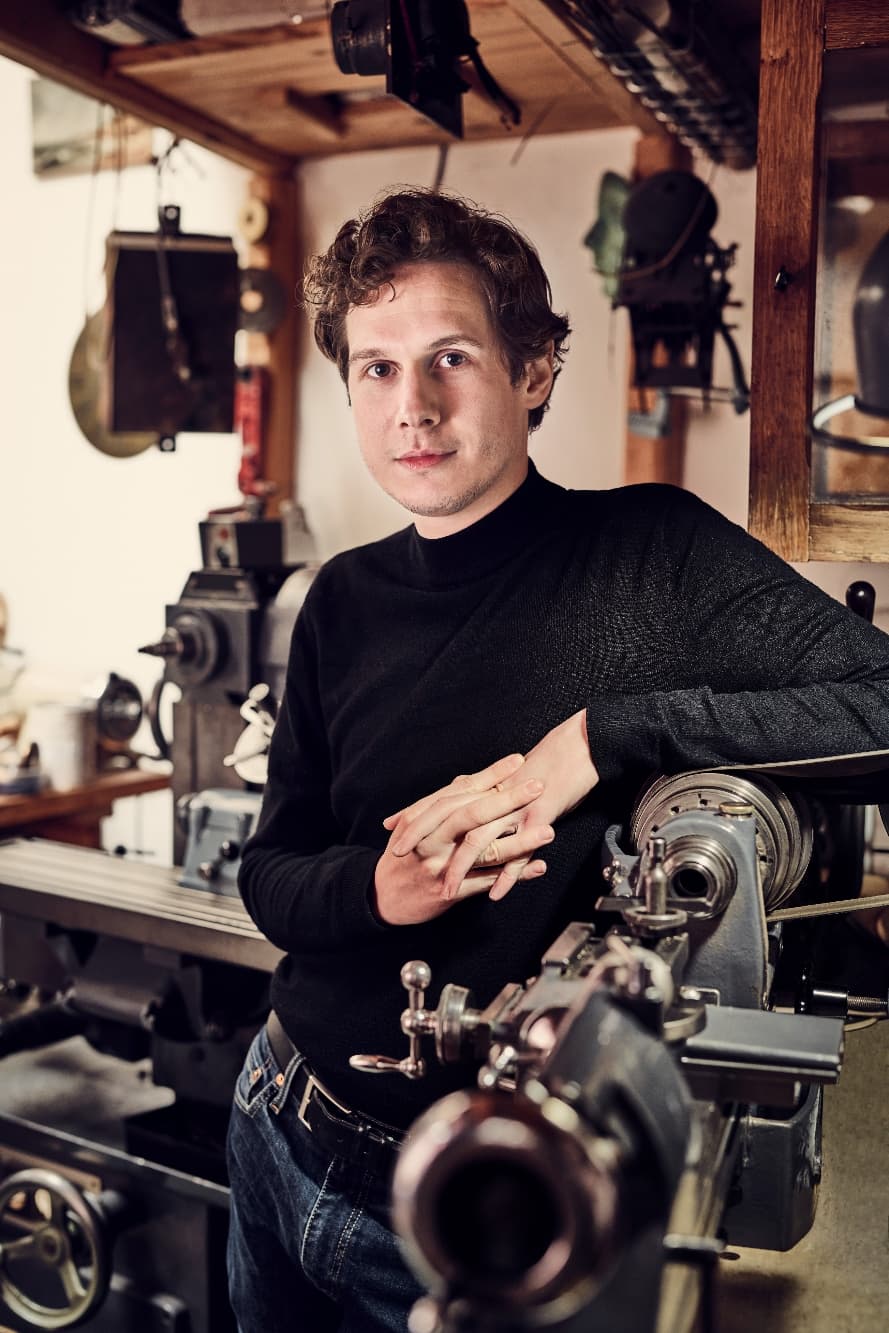
Fruhauff thrives on the challenge of matching his predecessors. “Antide Janvier and Breguet had no computers to assist them, yet their technical ingenuity and perfect execution went on to command immense respect. Every component they created shows a circus of mastery, which is very motivating,” he said.
His prize-winning clock also pays tribute to his mentor, Jean-Baptiste Viot. The hour and minute hands were designed as a nod to Viot, who opened his workshop doors to the young clockmaker. Fruhauff spent two years in Viot’s workshop, using his equipment to finish the clock.
Fruhauff’s passion surfaced during vacations in the Jura region, near the Swiss border and the Vallée de Joux. “I grew up immersed in this horology environment… My parents would buy me watch magazines,” he recalled. Upon returning to Paris, he was spellbound by the compactness of watch calibres, realising that the patience and precision required suited his character perfectly.
However, his journey was not straightforward. Teachers initially discouraged him from manual trades, leading him to pursue general studies, where he felt lost. Eventually, he returned to his true love. Despite initial rejection from the Paris Watchmaking School, he persisted, improved his skills, and was eventually accepted. He eventually completed the equivalent of a BA, the DNMADE, gathering valuable contacts along the way.
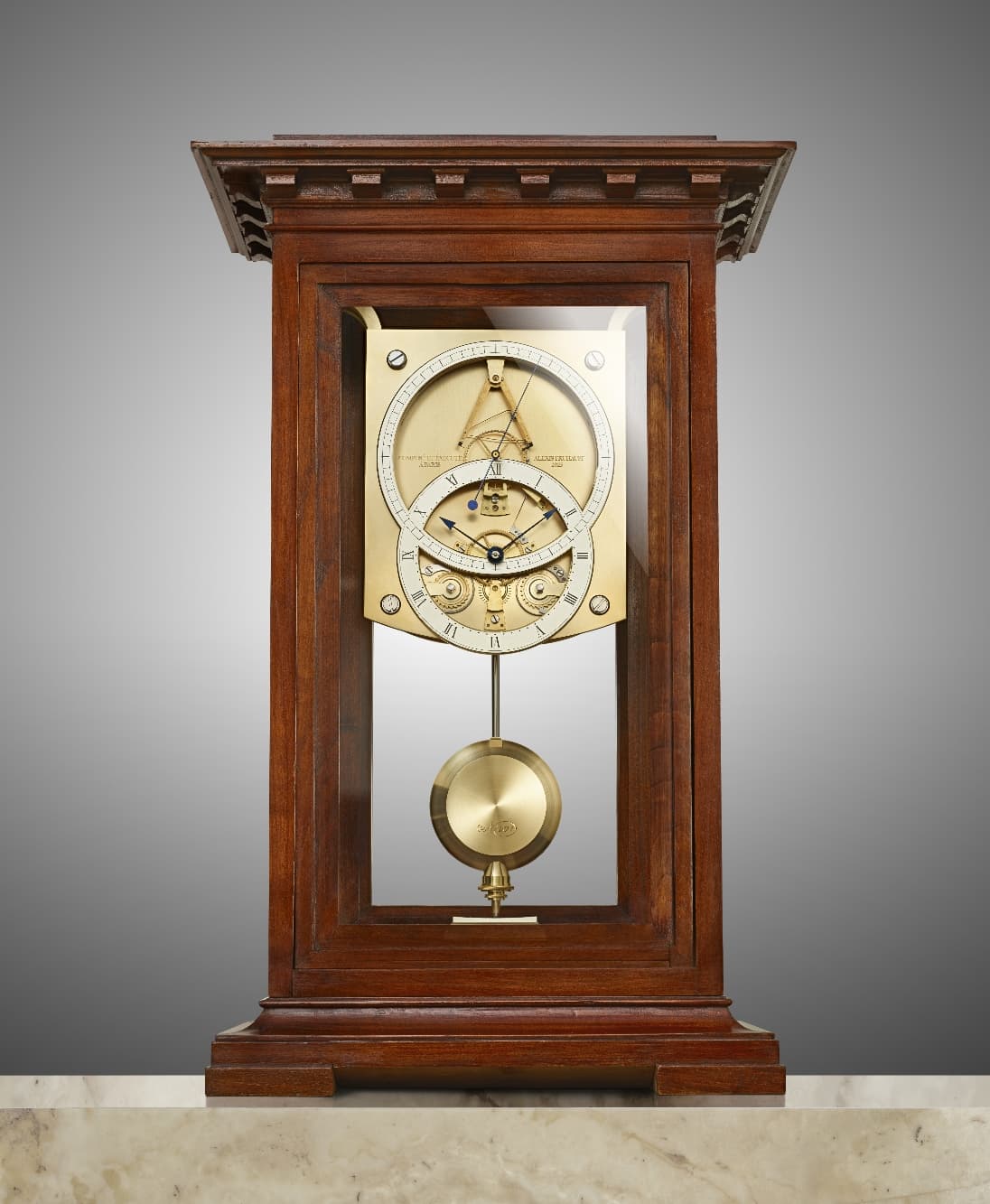
Fruhauff defines his clocks as “traditional with a subtle contemporary twist.” For his Pendule à Seconde, he added a brass backplate with large chamfers and polished inward angles to create relief. This seamless combination of old and modern makes his work unique.
He utilises high-level materials, including traditional brass and steel, but innovates by using INVAR (a nickel alloy with low thermal expansion that enthusiasts will be familiar with) for the pendulum rod. He also incorporates Hardiall®, a new-generation material from the aerospace industry (that the horologically inclined will not know at all).
Winning the F.P. Journe prize was a game-changer, providing Fruhauff with visibility and confidence. He notes that wealthy collectors are driving the demand for exquisite timepieces. “We should feel grateful for their presence, as they make the creation of complex and artisanal pieces possible,” he said.
“Antide Janvier and Breguet had no computers to assist them, yet their technical ingenuity and perfect execution went on to command immense respect. Every component they created shows a circus of mastery, which is very motivating,”
— Alexis Fruhauff
Fruhauff sees independent watchmakers as painters, engaging in a deeply human form of artistic expression. He believes collaboration is fundamental to reviving disappearing professions within the trade.
L’ÉPÉE 1839: THE AVANT-GARDE GIANT
While individual artisans make their mark, the Swiss brand L’Épée 1839 serves as a powerful force in the industry, having never been out of the picture since its founding. Originally famous for carriage clocks chosen by royal courts, the brand now dedicates itself entirely to creating artful clocks fully in-house.
According to CEO and Creative Director Arnaud Nicolas, L’Épée clocks are no longer just timekeeping instruments. “They’re now reimagined as art pieces that are purely meant to evoke emotions in their owners,” he said. The brand’s objective is to transform clocks into kinetic pieces of art.
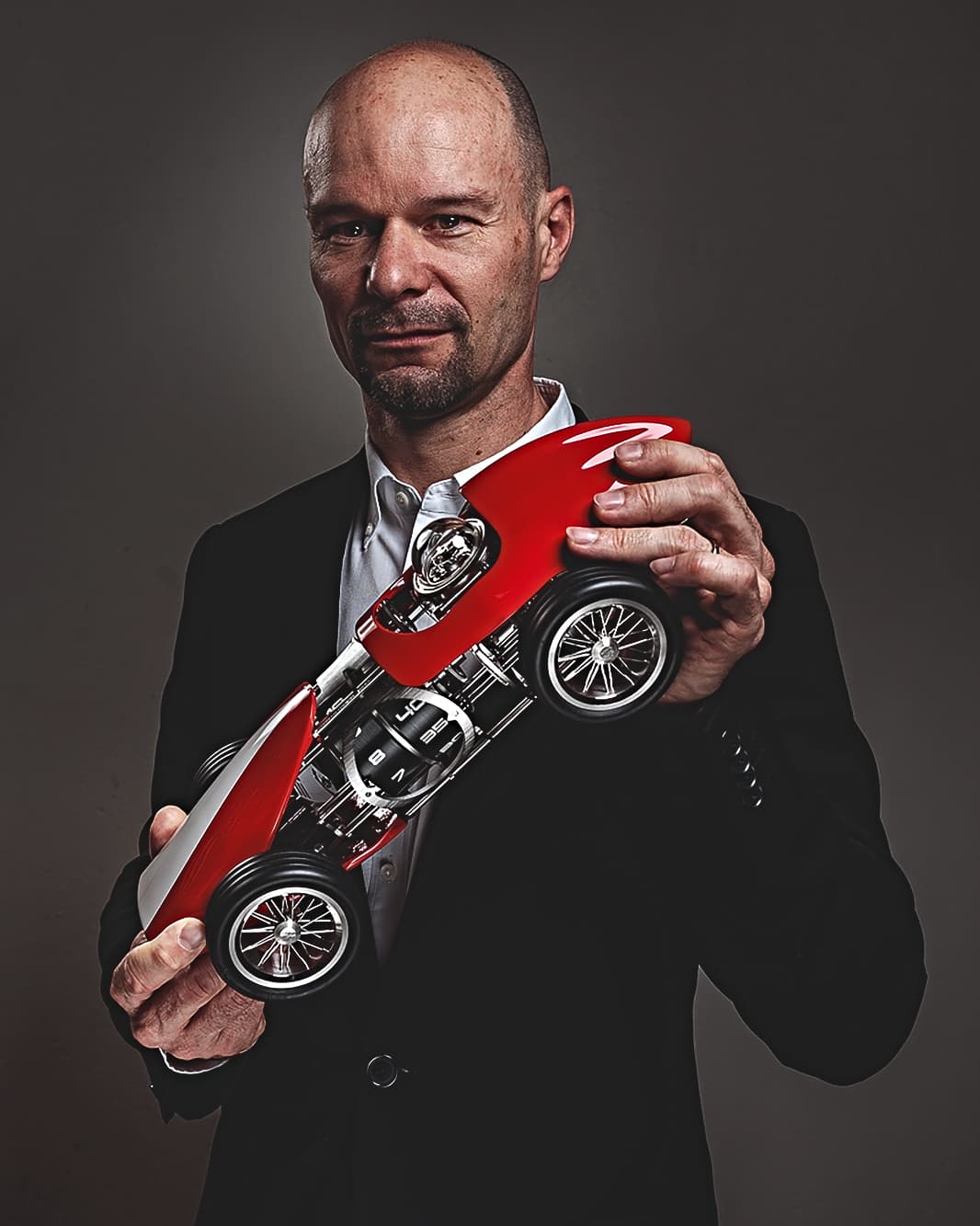
The process always begins with a story, which inspires the design and the movement. This approach allows L’Épée to appeal to a broad audience, from pilots to interior design lovers.
The launch of the “Creative Art Line” in 2014 transformed the brand’s image. The Starfleet Machine, created in collaboration with MB&F, marked the beginning of a new era. “All these incredible feats (have) been possible since 2009 when we embraced an avant-garde approach to create kinetic art that’s unlike anything seen before in horology,” Nicolas explained.
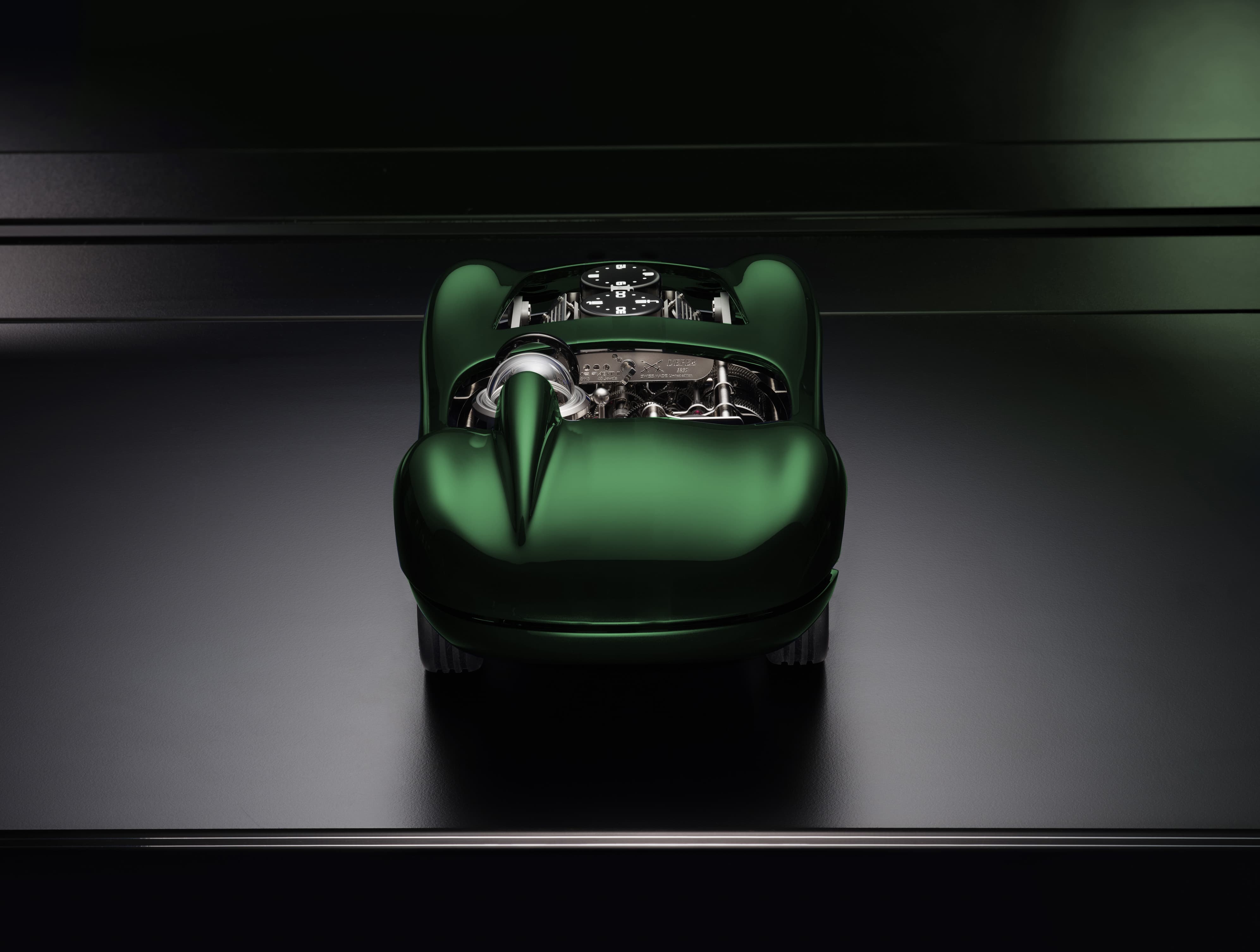
In 2025, L’Épée’s Albatross (another collaboration with MB&F) changed the game, competing alongside other talents like Anton Suhanov (the Easter Egg Clock). Nicolas views collaborations as a marriage where both parties win, believing that brands refusing to collaborate will become stagnant.
A part of the LVMH family since 2024, L’Épée is poised to expand its production capabilities and infrastructure. Nicolas noted that the acquisition deepens the brand’s commitment to craftsmanship. “Another reason that brought us together is LVMH’s proactive role when it comes to preserving and developing historic savoir-faire,” he said.
PRECISION ART
The dawn of exquisite clocks is becoming vividly apparent. From the kinetic genius of Miki Eleta and the educational innovation of Maison Alcee to the rising talent of Alexis Fruhauff and the avant-garde vision of L’Épée 1839, the industry is witnessing a phenomenon that may have legs.
The passionate clockmakers of the 21st century prove that when an object as ancient as the clock is designed with bold perspectives, the result is nothing short of inspirational. The quest for excellence is the dominating factor changing the scenario for the better, and if Fruhauff is correct, this is a highly welcome development.
WORDS THE WOW TEAM INTERVIEWS NAGMANI
This story was first seen as part of the WOW #83 Spring 2026 Issue
For more on the latest in luxury watch reads, click here.