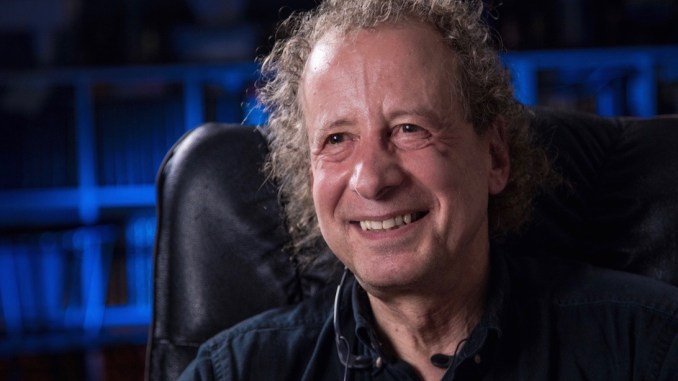
Howard Bloom has built a career doing what most thinkers avoid—crossing lines. Not political ones. Intellectual ones. Science into culture. Biology into history. Rock music into evolutionary theory. While most writers specialize, Bloom synthesizes, pulling patterns from places that aren’t supposed to touch and insisting they belong in the same conversation.
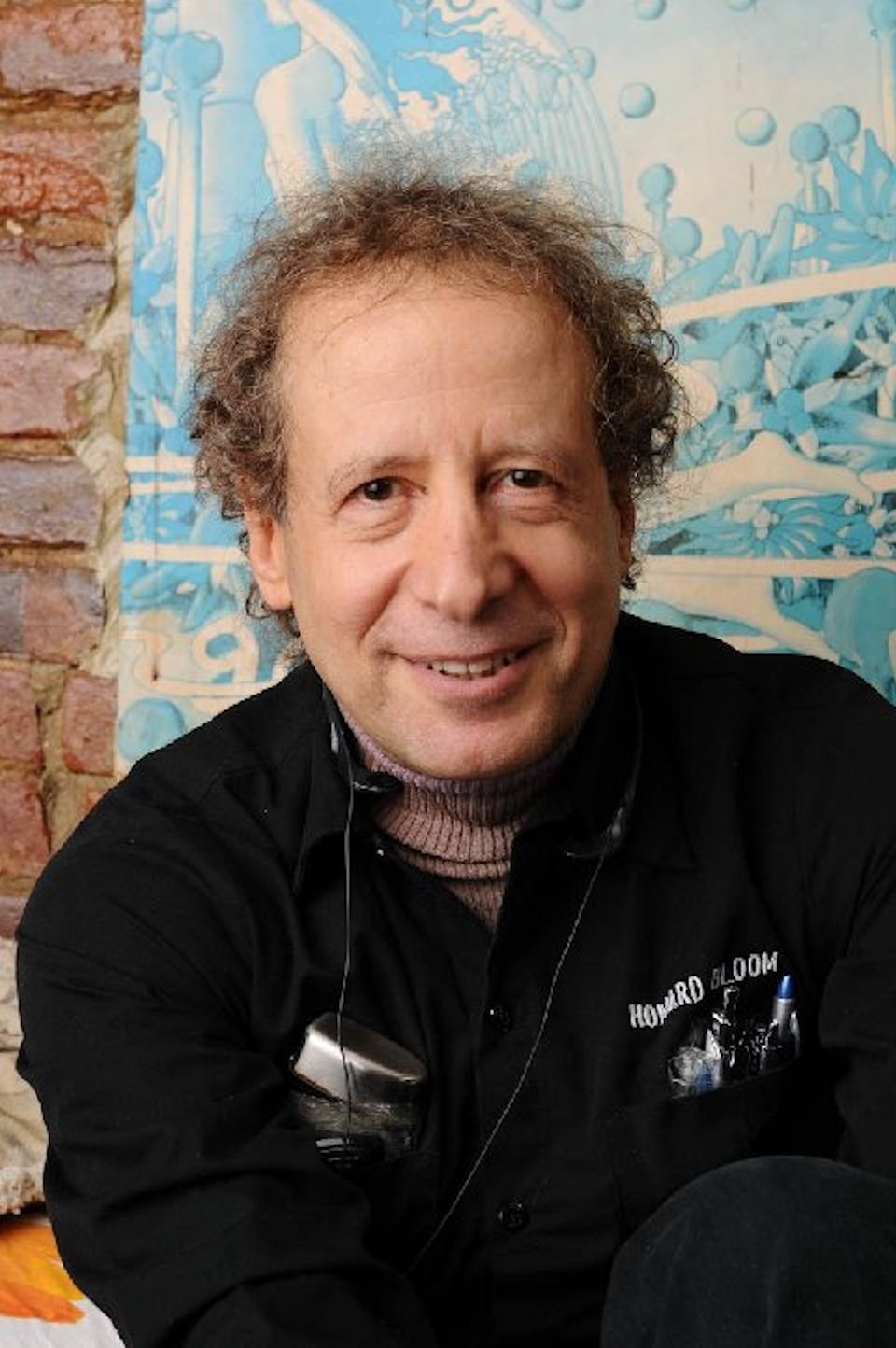
Before he became an author known for grand, sometimes incendiary ideas, Bloom was a science-obsessed kid constructing logic machines and studying immune systems. He was drawn early to one question that would follow him for life: how do systems organize themselves into something greater than their parts? That curiosity never faded—it just found unusual arenas to express itself.
One of those arenas was the music industry. During the 1970s and 1980s, Bloom emerged as a dominant force in publicity, shaping the public images of artists like Prince, Michael Jackson, Bob Marley, and Billy Joel. But even then, he wasn’t simply selling talent. He was observing mass psychology at scale—how crowds think, how movements form, and how belief spreads. When illness abruptly ended that chapter of his life, Bloom didn’t retreat. He turned inward and outward at the same time, transforming lived experience into theory.
A Body of Work That Thinks Big
Bloom’s first major book, The Lucifer Principle: A Scientific Expedition into the Forces of History, made a bold claim: the same evolutionary forces that generate beauty, cooperation, and progress also generate cruelty, competition, and conflict. Rather than seeing evil as a moral anomaly, Bloom reframed it as a natural byproduct of group selection. The book challenged readers to reconsider the roots of human behavior—and unsettled more than a few comfortable narratives.
He expanded that framework in Global Brain: The Evolution of Mass Mind from the Big Bang to the 21st Century, tracing intelligence as a collective phenomenon. From the earliest life forms to modern human networks, Bloom proposed that evolution itself behaves like a learning system—one that remembers, adapts, and scales.
In The Genius of the Beast: A Radical Re-Vision of Capitalism, Bloom turned his attention to economics, dismantling simplistic critiques of capitalism while exposing its paradoxes. His argument wasn’t that capitalism is clean or kind, but that it is an engine capable of turning unlikely raw materials into innovation and abundance—often in ways its participants barely understand.
The God Problem: How a Godless Cosmos Creates took on existential territory, asking how creativity, meaning, and structure arise without divine orchestration. Bloom’s answer drew from physics, biology, and systems theory, presenting creation as an emergent property of the universe itself.
Bloom continued to provoke debate with The Muhammad Code, a historically grounded and controversial exploration of how early religious narratives continue to influence modern extremism. The work underscored his willingness to confront difficult subjects head-on, regardless of backlash.
His memoir-driven works, How I Accidentally Started the Sixties and Einstein, Michael Jackson & Me, revealed the personal story behind the theories—offering a glimpse into a life spent at the intersection of fame, counterculture, illness, and relentless inquiry.
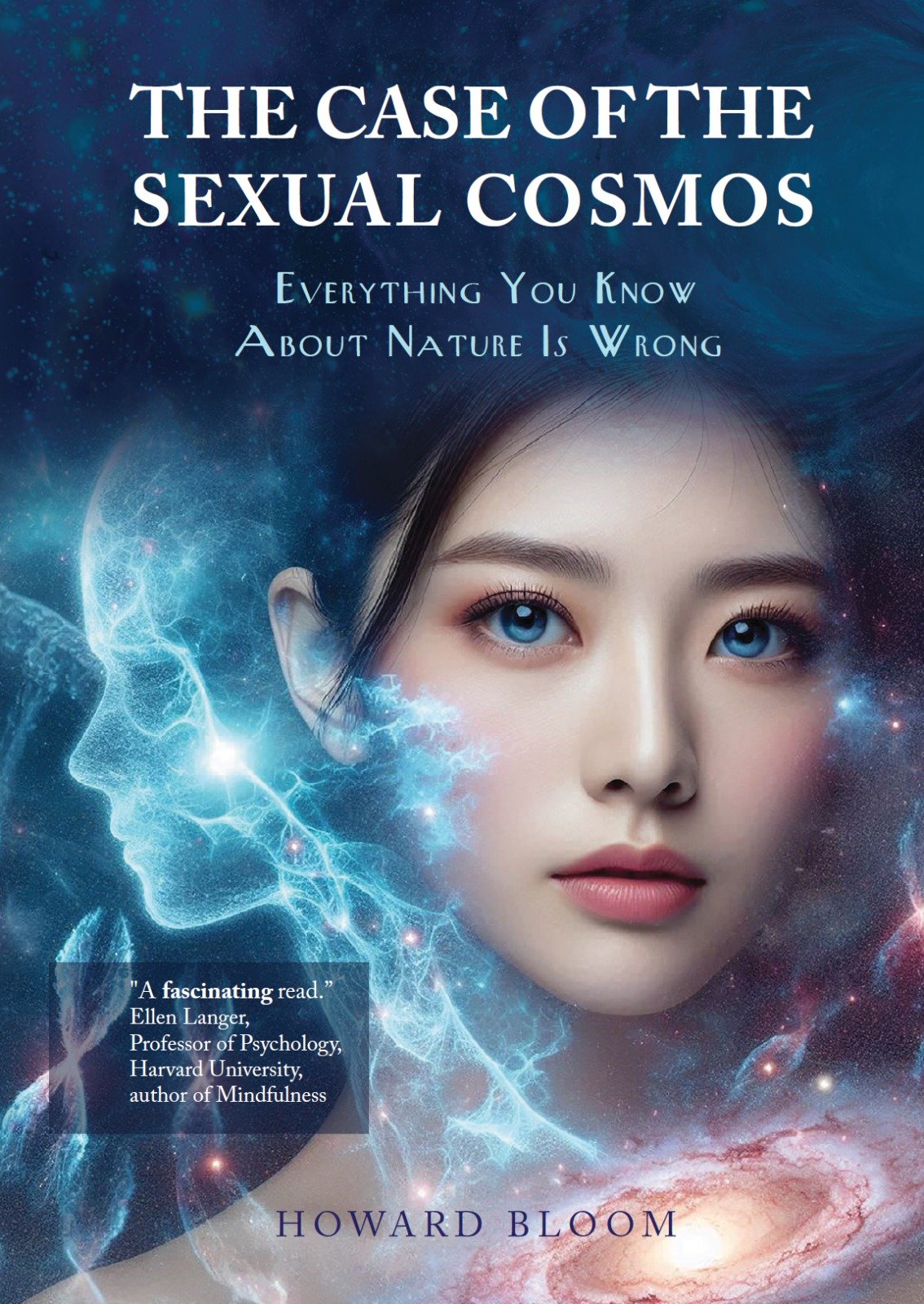
Most recently, Bloom has challenged yet another sacred assumption with The Case of the Sexual Cosmos: Everything You Know About Nature Is Wrong, arguing that sexuality is not merely a biological function but a fundamental driver of evolution and cosmic creativity. As with his earlier work, the book insists that what we think we understand is often only the surface.
The Howard Bloom Institute
Bloom’s ideas now live beyond the page through the Howard Bloom Institute, a platform devoted to exploring what he calls “omnology”—the study of all systems together. Neither academic nor ideological, the Institute exists to question inherited frameworks and encourage interdisciplinary thinking across science, culture, politics, and human behavior.
Through essays, discussions, and collaborative exploration, the Institute functions as a gathering place for people willing to examine the world without intellectual guardrails. Its guiding principles are deceptively simple: pursue truth without compromise, and look at the familiar as if seeing it for the first time.
Still Asking the Uncomfortable Questions
Howard Bloom’s work doesn’t aim for consensus. It aims for clarity, even when clarity is unsettling. He has spent decades dismantling artificial boundaries between disciplines, arguing that understanding humanity—and the universe—requires seeing patterns across every scale.
In an era dominated by specialization, Bloom remains defiantly integrative. His career is proof that the most disruptive ideas often come from those willing to stand between worlds and insist that everything, in the end, is connected.
The official website for the Howard Bloom Institute may be found at