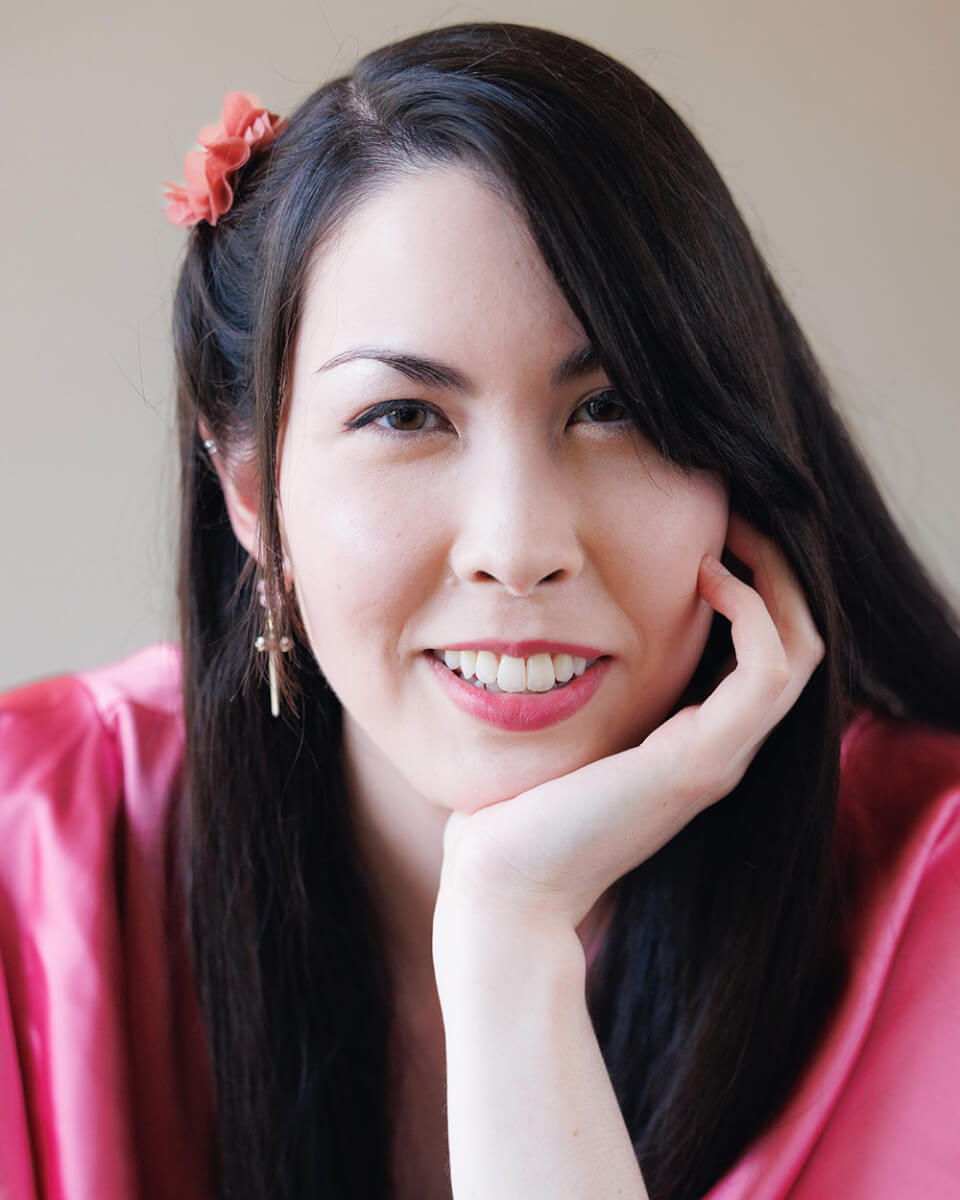
After penning multiple dark fantasy novels and horror stories like 2025’s Bat Eater and Other Names for Cora Zeng, Kylie Lee Baker returns with a dual-timeline horror novel chock full of secrets and scares. In Japanese Gothic, an eerie 200-year-old house in rural Japan becomes a portal that connects two very different lives: that of a modern young man and the 19th-century daughter of a samurai. We asked Baker about her skillful blend of horror and suspense, the difficulties of portraying history accurately and the allure of the gothic.
The use of the word “gothic” in the title sets the stage for this novel, particularly its mood and tone. What does “gothic” mean to you in a Japanese context, and how did you adapt or challenge Western gothic conventions in this story?
The key to most gothic stories is an old, haunted building and an atmosphere of terror. Even though this usually translates to European castles or mansions, old Japanese houses can be just as haunting, if not more so. I mean, have you ever seen those paper doors in old Japanese houses? Think of all the terrifying shadows you can see through them at night!
I think that when Western audiences want gothic literature, a lot of readers are really just craving a particular aesthetic—crumbling castles and cobwebbed estates that are evocative of classic horror like Dracula or The Castle of Otranto. Readers have preconceived notions of what these settings are like and can imagine them clearly. But what matters less than the specifics of the setting is how it makes readers feel. It’s not the flying buttresses in the haunted castle that make readers afraid; it’s what happens inside the castle. It takes a bit more legwork to build that same sense of dread in a setting that is “foreign” to most Western readers, but it can be just as effective.
Your novel connects two people across centuries through the same house. At what point did the idea of the house as a bridge between timelines emerge, and how did it shape the structure of the story?
The idea of writing some sort of portal horror came to me after reading The Book of Accidents by Chuck Wendig, which uses doors between dimensions in a terrifying yet beautiful way. I was also really inspired to write a twisty psychological horror after reading every Catriona Ward book I could get my hands on. I wanted to write a book that begins as a traditional haunted house story, but that you quickly realize is a mutual haunting where you’re not sure which timeline is real. The arc of Lee’s and Sen’s journeys had to be somewhat parallel to make this work, so I had to develop both of their storylines in ways that complemented each other.
“When your home is haunted, you have no safe place to go and are left adrift and alone. To me, this is more terrifying than any ghost.”
Sen’s timeline captures a period when the samurai class was losing its identity and power. How did you approach researching and portraying that historical transition without romanticizing it?
It’s easy not to deify the samurai once you learn more about what they actually did. Samurai practiced pederasty, for instance, which is obviously abhorrent even if it was the cultural norm, though that’s not a focus of this book. I’m also Okinawan, which is an ethnic minority from an island that the samurai helped colonize, so that definitely keeps me grounded. This is less a story about the samurai as a cultural phenomenon than it is a story about one samurai family’s dreams and mistakes.
Sen’s father doesn’t have all the stereotypical qualities of samurai (noble, honorable, levelheaded and so on). What angles of the samurai archetype were you most interested in investigating?
Sen’s father certainly thinks he embodies all the qualities of a perfect samurai! When writing his character, I mostly just wanted to speak to the dangers of glorifying an imagined past rather than contending with the present. It’s not my place to pass judgment on the samurai ethical code, but I do think that any ideology can be taken too far and wielded as a weapon to give oneself power and authority.
There’s a strong undercurrent of intergenerational trauma in both Lee’s and Sen’s timelines. Can you talk about how this element contributes to the story and the way you depict that pain manifesting in physical spaces? Why do you think inherited pain is so hard to confront?
In many families across different cultures, it’s considered shameful to talk about your pain. It’s more important to preserve a positive family image than to address underlying trauma. What Lee and Sen both learn is that if you don’t find a way to let out the trauma on your own, it starts bleeding out of you when it’s least convenient. Haunted house settings like this one are particularly good vehicles for talking about intergenerational trauma because of how much emphasis is placed on the meaning of home. Home and family are supposed to signify safety when you’re a child, but for many people, that’s not the case. When your home is haunted, you have no safe place to go and are left adrift and alone. To me, this is more terrifying than any ghost.
“It makes sense that readers are drawn to horror in 2026 because horror has always been a reflection of societal fears, and we’re living in truly unprecedented times.”
Horror is having a renaissance right now. Is this a genre you’ve always been drawn to? How do you see its appeal for readers in 2026?
Horror is what made me love reading when I was a kid. I devoured horror novels and watched scary movies when I was probably too young for them. I’m thrilled that horror is on trend right now, though for me it feels more like my first language than any kind of fad. I avoided writing it myself for a long time because I didn’t think I was good enough at writing to actually scare readers, but I’m so glad I finally changed my mind!
It makes sense to me that readers are drawn to horror in 2026 because horror has always been a reflection of societal fears, and we’re living in truly unprecedented times. Horror can be escapism—as a kid I loved the promise of not having to think about romance when I watched a horror movie—or it can be a type of catharsis. Justice is hugely important in horror, and I think that’s something people are rightfully seeking these days.
“I try to close chapters at a place that feels like a punch to the gut.”
I loved the inclusion of the Japanese folktale “Urashima Taro,” a story likely to be new to many U.S. readers. What differences do you see between Japanese mythology and Western folklore? What do they have in common?
I’m generalizing a lot here, but I think much of Western folklore focuses on monsters and good versus evil—likely due to Christian influence—whereas a lot of Japanese folklore is a bit more morally gray and involves tricksters who aren’t necessarily evil. But you’ll find parallel stories across many different cultures, all conveying similar fears. I think the closest Western story to the legend of Urashima Taro would be “Rip van Winkle.”
When you’re juggling two timelines, how do you decide where to cut between perspectives?
In the beginning, I tried to make the two timelines as parallel as possible; meet Lee’s family in one chapter, then meet Sen’s family in the next. See a flashback to Lee’s childhood trauma, then a flashback to Sen’s childhood trauma. I definitely deviate from this pattern as the book goes on, but I think that builds a solid foundation so that the readers hopefully know enough about each character to care about their chapters. Beyond that—and I know this is an incredibly unhelpful answer—I cut between chapters pretty intuitively. I try to close chapters at a place that feels like a punch to the gut.
Take us behind the curtain on the revision process for this book. What elements needed the most retooling, and what components felt right from the beginning?
The most challenging part of this book was tinkering with Lee and Sen’s conversations. They’re both such strange, intense characters with very delicate chemistry. I knew right away that this book—more than my other books—really hinged on whether or not I could make their conversations compelling. Getting it right was like painting numbers on a watch face—excruciatingly detailed but massively important work.
Perhaps the easiest part to write in this book was Lee’s backstory, simply because it was so fun to write. Another author said that one of the keys to getting your books adapted for film (which I hope will happen someday) is to write characters that actors would love to play, so I tried to make Lee an irresistibly strange character. I had so much fun making Lee such a Sherlock-esque genius with a deep, aching wound in his soul.
When you think back on writing, what sequence or moment was the most memorable to put down on paper?
Toward the end of Japanese Gothic, there’s a scene that’s an echo of one of the earlier scenes—much of the text is exactly the same, but it starts to diverge as you learn the real version of events. That moment was incredibly satisfying to write. Of course, I can’t say more without spoiling the ending!