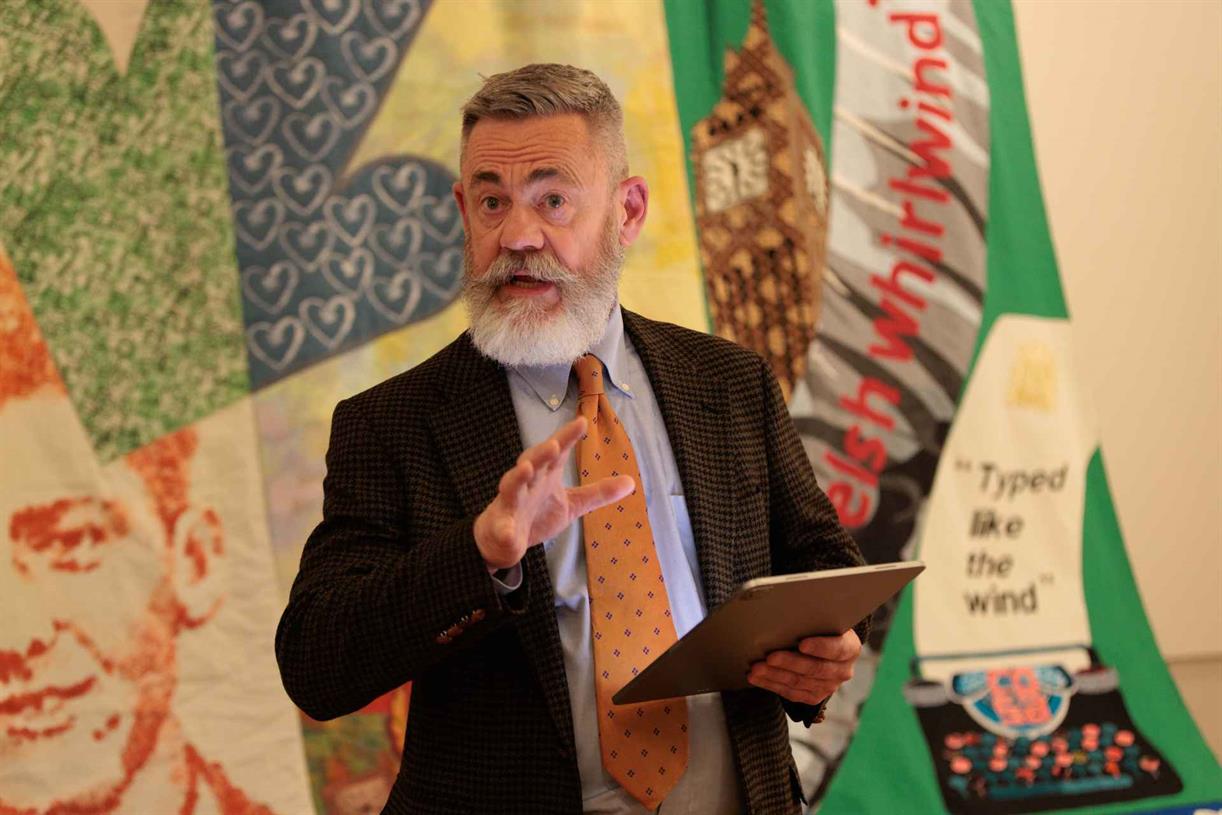
Financial competition between charities can lead to exclusion, exceptionalism and “a run for the bottom”, the co-founder of the Terrence Higgins Trust has warned.
Speaking on the Third Sector Podcast, Rupert Whitaker described collaboration as “utterly essential” in a charity’s quest to support its beneficiaries, regardless of its size.
“Helping smaller charities to do things that they are perhaps in a better position to do than you are will maximise your impact and effectiveness,” he said.
“For instance, they might be able to access certain communities that are hard for a larger organisation to reach.”
Whitaker, who is now a patron of the THT, was joined on the podcast by current chief executive Richard Angell to reflect on the legacy of fellow co-founder Martyn Butler, who died on 21 February.
Whitaker said “a run for the bottom”, caused by financial competition between voluntary organisations, “has to be resisted where there is a social rather than a commercial purpose to any organisation”.
He added: “You can never have too much collaboration. The whole point of charity is to help people.
“One of the best ways to help people is to help them help themselves insofar as they can, and then you help them help themselves more to be able to do more, so they actually don’t need you.”
He said that under the leadership of Angell and his predecessor Ian Green, “that attitude has really flourished”.
Whitaker also revealed that, while currently strong, the relationship between the charity and its co-founders had “waxed and waned” during its 44-year existence.
He said the charity had previously struggled as a result of “a wish to accumulate power” by some leaders, which impacted how he and Butler were treated as patrons.
“We were, in a sense, used for PR and fundraising for many years, while being kept very much at arm’s length,” Whitaker said.
“And that was very frustrating. We both kept at it because the cause was far more important than our own personal preferences and our wishes. The need to push out the messages was far more important.”
He added: “What you can see with a charity that goes wrong is where it starts to become exclusive, to position itself in a way where it becomes competitive rather than collaborative, where it disables rather than enables other organisations or its own beneficiaries.
“And THT had a period where it was really struggling with this.”